










What we know so far
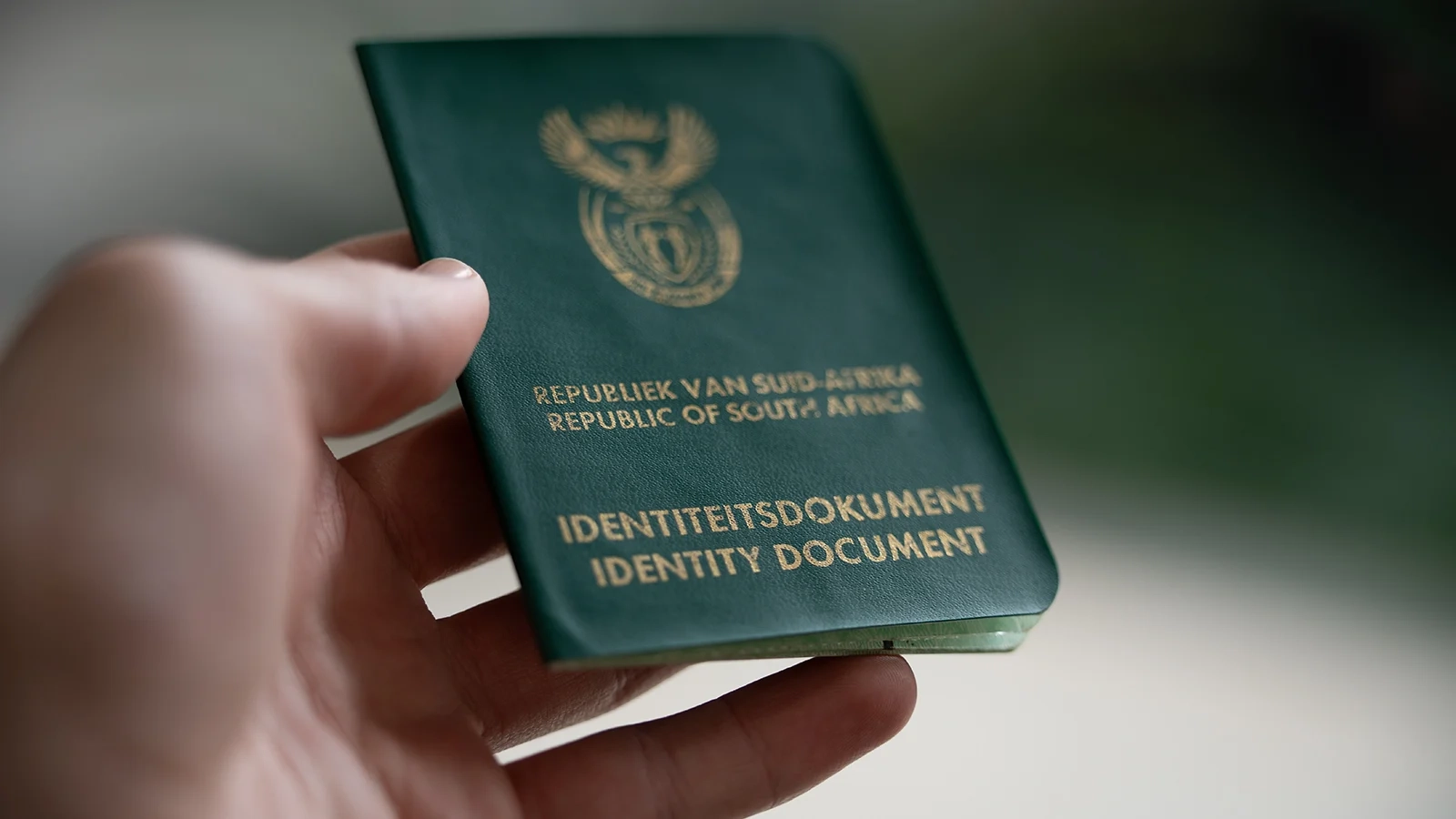
President Cyril Ramaphosa confirmed on Sunday evening, 7 June 2026, that the green barcoded identity book will no longer be issued, as government moves to eliminate a document it describes as a serious fraud risk. The announcement was made during a nationally televised address on migration at the Union Buildings in Tshwane, where Ramaphosa outlined a sweeping set of measures to overhaul South Africa’s identity and immigration systems.
The green ID book has been in circulation for nearly five decades and is still used by an estimated 16 million South Africans. Its discontinuation now carries a direct presidential mandate, elevating what had previously been a departmental policy goal into a Presidency-level commitment.
Ramaphosa’s address came days after Cabinet formally adopted a Comprehensive Approach for Migration Management, which has also been endorsed by the President’s Coordinating Council, comprising provincial premiers, MECs, local government representatives, and the National House of Traditional and Khoi-San Leaders.
Why it matters
For millions of South Africans, the green ID book remains their primary form of identification, used to access social grants, banking, government services, employment, and voting. Its discontinuation marks a fundamental shift in how the state identifies and verifies its citizens.
The decision is driven in large part by the scale of fraud the legacy document has enabled. According to a 2026 Identity Fraud Report by verification company VerifyNow, impersonation fraud involving green ID books surged by 400% year-on-year as criminals increasingly exploit weaknesses in the older paper-based system. The Department of Home Affairs has itself stated that the green barcoded ID book is an estimated 500% more vulnerable to fraud than the Smart ID card.
The announcement also carries significant economic consequences. Identity fraud costs the South African economy billions of rands annually, undermines access to financial services, and enables criminal activity ranging from fictitious grant applications to money laundering. A faster transition to a biometrically secured, chip-based identity infrastructure directly addresses these vulnerabilities.
There are also clear implications for immigration management. The green ID book has become a vector for document fraud by undocumented migrants seeking to establish false legal status. Ramaphosa specifically framed the identity modernisation drive as part of a broader effort to secure South Africa’s population register and strengthen immigration controls.
Key details and figures
The Department of Home Affairs issued a record 4,002,964 Smart ID cards in 2025, a 17% increase on the 3,427,468 issued during 2024, which was itself a record. The accelerated issuance rate is central to the government’s strategy for discontinuing the green ID book, as the document cannot be invalidated until every eligible South African has a viable replacement.
To widen access, the department has been expanding its bank branch partnership model. By the end of the current financial year, Smart ID services are targeted to be available at 200 bank branches nationwide. The longer-term plan calls for services at 1,000 bank branches by 2029, which would bring the application process far closer to most South Africans than the existing Home Affairs office network.
Draft regulations for a new national digital identity system were recently open for public comment, with the submission deadline falling on 6 June 2026. The proposed digital ID would assign every citizen a Unique Digital Identifier linked to all government transactions and authenticated through biometrics.
The Department of Home Affairs’ 2025-2030 strategic plan sets universal enrolment into a digital smart ID system as the end-term goal for 2029, with the discontinuation of the green ID book as a mid-term milestone to be reached before that final target. Government Printing Works has confirmed it will collaborate with the department in 2026/27 to design the digital identity document for implementation within the medium-term period.
According to reporting based on the phaseout timeline, green ID book production is set to cease on 31 December 2027. Existing holders will not be immediately affected, as the document is expected to remain legally valid during a transition window.
What happens next
The immediate next steps centre on the continued expansion of the Smart ID rollout. The Department of Home Affairs must demonstrate that every South African can access a Smart ID before the green ID book can be formally invalidated, making the bank branch partnership programme critical to the entire timeline.
Home Affairs Minister Dr Leon Schreiber has indicated that the department aims to have a fully functional digital identity system in place by the 2029 general elections. Achieving that target requires not only issuing Smart IDs at scale, but also completing the regulatory framework for the digital ID, finalising the public comment process on draft regulations, and building the infrastructure that links identity verification across government departments.
The Comprehensive Approach for Migration Management adopted by Cabinet will also shape how identity verification tools are deployed in immigration enforcement. Ramaphosa confirmed that the Department of Home Affairs, the Border Management Authority, and SAPS will intensify efforts to identify undocumented individuals, with robust identity infrastructure underpinning the entire enforcement mechanism.
South Africans who still hold a green ID book are not required to take immediate action. The government has not yet set a date on which the document will cease to be legally accepted as valid identification. What has changed is that it will no longer be issued, meaning any South African who needs a new identity document or who replaces a lost or damaged one will receive a Smart ID card going forward.