


What we know so far
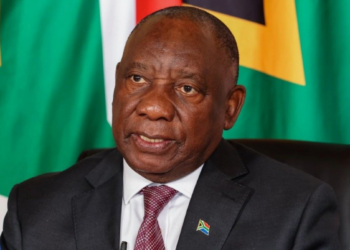
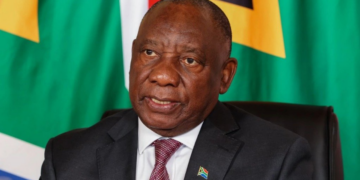
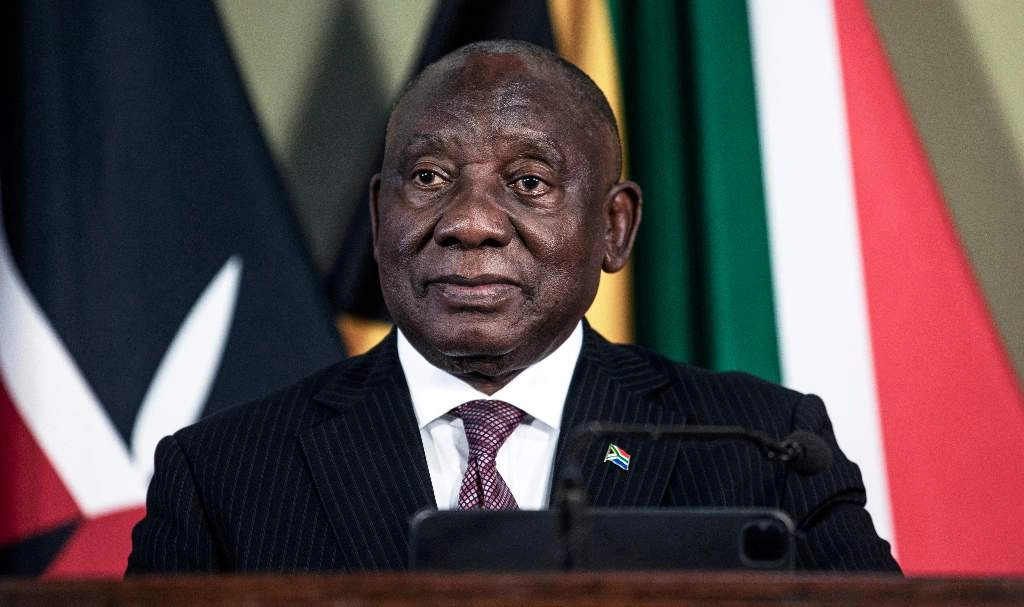
President Cyril Ramaphosa addressed the nation from the Union Buildings in Tshwane on Sunday evening, 7 June 2026, outlining government’s most comprehensive response yet to the crisis over illegal immigration. The address came after weeks of escalating anti-foreigner protests in multiple provinces, during which foreign-owned businesses were set alight, foreign nationals were confronted on the streets, and activist groups issued an ultimatum demanding that undocumented migrants leave the country by 30 June.
Ramaphosa acknowledged failures in migration management, corruption within the immigration system, and legitimate public frustration about unemployment, crime, and pressure on state services. At the same time, he drew a firm line against vigilantism, warning that private citizens have no authority to stop, interrogate, or confront people on the street to demand proof of nationality.
“The responsibility for enforcing immigration laws rests with the state and the state alone,” Ramaphosa said in the address.
The speech came days after Cabinet formally adopted a Comprehensive Approach for Migration Management. That framework has been endorsed by the President’s Coordinating Council, which includes all nine provincial premiers, MECs, local government representatives, and the National House of Traditional and Khoi-San Leaders, giving it broad governmental authority.
Why it matters
Ramaphosa’s address carries immediate consequence for two distinct audiences: the estimated millions of undocumented migrants living in South Africa, and the activist movements and political actors who have been pushing for more aggressive public action.
To South Africans expressing concern, the President said their grievances are real and will be addressed through intensified enforcement of existing immigration, labour, and business licensing laws. He acknowledged that illegal immigration places additional burdens on public services including healthcare and education, that criminal syndicates exploit undocumented migration for recruitment and concealment of criminal proceeds, and that businesses exploiting undocumented workers by paying below the minimum wage and denying legal protections are breaking the law and undermining fair competition.
To those threatening vigilante action, the message was categorical: groups that use public anxiety about illegal immigration to destabilise the country, incite lawlessness, or organise violence will face consequences. Ramaphosa drew a direct historical parallel, warning that private citizens demanding identification documents on the street echoed the methods of the apartheid state.
The address also places the government at a politically sensitive junction. Local elections are approaching, anti-immigrant sentiment is a live electoral pressure point, and movements including March and March, led by activist Jacinta Ngobese-Zuma, have set a hard deadline of 30 June 2026 for government action. Ramaphosa’s speech is government’s formal response to that pressure.
Key details and figures
The President outlined five pillars of the government’s migration management strategy: cracking down on violations of immigration, labour, and business laws; preventing irregular border entry; stamping out corruption in the immigration system; strengthening immigration laws and policies; and engaging neighbouring and African countries in a regional response to migration flows.
On enforcement, Ramaphosa confirmed that the Department of Home Affairs, the Border Management Authority (BMA), and the South African Police Service have intensified operations to identify undocumented individuals. The BMA, established in 2023 to consolidate border law enforcement at land, air, and maritime ports of entry, deported more than 51,000 people in the past year. The Department of Home Affairs has increased the number of deportations year on year since 2022.
Employers who knowingly hire undocumented workers will face sharply stronger penalties and stricter enforcement, Ramaphosa warned. Legislation to introduce employment quotas will be tabled before Parliament. The Department of Small Business Development, working with the South African Local Government Association, was also directed to address concerns about foreign nationals operating spaza shops and informal businesses in communities where South Africans feel excluded from their own local economies.
On the legislative front, Cabinet approved a revised White Paper on Citizenship, Immigration and Refugee Protection in March 2026 following a public consultation process conducted across all nine provinces. Government describes the White Paper as the most significant reform of South Africa’s immigration and refugee framework in a generation.
Ramaphosa acknowledged that illegal migration routes increasingly intersect with organised crime, with syndicates involved in trafficking, extortion, illegal mining, drug distribution, and money laundering using undocumented migrants for recruitment and the concealment of goods. He cited this nexus as a direct security concern, not merely a social or economic one.
On foreign nationals and public services, the President was unequivocal that the Constitution requires the state to protect the human rights of all people within South Africa’s borders, citizens and foreign nationals alike. He condemned incidents of foreign nationals being forcibly removed from healthcare facilities, calling such conduct un-South African and a violation of constitutional values.
What happens next
The immediate test for government is whether the enforcement measures outlined on Sunday produce visible results before 30 June 2026, when March and March has threatened a national mobilisation if its demands remain unmet. Ramaphosa did not directly reference the movement or its deadline, but his address was clearly framed to demonstrate decisive state action.
The Department of Home Affairs’ Comprehensive Approach for Migration Management will now need to be translated into operational reality by the BMA, SAPS, and partner departments. Coordinated enforcement operations across workplaces, border zones, and residential areas are expected to intensify in the coming weeks.
On the legislative side, the employment quota bill must still be tabled in Parliament. The White Paper on Citizenship, Immigration and Refugee Protection, approved by Cabinet in March 2026, must move through to implementation. Draft regulations for the new digital identity system, which closed for public comment on 6 June 2026, will inform how the state verifies who is legally present in the country.
Regional engagement also forms part of the strategy. Ramaphosa confirmed that South Africa is in active dialogue with neighbouring and African countries to develop a broader continental response to migration flows, including cooperation on deportation logistics, a matter underscored by Malawi’s repatriation of 150 of its nationals from South Africa on the same day the address was delivered.
What remains unresolved is how government will demonstrate sufficient progress to defuse anti-foreigner tensions without crossing into constitutionally impermissible conduct. Ramaphosa’s position is that firm enforcement and the rule of law are not in conflict with constitutional values. Whether that position holds against the pressure of the 30 June deadline and a looming local election calendar is a question only the coming weeks can answer.