




What we know so far
Anti-illegal-immigration movement March and March has confirmed it will press ahead with a planned national shutdown on 30 June, despite an emergency government engagement at the Union Buildings in Pretoria on Monday that sought to defuse rising protests against undocumented foreign nationals.
The confirmation came from movement representative Sandile Dube on 25 May 2026, after the Justice, Crime Prevention and Security cluster met with March and March, other lobby groups and political parties at the seat of the Presidency.
The Government Communication and Information System said in an official media advisory that the engagement was designed to establish rules of engagement in protests and to finalise a framework on the national action plan to combat racism, racial discrimination, xenophobia and related intolerance.
By the close of the engagement, the meeting had failed to dissuade March and March from proceeding with the action. Movement national treasurer Sanele Khambule walked out of the talks before they concluded, branding the gathering a “talk-shop” that lacked an agenda or a concrete government plan, according to TimesLIVE.
Why it matters
The 30 June date is not being framed as a routine protest. March and March has set it as a deadline for undocumented foreign nationals to leave the country and is calling on businesses to close and citizens to stay at home in support of the action.
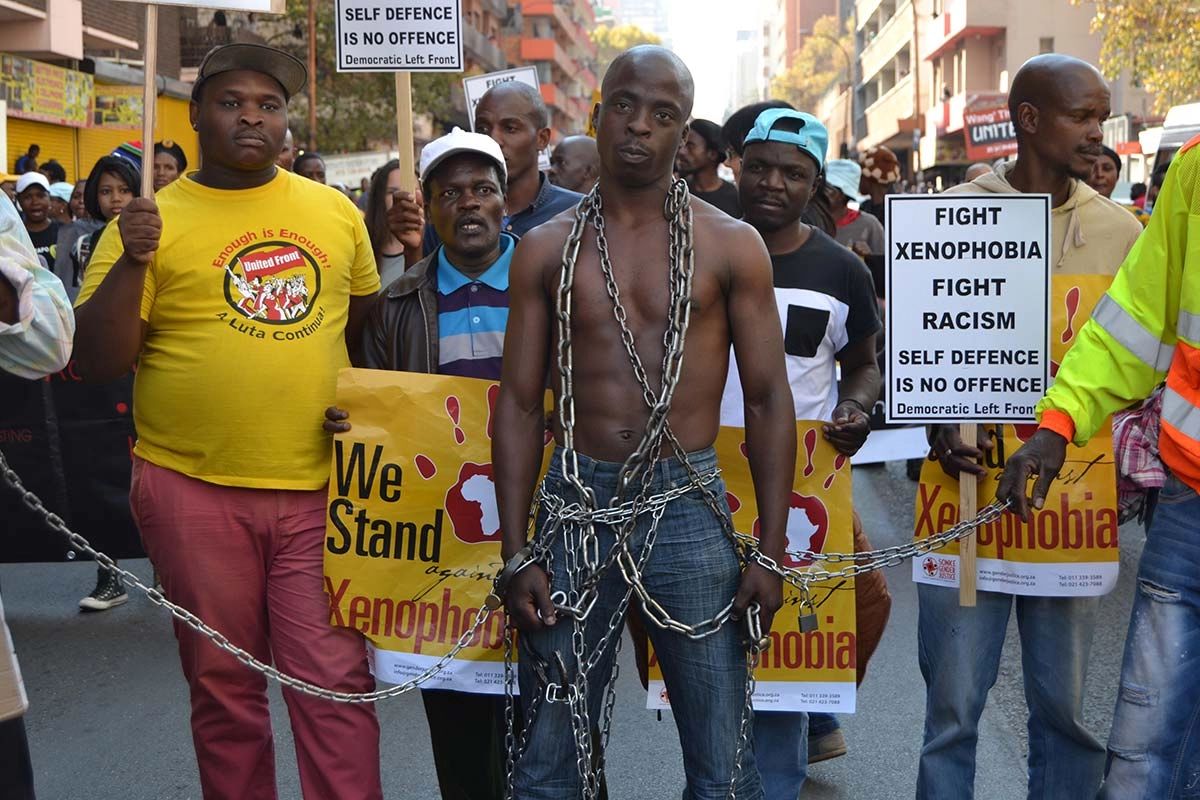
The planned shutdown lands at a politically sensitive moment. Anti-foreigner marches have spread from Durban to Pretoria, Johannesburg, Bellville and the East Rand in recent months, with several events drawing police intervention after protesters confronted foreign-owned businesses and traders.
The United Nations has issued a public warning to South Africa over the xenophobic character of some of the protests, calling on authorities to protect all people within South African borders regardless of nationality. Security analysts have drawn comparisons with the July 2021 unrest, which left more than 350 people dead and caused widespread economic damage.
For ordinary South Africans, the immediate stakes are practical. A shutdown call on a Tuesday at month-end risks disrupting public transport, supply chains, schools and small businesses, particularly in informal trading hubs where the protests have most often unfolded.
The broader diplomatic stakes are also rising. Several African governments have raised concerns about the safety of their nationals in South Africa, and continued violence at marches could deepen tensions with key trading and migration partners on the continent.
Key details and figures
The JCPS cluster, chaired by Justice and Constitutional Development Minister Mmamoloko Kubayi, used Monday’s meeting to announce a new structure aimed at responding to the protests on the ground.
Deputy Home Affairs Minister Njabulo Nzuza and Deputy Police Minister Polly Boshielo will lead a team of deputy ministers tasked with ensuring visibility in affected communities and enforcing compliance with the law during marches, according to SABC News reporting from the briefing.
Kubayi told reporters the cluster had “taken a decision” to deploy the team to monitor protests and to protect both citizens and foreign nationals from unlawful conduct, with periodic progress reports to follow.
Defence Minister Angie Motshekga, addressing the planned shutdown, said the right to protest is constitutionally protected but comes with responsibilities. She urged protesters to treat people with respect regardless of the date on which any action takes place, BusinessTech reported.
Nzuza told reporters that the tightening of border controls and inspections, alongside the deportation of people in the country unlawfully, formed part of the government’s longer-term response, according to TimesLIVE.
March and March was founded in March 2025 in Durban by former Vuma FM radio presenter Jacinta Ngobese-Zuma. The movement has registered as a non-profit and has built a national footprint in just over a year, with marches recorded across at least four provinces.
Its public demands include the mass deportation of undocumented foreign nationals, stricter visa and asylum regulations, the deployment of the South African National Defence Force in high-density areas such as Hillbrow and Sunnyside, and an audit of foreign-owned spaza shops.
Speaking after the Monday engagement, Dube said the government’s approach was being read by citizens as dismissive, and that South Africans wanted illegal foreign nationals removed from the country, according to SABC News.
What happens next
The JCPS cluster is set to reconvene on 11 June 2026, when the new deputy ministers’ team is expected to present its first report on areas visited, problems identified and proposed interventions, according to TimesLIVE. That meeting falls 19 days before the planned shutdown.
The South African Police Service has not publicly outlined its operational plan for 30 June. Past national shutdowns, including the Economic Freedom Fighters protest of 20 March 2023, saw heavy police deployment around the Union Buildings, major economic nodes and transport routes, with hundreds of arrests recorded on the day.
Several questions remain unresolved. It is not yet clear whether opposition parties, business chambers or trade unions will support, oppose or seek to interdict the action.
It is also not clear whether March and March intends to coordinate with other anti-foreigner formations such as Operation Dudula, which has staged parallel campaigns in Gauteng and KwaZulu-Natal.
What is confirmed is that the government has not banned the action, the movement has not withdrawn it, and the 30 June date now sits in the diaries of both the security cluster and South Africa’s biggest metros as a planned day of mass disruption.