



What the Reserve Bank wants to change about ATM fees
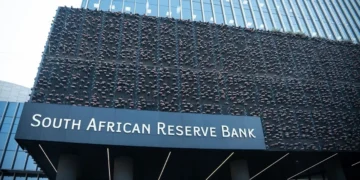
The Reserve Bank wants ATM fees scrapped for transactions below a set amount at every machine in the country, as part of a plan to turn South Africa’s roughly 30 600 ATMs into a shared, unbranded network. The cost it is targeting is large: consumers paid an estimated R17.7 billion in cash withdrawal charges and R13.3 billion in deposit charges in 2024, according to the Reserve Bank’s own cost of cash study.
That is about R31 billion a year in charges for using cash, by Southafriworld’s addition of the two figures. It is just over a third of the R88.5 billion the study estimates consumers spend in total on cash.
“We are asking banks to white-label all ATMs,” Pradeep Maharaj, executive director of the Reserve Bank’s Payments Ecosystem Modernisation programme, told a media briefing on 16 October, TechCentral reported. He said every ATM should allow deposits, withdrawals and balance enquiries, and that transactions below a certain amount must be free.
No threshold has been announced. The banks have responded with alternative models, and the Reserve Bank has said it will reply to them in November.
Who pays the most for using cash
The burden falls hardest on people with the least money. The study found that the share of income spent on cash-related costs falls steadily as income rises.
| Monthly income | Share of income spent on cash-related costs |
|---|---|
| R0 to R1 250 | About 5% |
| R2 501 to R8 000 | About 3% |
| R8 001 to R20 000 | About 2% |
| More than R20 000 | About 1% |
For someone earning R1 250 a month, 5% is about R62.50 a month, by Southafriworld’s calculation. The same group relies most on cash: 55% of people in the lowest band use only cash, against 1% of those earning more than R20 000.
Bank charges are only part of the cost. The study puts time spent queuing at R19.5 billion a year, travel to reach cash at R12.5 billion and cash-related crime and losses at R12 billion.
Reserve Bank governor Lesetja Kganyago said in September that many consumers withdraw their grants in cash because of fees and security worries, TechCentral reported. That makes the plan directly relevant to people who collect grants on SASSA payment dates.
Why some ATMs will not take your deposit
Not every machine offers the same services. In 2024 the country had 30 634 ATMs, of which 21 443 were run by banks and 9 200 by independent ATM deployers, the study found.
The independent machines, about 30% of the total, do not accept cash deposits. A rule that every ATM must take deposits would change that.
Maharaj also criticised what he called the “disloyalty fee”, the extra charge customers pay when their own bank’s ATM is out of order and they use another bank’s machine, according to TechCentral. A shared, unbranded network is designed to remove the distinction between your bank’s machine and someone else’s.
The study’s channel costs show why the Reserve Bank favours ATMs over branches. Handling cash costs about 68c per R100 at an ATM and R1.53 per R100 at a bank branch. Cash-back at a shop till costs 12c, the cheapest channel, and the study recommends expanding it.
How white-label ATMs would work
Under the Reserve Bank’s Cash Smart Strategy, a white-label ATM is installed and owned by a new National Cash Utility rather than by a bank, and customers of any bank can use it. The Reserve Bank says the strategy will be phased in over several years and is not intended to eliminate cash.
Maharaj said a cashless society does not exist and will not exist. He added that the cost of cash would have to fall by at least 30% just for the system to stand still.
The ATM plan sits alongside the payments overhaul that Southafriworld has covered in its explainer on the National Payment System Bill. Southafriworld has also reported on the Reserve Bank’s white-label ATM plans when the strategy was first published.
When ATM fees could change
TechCentral reported this timeline from the briefing:
- November: the Reserve Bank responds to the banks’ alternative models.
- January 2027: the white-label ATM pilot begins.
- March 2027: the National Cash Utility is established.
- Mid-2027: cash centres start moving across.
- End of 2027: the first batch of white-label machines is deployed, in a phased roll-out.
Several points remain open. The threshold for free transactions has not been set, the banks’ counter-proposals have not been published, and it is not yet clear who would carry the cost of fee-free transactions or where the pilot ATMs will be placed.
Until the Reserve Bank and the banks agree a model, existing ATM fees remain in place. The next fixed point is the Reserve Bank’s November response to the banks.
HOW WE REPORTED THIS
- Fee, cost and ATM figures were taken from the Reserve Bank's Cost of Cash Research Report, which uses 2024 as its base year, read in full.
- The plan for free transactions below a threshold and the timeline were taken from published reports of the Reserve Bank's media briefing of 16 October 2026, and the white-label ATM model from the Reserve Bank's Cash Smart Strategy questions and answers.
- Southafriworld added the study's withdrawal and deposit charges and calculated the monthly cash cost for the lowest income band from the study's published percentages.
- The banks' alternative proposals have not been published, and no comment was sought from the Banking Association South Africa or individual banks.
- No comment was sought from the Reserve Bank before publication.
- This article was drafted with AI assistance and the facts, figures and quotations were checked against the primary source by the editor before publication.