







What the petrol price October 2026 data shows
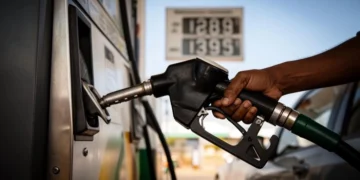
The petrol price October 2026 adjustment is tracking toward a record, with Central Energy Fund data on 25 September putting the under-recovery for 95-octane petrol at R3.01 a litre.
If that holds, the pump price would land near R29.93 a litre, against the current record of R28.06 set in June 2026. That is R1.87 above the highest price South Africa has ever paid.
Diesel is worse in rand terms. The under-recovery for 0.005% sulphur diesel sits at R3.08 a litre, pointing to a wholesale price near R33.13 against the May 2026 record of R31.88.
These are not confirmed prices. One week of the review period remains, and the Department of Mineral and Petroleum Resources announces the final adjustment, with all inclusions and exclusions, only days before it takes effect. The new prices apply from Wednesday, 7 October 2026.
Paraffin, not petrol, takes the biggest hit
Rank the five fuels by under-recovery and the order is not the one being reported.
| Fuel | Under-recovery at 25 September 2026 |
|---|---|
| Illuminating paraffin | R3.27 |
| Diesel 0.005% (wholesale) | R3.08 |
| Petrol 95 | R3.01 |
| Petrol 93 | R2.82 |
| Diesel 0.05% (wholesale) | R2.68 |
Illuminating paraffin carries the largest increase, 26 cents a litre more than 95-octane petrol.
Paraffin is not a motoring fuel. It is used for cooking, heating and lighting in households that are not connected to the grid, or that are connected and cannot afford the electricity. Those households do not own the cars that dominate fuel price coverage, and many of them also absorbed the Eskom tariff increase in April.
Diesel matters for the same reason at one remove. Minibus taxi operators run on it, and diesel is what moves food from farm to shelf, which is how a fuel increase becomes a food price increase six to eight weeks later.
Where the R3 is coming from, and where it is not
This increase is not a tax increase, and that is worth stating plainly.
Two things are driving it. Oil has sat above 100 dollars a barrel for most of September, and is more than 70% higher across 2026, with the war in the Middle East now in its seventh month. Analysts expect 100 to 110 dollars until the outlook changes materially, with a credible deal pushing prices below 100 and an escalation putting 120 back in play.
The rand is the second factor, and its role has flipped from helper to bystander. At R16.30 to the dollar it is still contributing positively to recoveries, but where it was offsetting under-recoveries by about 15 cents a litre a few weeks ago, it now offsets only about 6 cents. That is a 60% reduction in the cushion, by Southafriworld’s arithmetic.
The state’s share has not grown. In June 2026, when 95-octane cost R28.06, R6.66 a litre consisted of the General Fuel Levy, Customs and Excise duty, the Road Accident Fund levy and the slate levy, or 23.7% of the pump price. Because those levies are fixed per litre rather than set as a percentage, the same R6.66 against a projected R29.93 works out at about 22.3%.
In other words, the tax share falls slightly as the base price climbs. The R3 is the basic fuel price and the exchange rate, not Pretoria.
There is one caveat. The slate levy can be adjusted upward to recover an accumulated deficit, and if that happens for October it would add to the final figure. Nothing has been announced.
What a tank will cost, and what has changed since March
| Month | Petrol 95 | Diesel 0.005% (wholesale) |
|---|---|---|
| March 2026 | R20.30 | R18.60 |
| April 2026 | R23.36 | R26.11 |
| May 2026 | R26.63 | R31.88 |
| June 2026 | R28.06 | R29.26 |
| July 2026 | R26.10 | R25.67 |
| August 2026 | R25.58 | R26.90 |
| September 2026 | R26.92 | R30.05 |
| October 2026 (projected) | R29.93 | R33.13 |
A 50-litre tank costs R1 346.00 at September’s R26.92. At R29.93 it costs R1 496.50, which is R150.50 more per fill.
Across seven months, 95-octane moves from R20.30 in March to a projected R29.93, an increase of R9.63 a litre or roughly 47%. Diesel 0.005% moves from R18.60 to a projected R33.13, an increase of R14.53 or roughly 78%. Both calculations are Southafriworld’s from the published series.
That is landing on incomes that have not moved with it, with average salaries at a two-year low earlier this year.
It also lands in the same fortnight as a higher bond repayment, after the Reserve Bank raised the repo rate on 23 September, continuing the higher-for-longer path flagged earlier in the year.
What could still change before 7 October
Three things are unresolved.
A week of data remains, and the average across the full review period is what counts, not Friday’s figure. A sharp oil move in either direction still shifts the final number.
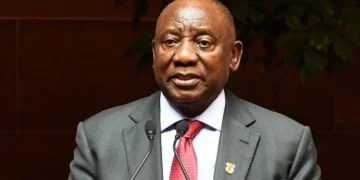
The government could step in with tax relief, which would blunt the increase. Minister of Finance Enoch Godongwana has framed the position as a choice between record pump prices and higher taxes, and no relief has been signalled for October.
The slate levy could go the other way and add to the total.
What is fixed is the date. The adjustment takes effect on Wednesday, 7 October 2026, and the department will publish the confirmed figures a few days beforehand.
HOW WE REPORTED THIS CROSS-CHECKED
- This article was built from Central Energy Fund daily under-recovery data as at 25 September 2026, with one week of the review period still to run, and the article states at the outset that these are indicators rather than confirmed prices because the department announces the final adjustment only days before it takes effect.
- The five fuels were ranked by under-recovery rather than reported petrol first, which is how the finding that illuminating paraffin carries the largest per-litre increase emerged, and paraffin is the fuel used for cooking, heating and lighting in households without electricity or unable to afford it.
- The seven-month comparisons, the margins above the existing records, the 50-litre tank illustration and the tax share of the projected pump price are Southafriworld calculations from the published monthly price series and are labelled as arithmetic in the article.
- The tax and levy component was included specifically to establish that this increase is driven by the basic fuel price and the exchange rate rather than by any new tax, which is a distinction that is frequently lost in coverage of fuel price adjustments.
- Only one named individual could be located in current material on this adjustment, which is below the usual standard for a Southafriworld article, and no second name was invented or padded in to meet it.
- This article was drafted with AI assistance and the facts, figures and quotations were checked against the primary source by the editor before publication.