








What the mpox South Africa numbers now show
Confirmed mpox South Africa cases rose from 18 to 22 as at 22 September 2026, according to the national Department of Health.
Eighteen are in the Western Cape, concentrated in the City of Cape Town, three are in Gauteng and one is in KwaZulu-Natal. All but one of the patients are male, and reported ages run from 23 to 50, with a median of 36.5 years.
The most recent confirmation involves a 47-year-old Cape Town man who travelled to Spain in September and returned on 14 September. He had been classified as a probable case pending results from Spanish laboratories, and has now been reclassified as laboratory confirmed. Two of the other recent cases are imported infections involving German and Norwegian citizens.
Twenty-two is a small number. What sits underneath it is the part worth reading.
The clade nobody is reporting
The National Institute for Communicable Diseases has grouped the cases into two clusters of close contacts, and says preliminary analyses indicate Clade Ib is involved in both. Complete final analysis is still pending.
That has not appeared in most coverage of the rising case count, and it is the material change.
| Year | Confirmed cases | Provinces | Clade | Deaths |
|---|---|---|---|---|
| 2022 | 5 | Not specified | Clade IIb, lineage B.1.7 | None reported |
| 2023 | 0 | None | Not applicable | None |
| 2024 | 25 | Gauteng, KwaZulu-Natal, Western Cape | Clade IIb B1.20 in local cases, Clade IIb B1.6 in one travel case | 3 |
| 2025 | 15 | Gauteng 8, KwaZulu-Natal 5, Western Cape 1, North West 1 | 12 Clade Ib, 2 Clade IIb, 1 unresolved | Not stated |
| 2026 to date | 22 | Western Cape 18, Gauteng 3, KwaZulu-Natal 1 | Clade Ib indicated in both clusters, final analysis pending | Not stated |
The NICD records no Clade Ib cases in South Africa in 2022 or 2024. Clade Ib appears in the national record from 2025, when 12 of that year’s 15 cases carried it, spread thinly across four provinces.
What is different in 2026 is the clustering. Thirteen of the 17 Western Cape cases the NICD had on record by 18 September were confirmed after mid-August, and the department has described the pattern as rapid local transmission.
Whether any of the 2025 Clade Ib cases involved local transmission is not stated in the published record, and Southafriworld could not establish it.
What happened the last time, and what was different
South Africa’s most serious recent mpox episode ran from May to October 2024. It produced 25 laboratory-confirmed cases and three deaths.
All but one of those cases reported no travel history outside South Africa, which the NICD treated as evidence of local transmission. Genomic work identified Clade IIb B1.20 in every non-travel case, and Clade IIb B1.6 in the single case that had returned from Peru.
So the 2024 outbreak was local transmission of a different clade, and it was lethal in three instances out of 25.
The 2026 clusters are, on preliminary analysis, local transmission of Clade Ib. No deaths have been reported in the current cases in the material available.
For continental context, the NICD cites figures showing 35 African countries reported 52 424 laboratory-confirmed mpox cases and 238 deaths between 1 January 2025 and 16 August 2026, a case-fatality ratio of 0.5%.
Vaccines, treatment, and a correction worth making
Several published accounts have described Tecovirimat as an mpox vaccine. It is not.
The NICD wording distinguishes two things the government has secured with World Health Organization support: limited doses of the mpox vaccine MVA-BN, and the antiviral treatment Tecovirimat. One prevents infection, the other treats it. The distinction matters to anyone trying to work out what is available to them.
Supply is limited and no national stock figure has been published. The only provincial number on the record is Gauteng’s, at 586 doses against that province’s three confirmed cases. No Western Cape figure has been released, and that is where 18 of the 22 cases are.
The doses are not held at clinics. They need cold-chain storage at roughly minus 40 degrees Celsius, so they sit in dedicated freezers at regional pharmacies and clinics request them against identified need. Gauteng has said it is engaging the national department about accessing more.
Health authorities will decide where doses are deployed. There is no general public vaccination programme.
What health authorities are asking people to do
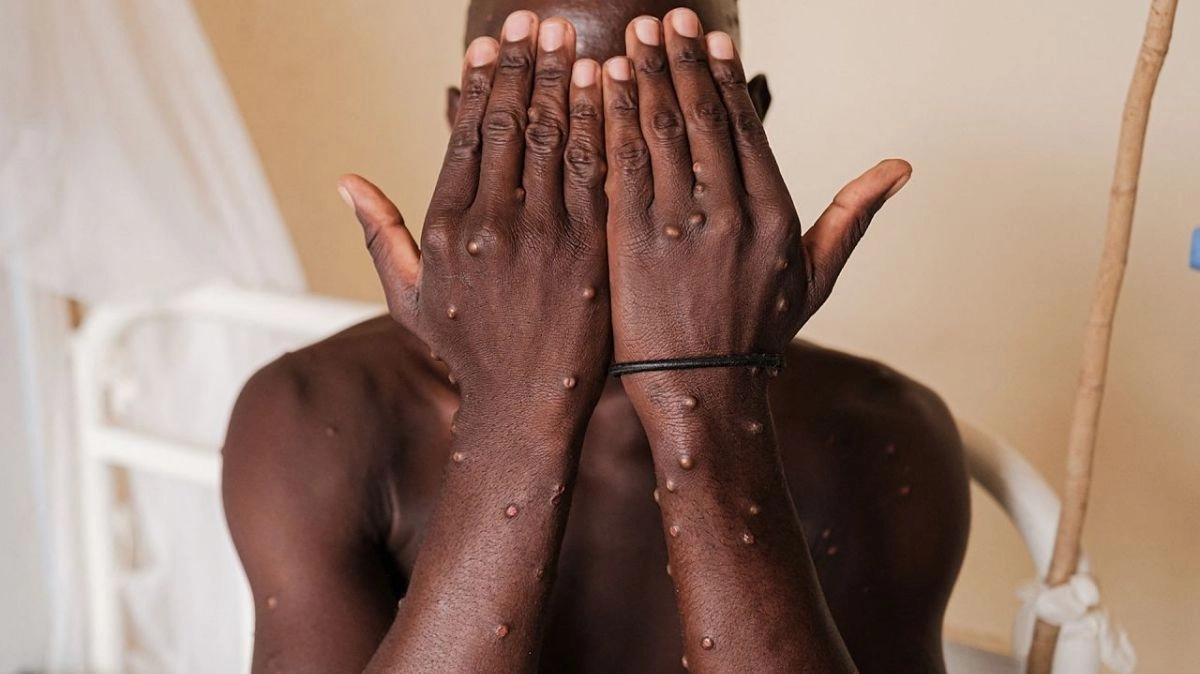
Symptoms include fever, headache, muscle aches, back pain, fatigue, and a rash or skin lesions that may appear on the face, hands, feet, genitals or elsewhere on the body.
Dr Saadiq Kariem, chief of operations at the Western Cape Department of Health, has asked anyone developing symptoms, “particularly a new or unexplained rash, sores or lesions”, to avoid close contact and seek healthcare advice as soon as possible.
Department of Health spokesperson Foster Mohale said anyone who has been in close contact with a confirmed case in the past 21 days and develops symptoms “should seek medical attention promptly and inform healthcare providers of their exposure history”.
The authorities have been explicit on one further point. The NICD has warned that “stigma and discrimination have the potential to undermine an outbreak response” by deterring people from seeking care. Mpox can affect anyone who has close contact with an infected person, and the department has asked that people diagnosed or suspected of infection be treated with dignity.
Outbreak response teams are active across all five Gauteng districts, and the national department is supporting the Western Cape with contact tracing and enhanced surveillance, working with the NICD and the WHO.
This article reports official guidance and is not medical advice. Anyone concerned about symptoms or exposure should contact a healthcare provider.
Two things are still outstanding. The final genomic sequencing that would confirm the clade in both clusters has not been published. Neither has a national vaccine stock figure. Both would change how much weight the number 22 should carry, and it is worth noting that South Africa has handled a national disease emergency recently, in the foot and mouth disease response, and that three of the four newest cases arrived with international travellers at a time when inbound travel volumes have been rising.
HOW WE REPORTED THIS CROSS-CHECKED
- This article was built from the National Institute for Communicable Diseases mpox updates page and from the joint NICD and Department of Health statement calling for public vigilance, both read in full, and from the department's case update of 22 September 2026.
- The multi-year comparison was assembled from the NICD's own published records for 2022, 2024, 2025 and 2026, which is where the clade assignments sit, because the clade is the material change in this outbreak and it is absent from most coverage of the case count.
- Several published accounts describe Tecovirimat as an mpox vaccine, and this was checked against the NICD wording, which distinguishes the vaccine MVA-BN from the treatment Tecovirimat, and the article states the correct position.
- A three-case discrepancy between the Department of Health count as at 17 September and the NICD count as at 18 September was identified and is flagged in the article rather than resolved silently.
- The anti-stigma guidance issued by the health authorities was carried in full, and demographic details of the cases are reported only as the authorities published them, without inference about how transmission occurred. No comment was sought from any party and this article reports official guidance rather than offering medical advice.
- This article was drafted with AI assistance and the facts, figures and quotations were checked against the primary source by the editor before publication.