







South Africa has classified the ongoing foot-and-mouth disease (FMD) outbreak as a national disaster, a step that formally escalates coordination across government as the livestock sector faces mounting containment costs and disrupted export markets.
The classification was published under the Disaster Management Act by the Head of the National Disaster Management Centre, Dr Elias Sithole, after considering reports on the outbreak’s spread and potential impact across multiple provinces. The notice lists affected provinces as the Eastern Cape, Free State, Gauteng, KwaZulu-Natal, Limpopo, Mpumalanga, North West and the Western Cape.
The announcement follows growing concern in the red meat and dairy value chain, where producers have warned that movement restrictions, vaccine shortages and trade interruptions are placing pressure on farm operations and the broader food supply system.
What “national disaster classification” means
A classification of a national disaster is not the same as a declared “national state of disaster” with extraordinary emergency powers. Instead, it is a legal mechanism designed to strengthen and coordinate the existing response under the Disaster Management Act.
In practical terms, the national disaster classification:
- Designates the national executive as the primary coordinator of the disaster response under existing legislation and contingency arrangements.
- Calls on organs of state across all spheres to strengthen contingency measures and support existing structures dealing with the outbreak.
- Encourages a multisector approach to prevention, mitigation, relief and rehabilitation actions linked to the disaster’s effects.
For businesses and consumers, the classification is a signal that government expects the outbreak’s economic and operational disruption to continue, and that the response will require coordination beyond routine provincial containment actions.
Why government escalated the response
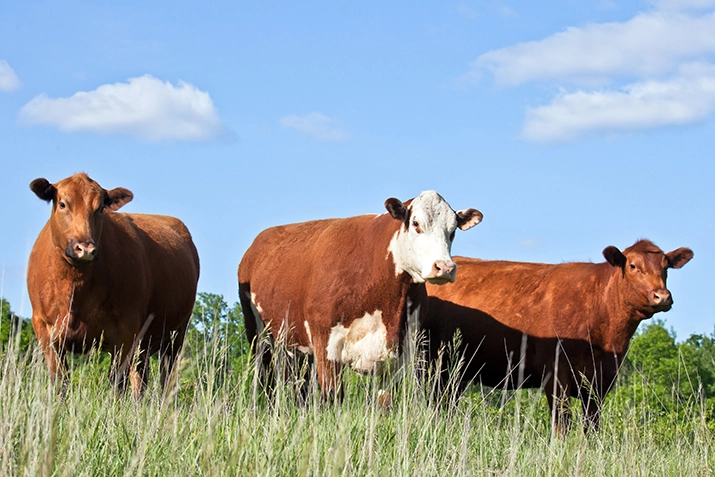
FMD is a highly contagious viral disease affecting cloven-hoofed animals and is primarily an animal health and trade risk rather than a direct public health emergency. Its economic impact is driven by reduced productivity on farms, restrictions on animal movement, and export market reactions to outbreaks.
Industry reporting has indicated that South Africa has faced resurgent infections since early 2025, with cases spreading widely enough to trigger heightened trade sensitivity and biosecurity controls. While outbreaks can be managed through vaccination and strict movement controls, the scale and geographic spread cited in recent official and industry statements have increased the need for coordinated action.
President Cyril Ramaphosa also referenced government’s intention to intensify interventions against FMD in national address coverage, with farming and animal health stakeholders urging faster implementation and clearer national coordination.
Trade and economic impact: exports, bans and farm-level costs
The strongest immediate economic effects have been felt through export disruption and rising farm-level costs linked to containment.
Recent reporting on the outbreak’s trade fallout has highlighted:
- A decline in beef export performance during 2025, despite strong global demand conditions.
- Major export disruption following China’s ban on South African red meat products during 2025, with a sharp drop in shipments to that market.
- Increased operating costs on farms hit by outbreaks, including sharp rises in veterinary product spending and productivity losses in affected herds.
These effects matter beyond the farm gate. South Africa’s red meat and dairy supply chains feed into abattoirs, cold-chain logistics, retailers and food service. Prolonged movement controls and production disruption can tighten supply in certain categories and contribute to price pressure, particularly where substitute imports are limited or consumer demand is inelastic.
Vaccination and containment: what is being rolled out
Government’s containment strategy has centred on vaccination scale-up, improved surveillance and stricter movement control enforcement.
A major development in February 2026 was the release of locally produced FMD vaccine doses for the first time in over 20 years, following a visit by Agriculture Minister John Steenhuisen to the Agricultural Research Council’s Onderstepoort Veterinary Research facility. The Department of Agriculture described the handover of the first batch as a significant milestone and linked the longer-term objective to regaining internationally recognised FMD-free status.
Key points from official and scientific statements released around the vaccine programme include:
- The first locally produced batch delivered in early February was reported as 12,900 doses produced using modern bioreactor technology.
- South Africa previously ceased local production in 2005, with later reliance on imported supply as domestic production capability declined.
- The Agricultural Research Council stated that vaccine development and scale-up is a multi-year process, and clarified that registration milestones do not automatically translate into large-scale manufacturing readiness.
- The ARC also stated that its vaccine was registered in South Africa in May 2022 as a stock remedy, but that this did not mean a mass roll-out-ready supply existed at that time.
The Agriculture Minister’s statement also outlined an import-and-local-production mix to support the rollout while local manufacturing capacity increases. It referenced vaccine supply channels and delivery timelines, alongside the need for centralised monitoring, surveillance and documented coverage to support a pathway back to recognised FMD-free status.
What industry bodies are saying
Agricultural organisations have welcomed the disaster classification while urging faster and more coordinated execution, particularly on the practical bottlenecks farmers face: access to vaccines, predictable vaccination schedules, veterinary capacity, and consistent enforcement of movement controls.
AgriSA, for example, publicly welcomed the national disaster declaration communicated around the State of the Nation Address period and called for urgent, coordinated implementation that translates policy into on-the-ground containment outcomes.
The ARC, in its technical statement, also emphasised that vaccine distribution, allocation and rollout form part of the national disease control programme and fall under the Department of Agriculture’s responsibility, underscoring the importance of state-led coordination rather than fragmented procurement or ad hoc deployment.
What happens next
The national disaster classification is likely to keep FMD response on the front burner for 2026, particularly as government and industry work to:
- Expand vaccination throughput and ensure consistent supply in high-risk areas.
- Tighten movement controls to limit further geographic spread.
- Strengthen surveillance and diagnostic capacity to track circulating strains and confirm containment.
- Stabilise export market confidence, which is closely linked to the credibility of national controls and documentation.
For consumers, the immediate issue to watch is whether containment measures reduce new outbreaks quickly enough to prevent extended supply disruption and secondary price pressure. For farmers and agribusiness, the key question will be whether the national disaster framework accelerates execution in the field—where the economic damage is being felt most sharply.