






What the NTA has actually threatened
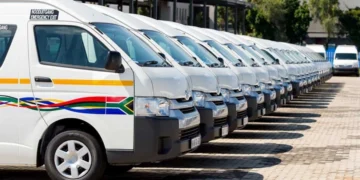
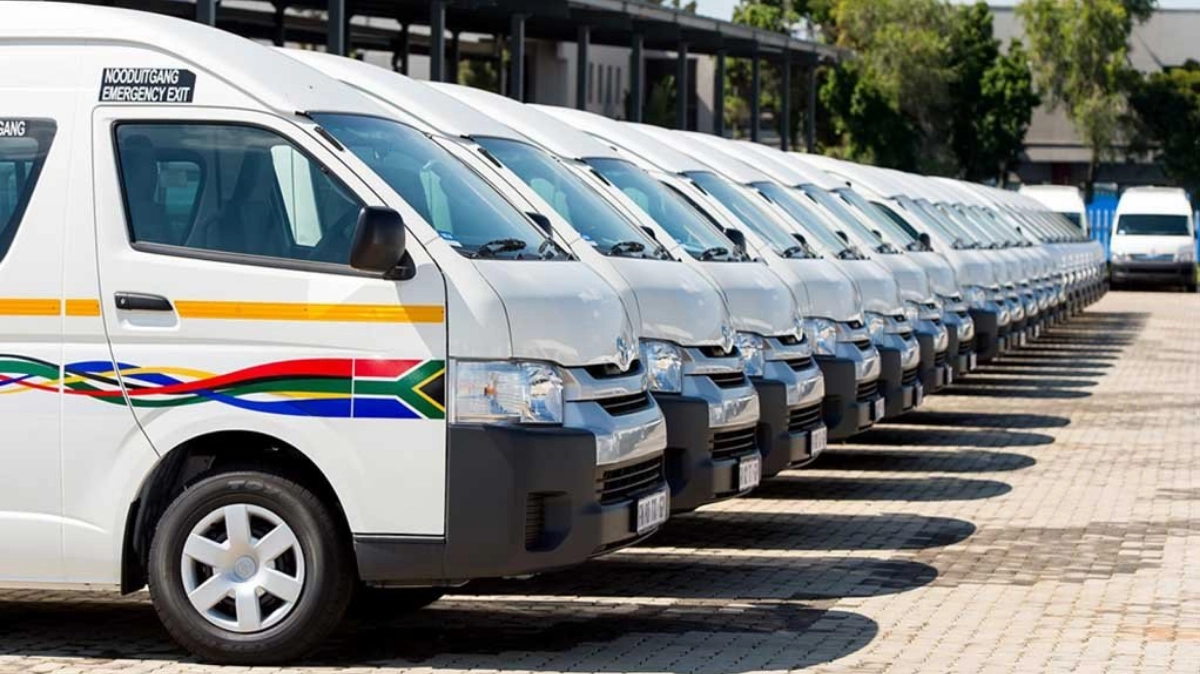
The National Taxi Alliance has given Transport Minister Barbara Creecy 14 calendar days from Monday, 14 September 2026 to deliver a written response and a concrete implementation plan on the cost pressures facing minibus taxi operators.
For commuters, the first thing to establish is what has been threatened and what has not. Across every published account of this ultimatum, the NTA has warned of a national protest march. It has not called a shutdown, and no date has been set for any action.
That distinction matters. A protest march does not stop taxis running. A shutdown strands passengers. The NTA has threatened shutdowns in the past, and a separate dispute in Gauteng in July this year involving SANTACO and the Gauteng National Taxi Alliance raised the possibility of a provincial transport shutdown over operating licences. Neither is what was announced this week.
NTA spokesperson Theo Malele framed the dispute in terms of costs the industry says it cannot pass on. “This is not merely a taxi-industry crisis,” he said, describing it instead as a national mobility and household affordability crisis.
The alliance’s statement on Monday was blunt about its patience. “Promises without delivery are no longer acceptable,” it said, adding that another workshop or an announcement without funding and deadlines attached would not be accepted.
The finance arithmetic behind the dispute
| Figure | Amount |
|---|---|
| Retail price, diesel Toyota Quantum | R606,000 |
| Monthly repayment cited by the NTA | R18,000 |
| Interest rates cited | About 12% to 15.5% |
| Loan terms reported in use | 74 to 80 months |
| Total repaid at R18,000 over 80 months | R1,440,000 |
| Total repaid at R18,000 over 60 months | R1,080,000 |
The last two rows are Southafriworld calculations from the alliance’s own two figures. Malele did not specify which term the R18,000 instalment applies to, so both are shown as illustrations of the range he described rather than as a quoted finance agreement.
On the longer of those terms, an operator would repay roughly 2.4 times the vehicle’s retail price. On the shorter, about 1.8 times.
“A diesel Quantum retails for R606,000. And the repayment is R18,000 for a taxi operator,” Malele said. “That is not affordable, because we’ve actually been classified as a risk market.”
The alliance argues that the high-risk classification, not the vehicle price, is what pushes the cost up, and that operators should be priced on the same terms as other borrowers.
The longer terms are the second problem. “You can imagine if you are paying for a vehicle for 80 months, what it looks like by the 80th month. It’s almost a wreck,” Malele said. The NTA’s written position is that stretched terms reduce the monthly instalment on paper while prolonging indebtedness and leaving operators paying for vehicles that have become expensive, unsafe and uneconomical to run.
What the National Taxi Alliance is actually asking for
| Demand | Detail |
|---|---|
| Targeted fuel rebate | For qualifying licensed public passenger operators, for a minimum of 12 months |
| Subsidy reform | Support to follow the commuter rather than the operator, through an electronic fare-collection system usable on taxi, bus and train |
| Cheaper vehicle finance | Removal of the high-risk classification, genuine de-risking mechanisms and fair loan structures |
| Shorter repayment terms | A return to 60 months |
| Regulatory review | Review of the National Credit Act to protect operators financing vehicles as productive assets |
| Who must be involved | Transport, National Treasury, the Department of Trade, Industry and Competition, the National Credit Regulator, banks and vehicle manufacturers |
| The deadline | 14 calendar days from 14 September 2026 |
The subsidy demand is the structural one. Government currently subsidises bus and rail operators. The NTA wants the support attached to the passenger instead, with the same fare-collection technology working across all three modes.
“The same gadget that’s used for buses and trains should be interoperable for the taxis to utilise,” Malele said, adding that such a system would also give government better data on passenger numbers and routes. The alliance says it has already tested electronic fare collection and needed only support to finish the work.
The fuel rebate demand lands against a record. Central Energy Fund data points to inland 95 octane petrol reaching about R29 a litre in October, and Southafriworld reported earlier this year on the temporary fuel levy relief that ran from April to June and has not been repeated.
Malele also pointed to competition and road conditions. Private vehicles carrying passengers from shopping centres have cut into demand, he said, and taxi ranks in most CBDs have potholes at their entrances and exits. Southafriworld has covered the regulatory changes proposed for e-hailing operators that sit alongside that competitive pressure.
One alliance, not the whole industry
The NTA is one taxi body. The South African National Taxi Council, the larger organisation, is not part of this ultimatum and has taken a different tack, saying a sustainable long-term approach requires broader policy intervention and that it continues to engage government on support mechanisms.
That split is the reason a national protest march by the NTA would not automatically become a national taxi shutdown. Any wider action would require a separate decision by other bodies.
Creecy has not responded publicly to the ultimatum. She has previously stated that government is committed to working with the industry to reduce the cost of repaying new vehicles, and the NTA’s case is that this commitment has not produced anything. Malele said the Minister entered office amid expectation that she would address the industry’s exclusion and financial distress, and that “she has failed to match her words with action”.
What commuters stand to lose
The cost of getting to work is already forcing people to stay home. IOL reported this week on survey findings that 6.9 million people in South Africa miss work or studies because of transport costs.
Taxi fares have risen this year by roughly R3 to R6 on some city routes and R10 to R30 on some long-distance journeys, and further increases are possible once the October fuel adjustment lands.
Several things remain unresolved. No protest date has been set. The Department of Transport has not confirmed whether a written response will be provided within the deadline. No costing has been published for the 12-month fuel rebate the NTA is asking for, and no timeline exists for the interoperable fare-collection system.
The deadline falls at the end of September, in the same week the official October fuel price is announced.
HOW WE REPORTED THIS CROSS-CHECKED
- The brief and one supplied headline describe this as a national shutdown. Every published account of the current ultimatum records the threatened action as a national protest march. Southafriworld found no statement by the National Taxi Alliance this week calling or threatening a shutdown, and the article reports what was said rather than that framing.
- The totals of R1,440,000 and R1,080,000 are Southafriworld calculations, multiplying the R18,000 monthly instalment cited by the NTA by the 80-month and 60-month terms it referred to. The article states that the alliance did not specify which term the instalment applies to and that the figures are illustrative rather than a quoted finance agreement.
- The distinction between the National Taxi Alliance and the South African National Taxi Council is set out, because the two bodies have taken different positions and any national action would require decisions beyond the NTA.
- Barbara Creecy has not responded publicly to the ultimatum. Her position is reported from her earlier public statement, and the article says she has not responded.
- The figure of 6.9 million people missing work or studies over transport costs was reported by IOL this week. The survey's author is not identified in the material Southafriworld reviewed, and the figure is attributed to that reporting rather than to a named research body.
- No comment was sought from the National Taxi Alliance, the Department of Transport, SANTACO or any financial institution for this article. Every quotation used was already on the public record.