






What changed
New fire danger rating guidelines gazetted on 11 September 2026 set out when you may not light a fire in the open air, and how a landowner applies to be exempted from that ban. Forestry, Fisheries and the Environment Minister Willem Aucamp published the notice under the National Veld and Forest Fire Act 101 of 1998, as Government Notice 7909 in Government Gazette 55393. It repeals the 2013 National Fire Danger Rating System notice, and the public has 30 days to comment.
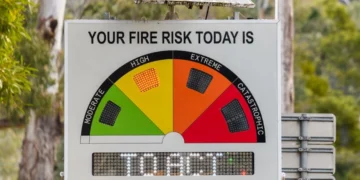
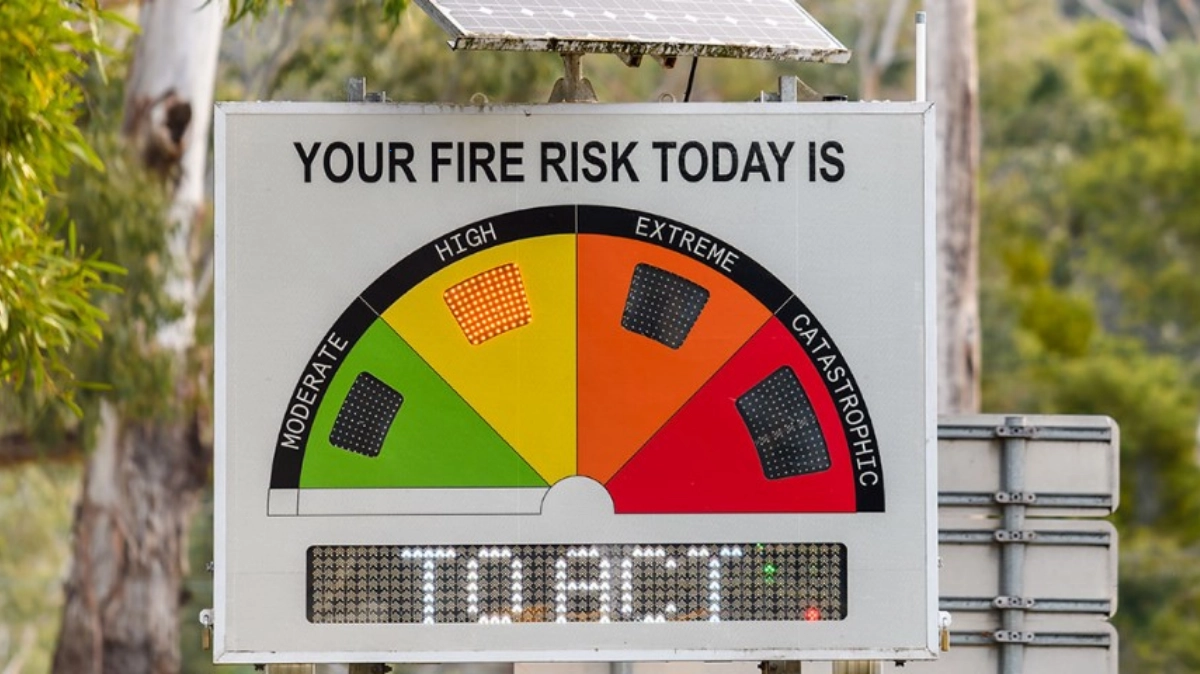
The National Fire Danger Rating System measures how likely a fire is to start and spread, and expresses that as an index and a colour. The colour is not advisory. At two of the five levels an open-air fire is an offence unless it is authorised.
The five colours
| Colour | Index | Rating | What you may do |
|---|---|---|---|
| Blue | 0 to 20 | Insignificant | No precautions needed |
| Green | 21 to 45 | Low | Fires, including prescribed burns, may be lit with reasonable precautions against spreading |
| Yellow | 46 to 60 | Moderate | No open-air fires except those authorised by the Fire Protection Officer, or the Chief Fire Officer where no association exists, or fires in designated fireplaces |
| Orange | 61 to 75 | High | No open-air fires unless the Minister has exempted you in writing |
| Red | 76 to 100 | Extreme | No fires at all, and all operations likely to ignite fires must stop |
At orange, municipal disaster management centres must invoke contingency plans and notify the provincial and national centres. At red the same applies at provincial level, and householders are placed on alert.
At green, flame lengths in grassland and plantation litter stay under one metre and fires spread at less than 0,3 kilometres an hour. At red, head fires can move faster than 4 kilometres an hour with flame lengths of 5 to 15 metres, and the notice says fire control is likely to be impossible until the weather changes.
What the law actually prohibits
Section 10(1)(b) requires the Minister to publish a warning, at the earliest opportunity and in all the main languages used in that region, when the fire danger is rated high. Once that warning is published, section 10(2)(a) makes it unlawful for anyone to light, use or maintain a fire in the open air in that region. The only way around it is a written exemption from the Minister, on good cause shown, subject to conditions.
Before granting any exemption, the Minister must consult the Fire Protection Association for the area, if one exists, and the Fire Protection Officer.
How to apply for an exemption
Any landowner, or a group acting together, may apply in writing. The form is Annexure A to the notice, on the departmental website and at regional offices. It must include the reasons and supporting documents, and goes to the relevant regional office, not head office.
The Minister may ask for more information, and where other people’s rights could be affected may require the applicant to run a public participation process first.
A successful exemption notice must state the holder’s name, address and telephone number, the location, the conditions and the period. It can later be suspended, withdrawn or amended, but only after the holder has had a chance to comment in writing.
What you must have in place before you burn
The notice lists the minimum conditions the Minister will consider.
| Requirement | Detail |
|---|---|
| Firebreaks | All firebreaks prepared and clear of flammable material, including the strip between outer and inner breaks where double breaks exist |
| Equipment | Firefighting equipment, vehicles and radio communication serviceable, firefighters in good protective equipment |
| Water and people | Sufficient water and trained personnel present on the day of the burn |
| Named supervisor | Name and contact numbers of a qualified person to oversee the fire |
| Neighbour notice | All neighbouring landowners notified at least 24 hours before the burn and again on the morning |
| Postponement | If the burn is called off, everyone already notified must be told |
| Supervision | Maintained until the fire is completely out, and neighbours told once it is |
The person in charge may call the burn off at any point on safety grounds.
An exemption does not move the blame
The application form requires the signatory to acknowledge that an exemption does not remove their responsibility to prevent a fire starting or spreading from their property, and does not transfer that responsibility to a neighbour, the Fire Protection Association, or any authority. The department also disclaims liability for damage or loss caused by the purported exercise of any power under the Act.
One inconsistency is worth noting. The body of the notice cites section 10(2)(a) as the exemption provision, while the Annexure A form is headed as an application under section 10(2)(b). Confirm with the department which reference belongs on your form.
How to comment
Written representations must reach the department within 30 days of publication in the Gazette, or in a national newspaper, whichever comes last. Late comments may not be considered.
| Channel | Detail |
|---|---|
| [email protected] | |
| Post | Director General: Forestry, Fisheries and the Environment, Attention Mr Lwando Paraffin, Private Bag X447, Pretoria, 0001 |
| Hand delivery | Ground Floor Reception, Environment House, 473 Steve Biko Road, Arcadia, 0083 |
| Enquiries | Mr Lwando Paraffin, 067 419 9857 |
Comments and the department’s responses go into a public comments and response report. If you do not want your name or your organisation’s name published, say so in the submission itself.
Our coverage of the super El Niño warning and the cut-off low behind three SAWS warnings tracks the conditions that drive these ratings, and the firefighting helicopter crash over Hout Bay shows what suppression costs.
Where to check
The notice is free to download from gov.za as Government Notice 7909 in Gazette 55393 of 11 September 2026, and from gpwonline.co.za. Exemption forms come from the Department of Forestry, Fisheries and the Environment website or its regional offices. For the current rating in your area, and for authorisation to burn at moderate danger, contact your local Fire Protection Association or the Chief Fire Officer of your municipal fire service.