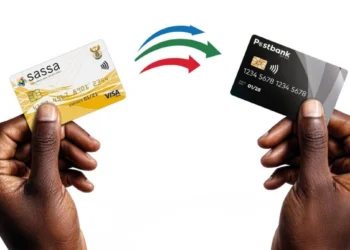




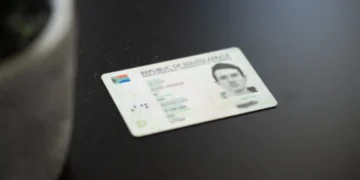



The SRD means test turns on one number: R624. If more than R624 is paid into your bank account in a month, SASSA treats you as having income and declines your R370 SRD grant for that month. The check runs again every month, it looks at money coming in rather than what is left in the account, and if you have more than one account the regulations test each one separately.
A January 2025 High Court ruling said once-off and ad hoc payments should not count as income, and declared the R624 threshold unconstitutional. The government appealed. The Supreme Court of Appeal heard the case on 25 August 2026 and reserved judgment, and no judgment had been reported when this page was checked on 18 October 2026. Until there is a ruling and it is applied, the R624 test stands.
What the SRD regulations actually say
The rules sit in the Regulations Relating to COVID-19 Social Relief of Distress, made under the Social Assistance Act. You qualify only if you have “insufficient means”, which the regulations define as not receiving income or financial support. The threshold has been R624 per person per month since August 2022, when it was raised from R350.
SASSA may test your means in three ways: your own declaration, checks against government databases that may show income or other financial help, and verification with banks. Two further rules decide many applications:
- If you have more than one bank account, the means test is met when every account, assessed individually, stays below the threshold.
- You cannot receive the SRD grant and a social grant paid for yourself at the same time.
The regulations never define “income” or “financial support”. That gap is the heart of the court case.
How the bank check works in practice
When the Department of Social Development proposed the R624 level in 2022, it said SASSA would decline anyone who receives more than R624 into their bank account in the month being assessed, and that an applicant whose deposits fall below R624 in a later month would qualify again. The High Court’s 2025 description of the system matches: the automated bank check looks only at money deposited, treats all of it as income whatever it was for, and excludes you once that month’s deposits pass R624.
That has three consequences. A low balance does not protect you if more than R624 came in during the month. A single deposit, such as a relative sending money for rent or transport, can cost you that month’s grant. And a declined month does not end your SRD, because the next month is assessed on its own.
| Paid into your account in one month (hypothetical) | How the current R624 test treats it |
|---|---|
| R550 from a relative, one account | Below R624, so the bank check alone should not decline you |
| R800 once-off gift, one account | Above R624, so likely declined for that month |
| R400 into account A and R400 into account B | R800 in total, but each account is below R624, which the regulations say meets the test |
| R900 in July, R200 in August | July likely declined, August assessed separately and can be approved |
The table covers the bank check only. SASSA does not publish the detail of how its automated check applies the separate-accounts rule, and a database match can still decline you in a month when your accounts are below R624.
When a database, not your bank, causes the decline
SASSA also checks government records. The High Court judgment names Home Affairs, UIF, NSFAS and SARS records among them. If your name appears on one of those databases as receiving money, you can be declined even when your bank account is nearly empty.
The court found these databases are often out of date. At the Supreme Court of Appeal hearing, counsel for the government accepted, as GroundUp reported, that outdated records can wrongly exclude people, and said applicants can appeal and have their information corrected.
Child support grant money and the R624 limit
The rule against double grants applies only to a grant paid for yourself. A child support grant paid to a caregiver is paid for the child, so that rule does not bar a caregiver from the SRD.
The bank check is less clear. The High Court found that SASSA’s reading of “income” counted all money an applicant receives, including money received on behalf of others. SASSA has not published how its bank check treats child grant deposits. If you were declined in a month when the only money in your account was a grant you collect for a child, you can appeal that month.
What the court case could change
In the case brought by the Institute for Economic Justice and #PayTheGrants, decided on 23 January 2025, Judge Twala held that income means money received regularly from work or investments, and that financial support means regular support a person has a legal right to receive. Neither, he found, includes once-off or ad hoc payments. He declared the R624 threshold and the R370 grant amount unconstitutional, and ordered government to plan increases to both with regard to inflation and the food poverty line.
The state is appealing the whole judgment. At the hearing, National Treasury told the court the relief sought could cost between R93 billion and R139 billion a year, GroundUp reported. The R624 figure was set at the 2021 food poverty line; the Institute for Economic Justice says the food poverty line now stands at R855 a month.
Because the judgment is under appeal, its orders have not become the basis for changes to the SRD system. Separately, the 2026 Budget allocated R36.4 billion to keep paying R370 a month until 31 March 2027. The full list of SASSA grant amounts shows how the SRD compares with the permanent grants.
If the means test declined you
Appeal each declined month separately. The regulations allow up to 90 days from the decision, and our guide explains how to appeal a declined SRD month step by step.
Know one limit before you start. The regulations say an appeal may not include evidence or information you did not give SASSA when you applied. The government conceded in the High Court that the appeal process does not allow new evidence, and said it could be widened, but the rule has not been removed.
Keep your cellphone number and banking details current. The regulations make that your responsibility, and if SASSA approves you but cannot pay you because your details are out of date, it may suspend the application after 90 days and cancel it after a further 90. Check your status only on the official site, srd.sassa.gov.za.
The next decision point is the Supreme Court of Appeal judgment, which has no announced date. Until it is delivered and applied, plan around R624 for each account, each month.
HOW WE REPORTED THIS
- Read consolidated COVID-19 SRD Regulations GN R2042 as amended to 1 April 2025 on Law Library
- Read High Court judgment IEJ v Minister of Social Development of 23 January 2025 on SAFLII
- Checked DSD 2022 statement on the monthly deposit test and 2026 Budget Review extension via SAnews
- Reviewed August 2026 reporting by GroundUp, Business Day and Sowetan on the SCA hearing from published extracts
- SASSA bank-check method and status codes are not published and were not described
- Drafted with AI assistance from these documents