



South Africa’s long-discussed high-speed rail proposal has moved a step closer to formal procurement after President Cyril Ramaphosa told Parliament that government is preparing to issue a request for proposals for new passenger rail corridors.
Speaking during the 2026 State of the Nation Address (SONA), Ramaphosa said government is continuing preparations for high-speed rail, pointing to potential routes “such as Johannesburg to Musina, and eThekwini to Johannesburg,” and signalling that the next stage will be a formal request for proposals following earlier market testing.
The update places high-speed rail alongside other infrastructure priorities government has linked to economic competitiveness, logistics performance, and improved mobility between major economic centres.
What the President announced
In the SONA address, Ramaphosa outlined three key points about the high-speed rail initiative:
- Government is continuing preparations for the introduction of high-speed rail in South Africa.
- Two example corridors were referenced: Johannesburg–Musina and eThekwini–Johannesburg.
- An earlier request for information tested market appetite, and government is now preparing to issue a request for proposals.
The President’s framing positioned high-speed rail as part of a broader effort to modernise economic infrastructure. In the same section of the address, he linked improved rail performance and private-sector participation to moving more volume and activity from road to rail over time.
Which routes are being referenced
Ramaphosa’s mention of Johannesburg–Musina and eThekwini–Johannesburg gives a clearer indication of the corridors government is placing on the public agenda.
The Johannesburg–Musina reference aligns with the economic significance of the Limpopo corridor, including freight and cross-border linkages, while the eThekwini–Johannesburg route highlights the strategic importance of Gauteng–KwaZulu-Natal connectivity.
At this stage, the President’s wording indicates example routes under consideration rather than a final route announcement, and it remains unclear how these corridors would be sequenced, funded, and delivered. Any formal bid documents would be expected to clarify whether government is seeking one corridor first or inviting proposals for multiple corridors in phases.
What “request for proposals” means in practice
A request for proposals (RFP) is a formal procurement step that typically follows early-stage market engagement. Government and state entities often use a request for information (RFI) to gauge investor appetite and technical capacity before moving to an RFP that invites binding proposals under defined conditions.
If the high-speed rail programme proceeds on a public-private partnership or concession basis, an RFP stage would usually set out:
- The scope of the corridor being procured
- Required technical standards and safety compliance
- Expected construction and operating responsibilities
- Revenue model assumptions and risk allocation
- Requirements for local content, skills transfer, and supplier development
- Governance, reporting, and performance penalties
- Timeframes for delivery milestones
The President’s comments indicate that government believes the project has moved beyond pure concept, but the RFP documentation will be the key test of seriousness, feasibility, and bankability.
Defining “high-speed rail” and what it would require
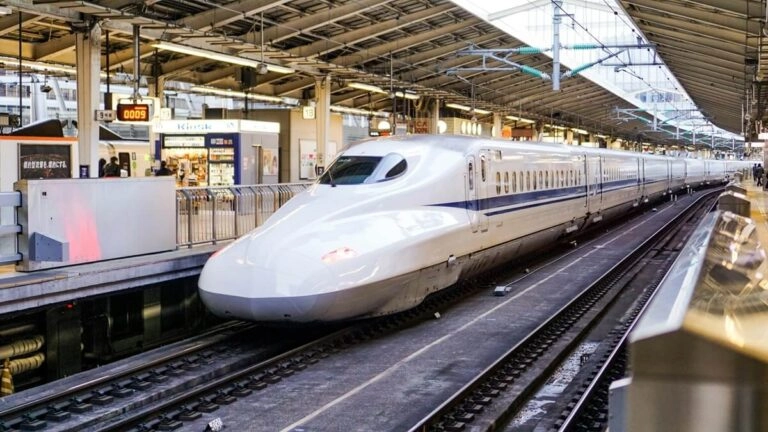
High-speed rail typically refers to passenger rail designed for substantially higher commercial speeds than conventional services. International rail bodies often benchmark high-speed lines at around 250 km/h for purpose-built systems, with lower thresholds applying to upgraded corridors depending on infrastructure and operating conditions.
For South Africa, achieving high-speed service would not simply require faster trains. It would require a full corridor system that can safely sustain higher speeds, including:
- Dedicated track or significantly upgraded alignment
- Modern signalling and train control systems
- Grade separation or robust protection at crossings
- Station design that supports safe high-throughput passenger flows
- A maintenance ecosystem capable of supporting high-speed rolling stock
- Reliable electricity supply and traction infrastructure for electrified services
- Security planning to prevent cable theft, vandalism, and corridor intrusion
These requirements are central to why high-speed rail projects tend to be expensive and complex, and why feasibility studies and environmental approvals typically take time.
How this fits into government’s wider rail and infrastructure agenda
Ramaphosa’s high-speed rail comments came in a broader section focused on rail system and port performance, private-sector participation, and infrastructure investment.
Government has, over the past few years, repeatedly argued that logistics constraints and poor rail performance raise the cost of doing business and weaken growth. In that context, the high-speed rail proposal is being presented not only as a mobility upgrade, but as part of a modernisation narrative aimed at positioning South Africa as globally competitive.
However, South Africa’s rail environment also faces well-documented constraints, including maintenance backlogs, security risks, and capacity limitations that affect both passenger and freight operations. High-speed rail procurement would therefore likely be scrutinised against near-term priorities such as commuter reliability, safety, and restoring existing corridors.
What still needs to be clarified
The SONA update answers the “is it still on the agenda” question, but several fundamentals remain open and would normally need clear public detail before a project of this scale can proceed.
Key unknowns include:
- Funding model
Whether the corridor would rely on state support, private capital, blended finance, or guarantees, and how revenues would be generated. - Procurement structure
Whether government would pursue a concession, a design-build-operate approach, a build-own-operate-transfer model, or another public-private partnership format. - Timeline and phases
Whether government intends a pilot corridor first, or parallel procurement for multiple corridors. - Institutional leadership
Which entity will run the process end-to-end, manage the contract, and enforce performance standards over decades. - Affordability and demand
Whether ticket pricing would target premium business travel, mass intercity mobility, or a mixed model. - Integration with existing networks
How high-speed services would connect with airports, metros, and commuter rail, and where stations would be placed to avoid creating an isolated “elite corridor.”
These details matter because high-speed rail projects can become fiscally risky if demand is overestimated, costs escalate, or governance is weak. Transparent procurement documentation and credible feasibility work are typically what separates an implementable programme from a repeating policy promise.
What to watch next
The next concrete signals expected from government include:
- Publication or announcement of the RFP timetable and procurement authority
- Release of route-specific feasibility and environmental documentation where required
- Clarity on whether the project will be run as a public-private partnership and what risk private bidders are expected to carry
- Confirmation of corridor prioritisation beyond the example routes referenced in SONA
- Public disclosure standards, including how bids will be evaluated and how costs will be controlled
Until these steps are visible, the most verifiable development remains the President’s statement that government is preparing to move to a proposals stage, following an earlier request for information process.