




What was gazetted
The electricity levy South Africa has charged on locally generated power, 3,5 cents a kilowatt hour, has been repealed with retrospective effect from 1 January 2026. Finance Minister Enoch Godongwana signed the notice under section 48 of the Customs and Excise Act, 1964, and it was published in Government Gazette 55355 on 11 September 2026.
Two notices do the work.
| Notice | What it does |
|---|---|
| R.7903 | Deletes Section B of Part 3 of Schedule No. 1, removing item 148.01.01 and its rate of 3,5c/kWh |
| R.7904 | Inserts rebate item 681.08/000.00/07.00 in Part 4 of Schedule No. 6, creating a refund provision for levy already paid |
Both take effect retrospectively from 1 January 2026. Supporting rules amendments under sections 54F and 120 of the Act, known as DAR278, were published as R.7900 and R.7901 in the same gazette.
The refund matters because generators have been paying the levy since January while the repeal was being processed. The rebate item covers goods liable to the levy under item 148.01.01 on which duty has been paid and for which a refund becomes payable following the withdrawal of the levy in terms of section 48(2) of the Act.
Who was actually paying it
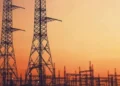
This was never a line item on a household bill. The levy was charged on electricity at the point of generation, on the quantity generated, and generators liable for it had to be licensed as customs and excise manufacturing warehouses.
The schedule set out who was outside the net.
| Generation type | Liable for the levy |
|---|---|
| Plants with installed capacity above 5 megawatts, non-renewable sources | Yes |
| Plants with installed capacity not exceeding 5 megawatts | No |
| Renewable sources, being biomass, geothermal, hydro, ocean currents, solar, tidal waves or wind | No |
| Concentrated solar power | No |
| Qualifying waste heat, combined heat and power, or renewable co-generation | No |
| Non-renewable energy input not exceeding 15 per cent of total energy input over a calendar year | No |
Non-renewable sources were defined as coal, petroleum based liquid fuels, natural gas and nuclear. So in practice the levy applied to large-scale fossil and nuclear generation and left rooftop solar, wind farms and small plants alone.
The schedule also said the levy was calculated on the quantity generated at the moment of generation, and that losses after generation or electricity that was exported could not be deducted from the monthly levy account.
What 3,5c a unit is worth
The levy is a small number multiplied by an enormous volume. At household scale it looks like this.
| Monthly consumption | Levy at 3,5c/kWh |
|---|---|
| 350 kWh | R12.25 |
| 600 kWh | R21.00 |
| 900 kWh | R31.50 |
| 1 200 kWh | R42.00 |
Treat those as illustrations of scale rather than a refund you can claim. The levy was paid by generators, not by you, and the rebate item is a customs and excise refund available to the licensed party that paid the duty.
Will your electricity bill come down
Not automatically, and not because of this notice on its own.
Eskom’s tariffs are approved by the National Energy Regulator of South Africa, and municipal tariffs are approved on top of that. A change in a generator’s input costs only reaches a household tariff through a regulatory decision. Nothing in R.7903 or R.7904 instructs anyone to reduce a tariff.
What the repeal does is remove one cost from the generation side of the equation with effect from the start of this year. Whether that shows up in the next price determination is a question for NERSA and for the utility, not for SARS.
Our coverage of Eskom’s proposed increase for 2027 sets out the application currently before the regulator, Eskom tariff hikes explained walks through how the components of a tariff fit together, and municipal tariff increases for 2026 covers what metros approved on top of the Eskom price.
The carbon tax moved the other way
The same Schedule No. 1 carries a separate environmental levy on carbon dioxide equivalent, and that one went up.
Notice R.7297, published in Government Gazette 54412 on 27 March 2026, increased the carbon dioxide equivalent levy by R72 per tonne, from R236 to R308 per tonne, with retrospective effect from 1 January 2026. That is the same effective date as the electricity levy repeal.
So the two environmental levies changed on the same day in opposite directions: the flat charge on each unit of non-renewable electricity fell away, and the charge on each tonne of carbon dioxide equivalent rose by 30,5 per cent.
What this means if you generate electricity
If you run a generation plant above 5 megawatts on non-renewable sources, you have been paying a levy since January that no longer exists in the schedule. The refund route is the new rebate item in Part 4 of Schedule No. 6, read with the DAR278 rules, and it runs through the customs and excise process rather than through income tax.
If you have rooftop solar or a small installation, nothing changes. You were never liable, because plants at or below 5 megawatts and renewable generation were excluded throughout.
Where to check
SARS publishes every tariff amendment, with the gazette number, notice number and implementation date, on its Tariff Amendments 2026 page under Legal Counsel, Secondary Legislation. The notice text for R.7903 and R.7904 is downloadable there. Go to www.sars.gov.za and follow Legal Counsel to Secondary Legislation to Tariff Amendments. For anything about what a tariff decision means for your own bill, the regulator is NERSA, and your account query goes to your municipality or Eskom.