




What the gazette declares
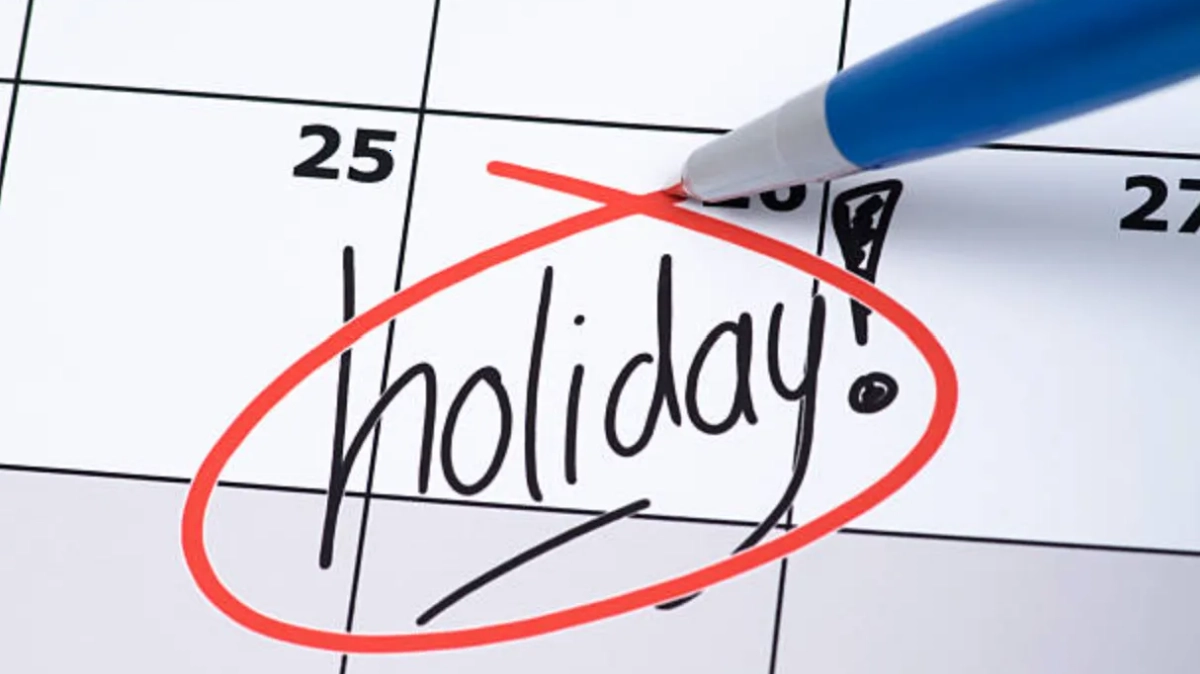
The 4 November public holiday has been formally declared. President Cyril Ramaphosa gazetted local government election day as a public holiday in terms of section 2A of the Public Holidays Act, in a Home Affairs notice published on 8 September 2026.
For most employees the immediate consequence is a paid day off in the middle of a working week. For those who work that day, section 18 of the Basic Conditions of Employment Act sets out what the employer must pay.
Section 2A gives the President the power to declare any day a public holiday, either nationally or in a specific area, by publishing a notice in the Government Gazette. The declaration completes a process that has run since April.
Ramaphosa announced the 4 November date in April 2026 after discussions at the Extended Presidential Coordinating Council. Minister of Cooperative Governance and Traditional Affairs Velenkosini Hlabisa then gazetted and proclaimed the election date in August. The public holiday notice on 8 September finalised it.
The date was chosen because it falls outside the festive season, is expected to help turnout, and was assessed as having limited impact on schools and the matric examination timetable.
What the 4 November public holiday means for your pay
Section 18 of the Basic Conditions of Employment Act is short and specific. It states that “an employer may not require an employee to work on a public holiday” except in accordance with an agreement, and then sets the payment rules where the holiday falls on a day the employee would ordinarily work.
| Your position on Wednesday 4 November | What section 18 provides |
|---|---|
| You would ordinarily work that day, and you do not work | At least the wage you would ordinarily have received for work on that day |
| You would ordinarily work that day, and you do work | At least double that wage, or that wage plus what you earn for the time worked, whichever is greater |
| You would not ordinarily work that day | The section 18(2) payment rules are triggered by the holiday falling on a day you would ordinarily work, so they do not apply |
| Your employer instructs you to work | An employer may not require work on a public holiday except in accordance with an agreement, which is often a clause already in the employment contract |
There is no blanket right to double pay on every public holiday. It applies where the employee both ordinarily works that day and actually works it.
Two further points change the picture for some workers. The Public Holidays Act allows a public holiday to be exchanged for another day by agreement with the employee, which moves the day off but not the payment entitlement. And bargaining council main agreements and sectoral determinations can set different rules for the sectors they cover.
Parliament has been examining this part of the law. Officials from Parliamentary Legal Services briefed the Portfolio Committee on Employment and Labour in 2025 on what parliamentary legal adviser Telana Halley-Starkey described as semantic ambiguity in section 18(2)(b)(ii). No amendment has been enacted, so the current wording applies on 4 November.
No matric papers fall on 3, 4 or 5 November
The concern that drove the public holiday designation was the matric examinations, because many schools serve as voting stations.
Mmusi Maimane, chairperson of Parliament’s Standing Committee on Appropriations, reported after discussions between the committee, the Electoral Commission of South Africa and the Department of Home Affairs that the IEC had consulted the Department of Basic Education and expected “minimal disruptions to matriculants as the day will be designated as a public holiday”.
The timetable itself provides more protection than that. The Department of Basic Education’s October and November 2026 National Senior Certificate timetable, published in February 2026, has no papers scheduled across a three-day block. Apex Academic Centre, working from that timetable, notes that “there are no papers on 3, 4, 5 and 9 November 2026”.
The 2026 finals began on Tuesday, 13 October and run to late November, with morning papers at 09:00 and afternoon papers at 14:00. Life Orientation was written on 1 September, Performing Arts practicals ran from 3 August, and Visual Arts and Design practicals from 14 September.
Two qualifications matter. Independent Examinations Board and SACAI candidates write to their own timetables, not the DBE one. And a school or the department can issue an amended timetable, so families should confirm against the copy the school has issued.
The 14th public holiday of the year, on a Wednesday
The gazetted 2026 school calendar lists 13 public holidays for the year: New Year’s Day, Human Rights Day, Good Friday, Family Day, Freedom Day, Workers’ Day, Youth Day, National Women’s Day, the Monday public holiday on 10 August that followed Women’s Day falling on a Sunday, Heritage Day, the Day of Reconciliation, Christmas Day and the Day of Goodwill. Election day makes 14.
The date falls on a Wednesday, so it produces a mid-week break rather than a long weekend. It also lands inside the fourth school term, which the gazetted 2026 calendar runs from 6 October to 9 December and recorded as containing no public holidays at all, because that calendar was published in February 2025, well before the election date existed. Southafriworld has published the gazetted school term dates for 2027 for comparison.
What is not settled yet
The holiday is confined to 4 November 2026. Section 2A declarations are made for a specific day and do not add a recurring date to the schedule in the Public Holidays Act, so this does not become an annual holiday.
Whether individual employers will require staff to work the day, and on what agreed terms, is a matter for each workplace and for the applicable bargaining council or sectoral determination.
Voting stations open on Wednesday, 4 November 2026, and the Electoral Commission has not yet published the final list of station locations and hours for the 2026 local government elections.