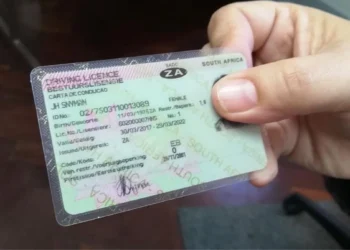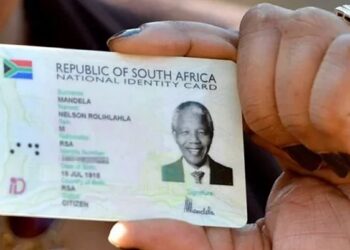
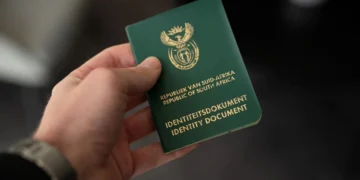








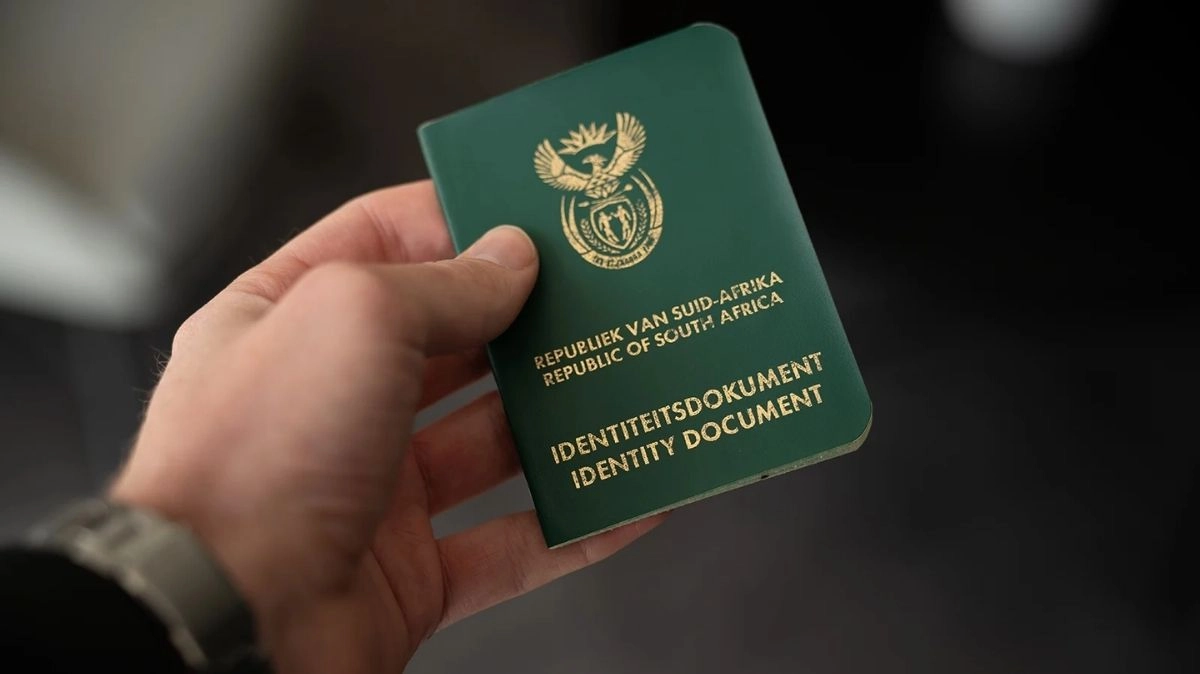
When the green ID book stops working
The green ID book will no longer be accepted as a valid identity document from 31 March 2028, Minister of Home Affairs Leon Schreiber announced on Wednesday, 1 October 2026.
Production stops a year earlier. From 31 March 2027 the machines that print green ID books will be shut down and permanently decommissioned.
Schreiber said continued use of the document is “irreconcilable with the functioning of a modern society”. The department has pushed the replacement for years on the grounds that the green barcoded book is vulnerable to fraud.
| Date | What happens |
|---|---|
| Now to 31 March 2027 | Green ID books still produced and still valid. Department says it will enable remaining naturalised citizens, permanent residents and South Africans abroad to obtain smart ID cards |
| 31 March 2027 | Production stops. Machines shut down and permanently decommissioned |
| 1 April 2027 to 31 March 2028 | A 12-month window in which holders must convert |
| 31 March 2028 | Green ID books stop being accepted as a valid identity document |
About 14.7 million South Africans currently hold only a green ID book.
Deputy Director-General for operations Tulani Mavuso has warned that converting becomes much harder once the book is no longer accepted for identity verification, and that the smart ID will be the document required for transactions with financial institutions.
What 14.7 million conversions actually requires
This is the part the announcement does not address.
| Measure | Figure |
|---|---|
| South Africans holding only a green ID book | About 14.7 million |
| Months from 1 October 2026 to 31 March 2028 | 18 |
| Conversions needed per month to clear it | About 817 000 |
| Annualised equivalent | About 9.8 million |
| Smart IDs issued in 2025/26, a record year | 4 million |
| Required rate against that record | About 2.5 times |
| Smart IDs issued in 2024 | 3.42 million |
Spread across the 18 months remaining, 14.7 million conversions works out at roughly 817 000 a month, or about 9.8 million a year. Those are Southafriworld calculations, not departmental targets.
The department’s best year on record was 2025/26, when it issued four million smart ID cards. Schreiber described that as “more than 1.3 million above the previous annual average”, which puts the prior average near 2.7 million.
So the required rate is about two and a half times the best year Home Affairs has ever had.
It is harder than that figure suggests. The four million covers every smart ID issued, including first-time applications from sixteen-year-olds and replacements for lost or damaged cards. Green book conversions are only a portion of it. The 817 000 a month would have to come on top of that ordinary workload, not instead of it.
None of this means the deadline cannot hold. It means the department is proposing a step change, and it has not published the rate it believes it can achieve.
The network being built to do it
Home Affairs is not standing still, and the expansion has been fast.
The digital partnership with banks launched on 9 March 2026 at nine branches. By 13 August it was live at 410 branches, having processed 574 371 applications through bank channels. That works out at roughly 113 000 applications a month through the new channel.
Measured against the 817 000 a month the backlog requires, the bank network at that rate is delivering about 14% of it.
The target is 750 branches by the end of 2026 and 1 000 by 2029. The department also runs 349 Home Affairs offices. Applications at participating branches take as little as five minutes, and an online tool at the department’s site lets people find their nearest participating branch.
Schreiber has put the logic plainly, saying that to make the green book fall away, the department has “to give the remaining 14.7 million holders of the green ID access” to the alternative.
The expansion is real and it is working. Whether it scales by a further factor of six within 18 months is the open question, and it is the same pattern South Africans have seen with the new driving licence card timeline and the proposed 10-year driving licence, both announced well ahead of delivery.
Who is exempt, and who is still stuck
Two groups get relief, and one group has a commitment without a published mechanism.
First-time applicants and anyone over 60 are exempt from the fee for obtaining a smart ID card, continuing existing policy. For older South Africans, who are heavily represented among green book holders, the cost barrier is removed.
The group that has held the process back is naturalised citizens, who have historically struggled to obtain smart ID cards. Schreiber said that before 31 March 2027 the department will enable the remaining cohort of naturalised citizens and permanent residents, as well as South African citizens abroad, to obtain smart IDs.
That is a commitment with a date attached. What has not been published is how. For South Africans living overseas in particular, the department has not said whether missions will process applications, whether biometric capture will be available abroad, or what happens to someone who cannot travel home before the deadline.
What to do, and when
The practical advice is simple and it has not changed.
Anyone holding only a green ID book can convert now, free of the queues that will build as the deadline nears. Applications can be made at a Home Affairs office or at a participating bank branch, and the department’s online tool shows which branches are live.
The reason to go early is arithmetic rather than urgency. If 14.7 million people leave it, the last months before March 2028 will carry a volume no system in the country has handled. Bank branches have already become a route for routine government transactions, much as licence disc renewals moved into banking channels.
Three things are still outstanding. The department has not published the conversion rate it is targeting. It has not set out how South Africans abroad will comply. And it has not said what happens to anyone who misses 31 March 2028, beyond the fact that their book will no longer be accepted.
HOW WE REPORTED THIS CROSS-CHECKED
- This article was built from the Minister of Home Affairs' announcement of 1 October 2026 setting 31 March 2028 as the date from which green ID books cease to be a valid identity document and 31 March 2027 as the end of their production, together with the department's own published figures on smart ID issuance and the bank partnership programme.
- The required conversion rate was calculated by dividing the 14.7 million affected citizens across the 18 months between publication and the invalidation date, and then annualising the result, and both figures are labelled as Southafriworld arithmetic in the article.
- That required rate was set against the department's record year of four million smart IDs issued in 2025/26, and the article states that the four million covers all smart IDs rather than green book conversions alone, which makes the required rate harder rather than easier to meet.
- The bank partnership figures were used to establish what share of the required rate the fastest-growing channel is currently delivering, calculated from the applications processed between the programme's launch on 9 March 2026 and 13 August 2026.
- The fee exemptions and the position of naturalised citizens, permanent residents and South Africans abroad were reported in full, because those are the groups for whom the deadline carries the most risk, and no comment was sought from the department.
- This article was drafted with AI assistance and the facts, figures and quotations were checked against the primary source by the editor before publication.