

What the 30 September shutdown call actually is
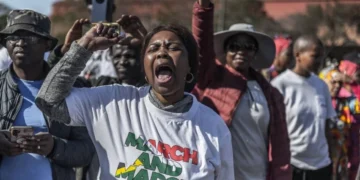
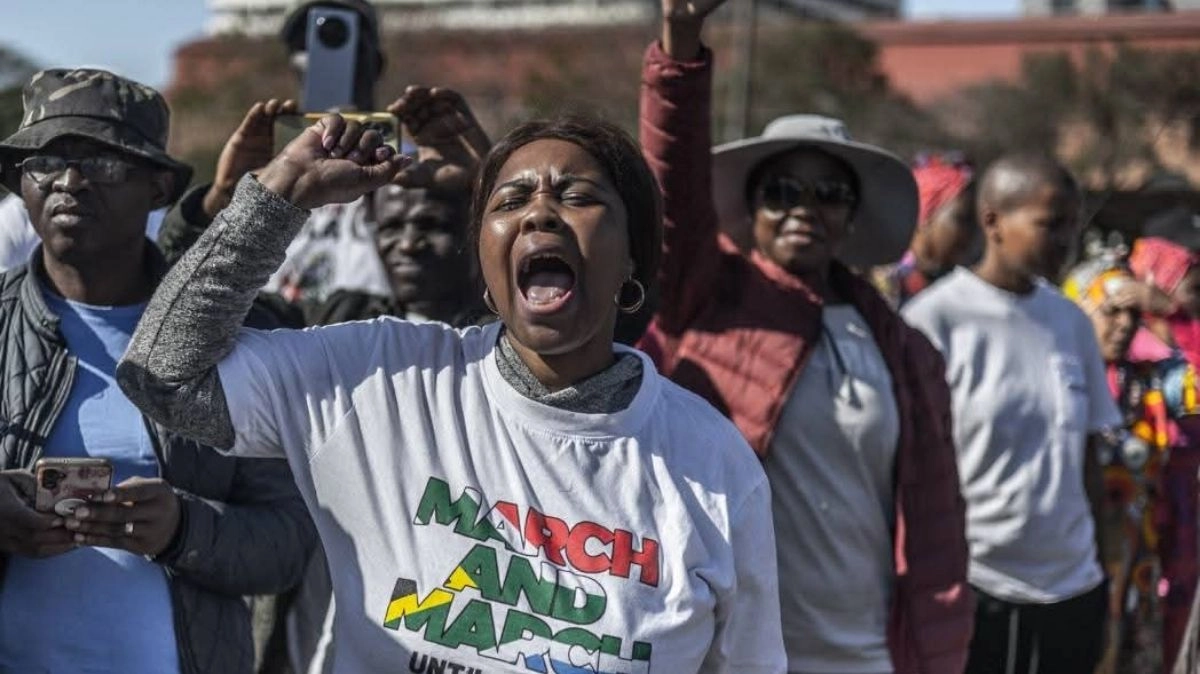
A protest group called March and March has called a national day of mass action for Wednesday, 30 September 2026, with marches planned in Pretoria, Johannesburg, Durban, Cape Town and other cities.
It is a protest call, not a shutdown in any operative sense. No trade union federation, taxi association, business body or government department has called for a stay-away. The date was set by the group itself and has no official standing.
The South African Police Service has said the deadline does not change its approach, and that it will continue with normal policing operations. Its focus, it said, remains maintaining law and order and responding to incidents as they occur.
That is the practical answer for anyone wondering whether to plan around Wednesday. Police are not preparing for the country to stop.
What happened on 30 June
The same group called the same kind of action three months ago. That day is the best available guide.
| Measure | 30 June 2026 |
|---|---|
| Allocated to peacekeeping operations | R600 million |
| Actually spent | R306 million |
| Unspent | R294 million, about 49% |
| Expected mass disruptions | Did not materialise |
| Deaths linked to the protests | At least one reported |
| Arrests | More than 900 |
| Business losses | Millions of rands, largely in the township economy |
Government budgeted R600 million for peacekeeping around that day and spent R306 million. The unspent R294 million represents about 49% of the allocation, by Southafriworld’s arithmetic. Preparations were made for a scale of disruption that did not arrive.
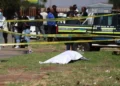
That is only half the record, and the other half matters. The expected shutdown did not happen, but at least one fatality was linked to the protests, more than 900 people were arrested, and businesses lost millions, concentrated in township economies rather than in central business districts.
So the honest position is neither that nothing happens nor that the country stops. Something happens, it is localised, and for the people in those specific areas it is serious. Southafriworld reported on how police prepared for the 30 June demonstrations at the time.
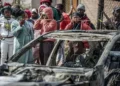
Since June, demonstrations against immigrants have taken place on a near-weekly basis, some of which have turned violent.
The two causes now attached to one day
Wednesday now carries two stated purposes, which is new.
The original call was the group’s next nationwide protest against illegal immigration, following through on a warning it issued after 30 June that it would act again in three months.
The group has since added the recent killings of women to its list of causes, framing 30 September as a Men’s March against gender-based violence and crime as well. It called on South African men to take to the streets and said men are part of the problem and must fix it.
The figure of 12 murdered women that the group refers to does not match the police record. On the police account, eleven bodies have been found across Ekurhuleni since July, with a further body recovered in Soweto that police have not linked to those cases.
No gender-based violence organisation has been named as endorsing or co-organising the march in the material available. Whether any has is unresolved.
What the organisers and the President say
March and March leader Jacinta Ngobese-Zuma has rejected the characterisation of the marches as xenophobic, arguing the issue is capacity rather than hostility.
She said South Africa is falling apart and lacks the resources to care for everyone, that “we don’t have enough schools, hospitals and buildings” while the country carries a burden for the continent, and that African leaders should ask why their citizens are leaving. Those arguments land in a country where unemployment remains the defining economic problem.
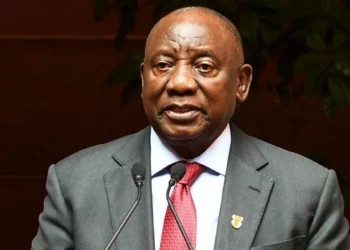
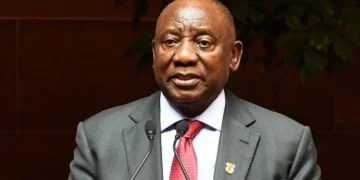
President Cyril Ramaphosa used his weekly letter to the nation to address both the tensions and the killings.
On gender-based violence he said “we cannot allow violence against women to define who we are”, describing the abuse, rape and killing of women as a stain on the national conscience, and saying the country cannot claim to be founded on freedom, equality and human dignity while half the population lives in fear.
On the marches he said South Africa refuses to be defined by xenophobia and intolerance, noting the support African countries gave the liberation struggle. He also said migration must take place within the law, that government has a responsibility to manage borders effectively, and that everyone living in South Africa must respect its laws.
Both positions are reported here as their holders put them. This article does not rule between them.
What to plan for on Wednesday
The reasonable expectation, based on June, is localised disruption in specific areas rather than a national stoppage.
Schools, government offices and businesses have not announced closures. Police have not announced road closures or special measures. No metro has announced a change to services.
Anyone in the areas where marches are planned may face traffic disruption and should allow extra time, as with any large-scale disruption to Gauteng transport. Foreign nationals working in township economies were the group most affected in June, and the near-weekly demonstrations since then have included violent incidents.
Anyone who witnesses violence or intimidation can contact their nearest police station, call Crime Stop on 08600 10111 or use the MySAPS app.
What is not known is how many people will turn out. The group has not published a target. Police have not published a deployment figure for Wednesday. Neither number existed before 30 June either, and the day that followed cost less than half of what government set aside for it.
HOW WE REPORTED THIS CROSS-CHECKED
- This article was built from the protest group's own announcement of a national day of action on 30 September 2026, from the President's weekly letter to the nation addressing both the marches and gender-based violence, and from the South African Police Service position that its approach and operations are unchanged.
- The 30 June 2026 precedent was treated as the central evidence, because the same organisation called the same kind of action three months ago and the outcome of that day is the best available guide to what Wednesday will involve.
- The peacekeeping allocation of R600 million against R306 million spent was converted into an unspent figure and a percentage, which is a Southafriworld calculation, and it is labelled as arithmetic in the article.
- The documented harms of the June action, being a reported fatality, more than 900 arrests and business losses concentrated in the township economy, were reported alongside the finding that expected disruptions did not materialise, because reporting either one without the other would mislead.
- The organisers' stated position and the President's position are both reported on their own terms and this article does not adjudicate between them, no victim of any protest violence is named, and no comment was sought from the organisers, the police or the Presidency.
- This article was drafted with AI assistance and the facts, figures and quotations were checked against the primary source by the editor before publication.