




What the President said about gender-based violence, and what he did not
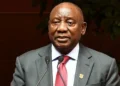
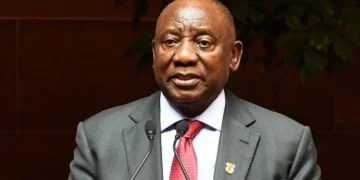
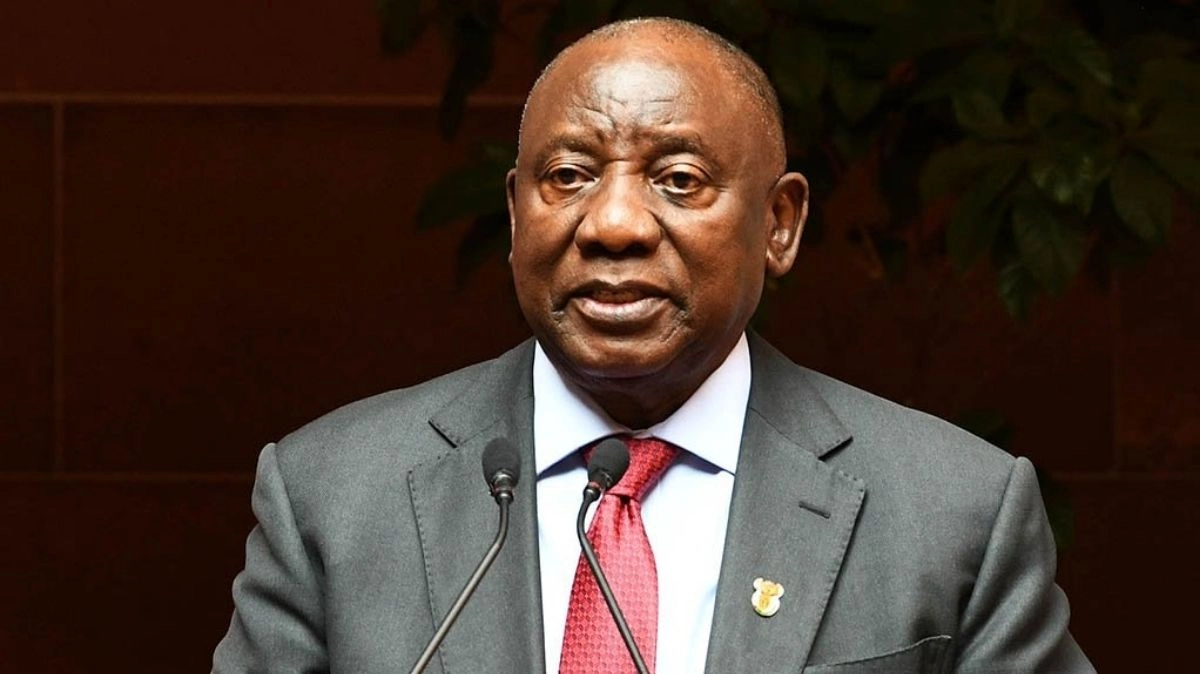
President Cyril Ramaphosa has announced that government will address the nation on gender-based violence within days, and will update South Africans on the investigation into the killings of women in and around Ekurhuleni.
He made the announcement at the National Heritage Day celebrations at Bongolethu Sports Stadium in Oudtshoorn on Thursday, 24 September 2026.
“The abuse, rape and killing of women is not our heritage,” he said, adding that no culture worthy of the name diminishes the dignity of women. He described what South African women have endured as a national shame, and said women have the right to walk the streets at any hour without fear.
He framed freedom itself as unequally distributed, saying it is lived differently by a man who can walk the streets without fear and a woman who must constantly consider whether she will be safe. That is a description most South African women would recognise, and it echoes how fear of crime has reshaped daily life across the country.
He named the country’s enemies today as unemployment, gender-based violence, corruption, and alcohol and drug abuse.
What the announcement did not contain was a measure. No new programme, no funding commitment, no legislative step and no date for the address itself were given. The announcement was that an announcement is coming.
The architecture already exists
That matters because the machinery the President is expected to speak about has been built already, over eight years.
| Date | Step |
|---|---|
| 2018 | Presidential Summit on GBVF, after the Total Shutdown marches. State commits to a national council and a national plan |
| June 2019 | State of the Nation commitment. Emergency Response Action Plan implemented |
| March 2020 | Cabinet approves the National Strategic Plan on GBVF |
| 30 April 2020 | National Strategic Plan on GBVF 2020 to 2030 launched |
| February 2021 | GBVF Response Fund launched, R128 million initially pledged |
| January 2022 | Three gender-based violence laws signed |
| 24 May 2024 | National Council on GBVF Act signed into law |
| August 2026 | National Council on GBVF begins work |
| 24 September 2026 | President announces a national address on GBV measures, no date given |
The plan itself is not thin. It runs six pillars covering accountability, prevention, justice, survivor support, economic empowerment and research, and it was designed to run to 2030. Thuthuzela Care Centres and Khuseleka Care Centres, which support survivors, sit inside it.
South Africa has also already classified gender-based violence and femicide as a national disaster and adopted a Cabinet-approved action plan, a step comparable in form to the deployment of additional force against organised crime.
Eight years to start one council
The National Council on Gender-Based Violence and Femicide was the central institutional promise of the 2018 summit. It is the body meant to hold departments accountable, monitor the plan and coordinate the national response.
It began work in August 2026.
That is roughly eight years after the commitment was made, and roughly 27 months after the Act creating it was signed on 24 May 2024. Both intervals are Southafriworld calculations from those dates.
Sindisiwe Chikunga, Minister in the Presidency for Women, Youth and Persons with Disabilities, told the Council at its launch that the groundwork was complete. The baseline had been established, the evidence gathered, the legislation enacted and the mandate conferred. The responsibility, she said, now shifted to the Council to deliver.
At that launch the Council was presented against a figure of 50 511 reported SAPS cases. The material available does not define the period or the offence categories that figure covers, which is why it sits in the verification list rather than being treated as settled.
Nobody has costed the response
This is the part that most directly bears on whatever the President announces.
Chikunga said in August 2026 that the Council would develop a comprehensive costing framework to determine what South Africa’s response to gender-based violence would actually require, identify resource gaps and build a national investment case. “No mandate succeeds without resources,” she said.
Six years after the National Strategic Plan launched, that costing had not been done. The country has a ten-year plan, three laws, a statutory council, a disaster classification and an action plan, and no published figure for what delivering any of it costs.
The money that has moved is modest. The GBVF Response Fund, established in February 2021 as an interim vehicle until the Council existed, opened with R128 million pledged. By 2026 about R162 million had been pledged, of which roughly 75% had been collected.
That is about R121.5 million actually in hand, and roughly R29 million a year in pledges across the Fund’s life. Both figures are Southafriworld calculations.
Against that, the President has named gender-based violence as one of four national enemies, alongside unemployment, corruption, and alcohol and drug abuse.
What to watch, and where to get help
Three things will show whether the coming address differs from those before it. Whether it carries a rand figure. Whether it gives the Council a delivery deadline. And whether it reports on the Ekurhuleni investigation with something more than the fact that it is continuing.
The address has no date. The Presidency has said only that it will come in a few days.
Anyone affected by gender-based violence can contact the GBV Command Centre on 0800 428 428, which operates around the clock, or reach a Thuthuzela Care Centre through the nearest police station or hospital for medical care, counselling and help with laying a charge.
The President’s condemnation on Thursday was unambiguous and it was correct. The open question is not whether the government knows there is a crisis. It has said so formally since 2018. The question is what the next address adds to eight years of documents.
HOW WE REPORTED THIS CROSS-CHECKED
- This article was built from the Government Communication and Information System report of President Cyril Ramaphosa's Heritage Day address at Bongolethu Sports Stadium in Oudtshoorn on 24 September 2026, read in full, together with the published record of the National Strategic Plan on Gender-Based Violence and Femicide and the legislation that followed it.
- The timeline was assembled from government sources covering the 2018 Presidential Summit, the 2019 Emergency Response Action Plan, the March and April 2020 approval and launch of the National Strategic Plan, the February 2021 launch of the GBVF Response Fund, the May 2024 signing of the National Council Act and the Council's commencement of work in 2026.
- The interval of roughly eight years between the 2018 commitment to a national council and that council beginning work, and the interval of roughly 27 months between the Act being signed and the same event, are Southafriworld calculations from those dates and are labelled as such.
- The statement that the response has not been costed rests on the responsible Minister's own account in August 2026 that the Council would develop a costing framework, identify resource gaps and build a national investment case, which are tasks that had not yet been completed.
- The President's condemnation was reported in full and on its own terms before the implementation record was set out, no detail of any individual case was included, and no comment was sought from the Presidency or the Department because every statement used is already on the public record.
- This article was drafted with AI assistance and the facts, figures and quotations were checked against the primary source by the editor before publication.