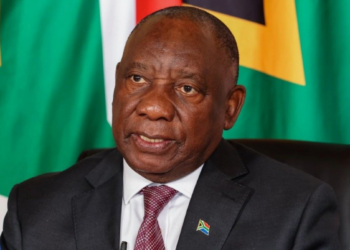







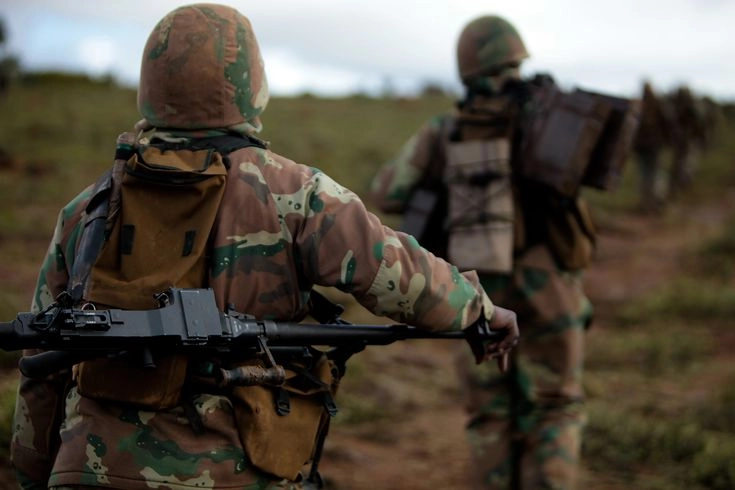
President Cyril Ramaphosa has announced that the South African National Defence Force (SANDF) will be deployed to support police operations against organised crime and criminal syndicates, with initial focus on Gauteng and the Western Cape.
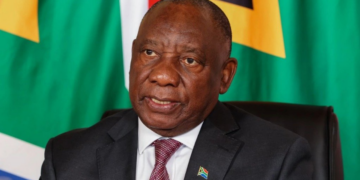
The announcement was made during the 2026 State of the Nation Address (SONA) in Cape Town on Thursday, 12 February 2026, where Ramaphosa described organised crime as a growing threat to public safety, economic stability, and state authority.
What Ramaphosa announced at SONA
In his address, Ramaphosa said the SANDF would be used in a support role to strengthen law enforcement capacity in areas facing persistent violence and intimidation linked to organised criminal networks.
The President said the initial deployment would focus on two provinces:
- Western Cape, where gang violence and firearm-related crimes remain a major public safety concern in parts of Cape Town and surrounding areas.
- Gauteng, where criminal syndicates linked to illegal mining and extortion-related violence have been associated with intimidation and disruption in some communities.
Ramaphosa indicated that a technical plan would be finalised to determine the specific areas and operational details of the deployment. The plan is expected to guide where security forces will be positioned, how long they will remain in place, and how command structures will operate between police and military units.
Why “mafias” are central to the deployment decision
Recent public statements and reporting have increasingly used “mafias” to describe organised groups involved in systemic extortion, intimidation, and disruption of lawful economic activity. In South Africa, this has commonly been linked to:
Construction extortion and project disruption
Organised extortion groups have been accused of forcing contractors off sites, demanding “protection fees,” or compelling the use of certain labour and suppliers. These activities can delay infrastructure delivery, inflate project costs, and create a climate of fear for workers and smaller businesses.
Gang violence and territorial control
In parts of the Western Cape, gang networks are often associated with firearm violence, intimidation of residents, and criminal control over local communities. While police remain responsible for investigations and arrests, a SANDF presence is typically positioned as a way to stabilise hotspots and reinforce visible enforcement capacity.
Illegal mining networks in Gauteng
Illegal mining operations are frequently associated with criminal syndicates that control access to mining areas, extract minerals unlawfully, and engage in violence or intimidation where enforcement is weak. These networks can also be linked to broader illicit economies, including weapons, cash-based money flows, and illegal trade.
What happens next: timing, scope, and costs still to be clarified
While the President confirmed the intention to deploy the SANDF, key operational details were not fully specified in the initial announcement. The final scope is expected to clarify:
- Exact deployment areas within the two provinces
- Number of SANDF members involved
- Duration of the deployment
- Estimated cost and which budgets will carry the expenditure
- Command-and-control structure between SANDF leadership and SAPS leadership
These factors are significant because SANDF domestic deployments can become expensive and resource-intensive, especially if extended beyond an initial stabilisation period.
Legal framework: how SANDF deployments inside South Africa work
South African law allows the SANDF to support the South African Police Service (SAPS) under specific conditions, but it requires oversight and reporting.
When the defence force is employed internally, the President is required to inform Parliament with appropriate detail. In practice, this reporting requirement is meant to ensure transparency on why troops are being used, where they are deployed, and how long they will remain in operation.
This framework also matters for public expectations. A SANDF deployment can increase visible security presence, but it does not replace core policing functions such as detective work, case building, prosecution preparation, and long-term intelligence investigations.
Broader crime measures signalled alongside the deployment
The SANDF announcement formed part of a wider crime and enforcement message delivered during SONA, including emphasis on stronger action against firearm crime and criminal economies.
Ramaphosa also referenced steps aimed at strengthening law enforcement capacity, including the planned expansion of police staffing. He indicated that additional police recruitment is expected during the year, adding to prior hiring announcements.
Separately, the President referenced efforts to disrupt illicit economic activity that fuels organised crime, with attention on high-risk sectors where illegal trade undermines jobs and legitimate businesses.
What to watch in the coming days
The next developments expected to determine the impact of the announcement include:
- The release of the technical plan describing where the SANDF will be deployed
- Any formal government notice or parliamentary communication setting out the legal basis, costs, and deployment period
- Clarification of whether the deployment will be short-term stabilisation or a longer operation
- Operational detail on how enforcement will focus on syndicate leadership, not only street-level activity
The effectiveness of past SANDF domestic support operations has often depended on whether deployments are matched with intelligence-led policing, sustained investigations, and functional prosecution pipelines.