

South Africa’s 2036 Olympics bid makes the IOC list of seven
South Africa’s 2036 Olympics bid cleared its first public marker on Tuesday, when the International Olympic Committee named the country among seven parties in talks to host the Games. The harder test comes next: the IOC will judge each project on its funding strategy and public support, and shortlisted bidders must then lodge core financial guarantees, the step on which Durban lost the 2022 Commonwealth Games.
The IOC listed Germany, Hungary, India, Qatar, the Republic of Korea, South Africa and Türkiye as the parties in what it calls Continuous Dialogue for 2036. It said no further interested parties would be considered after 31 October 2026, and invited all seven to present their projects to its Future Host Commission in November.
No African country has hosted the Olympic Games. SASCOC has described a model shared between Cape Town, Durban and Johannesburg, and Cabinet approved continuing talks with the IOC in November 2025 for either the 2036 or the 2040 Games.
What the IOC will test in each 2036 Olympics bid
The IOC said projects will be assessed on venue masterplan and athlete experience, funding strategy, political and public support, delivery capability and legacy for host communities. Bids will also be judged on their vision and how well they fit local development plans.
That evaluation is already under way, supported by independent reports and public opinion polling, according to the IOC. What South Africans think of the bid will be measured as part of it.
IOC President Kirsty Coventry, a former Zimbabwean swimmer, said the process starts with the competitors: “athletes have to be at the heart of everything we do.”
| Date | Stage | What is required |
|---|---|---|
| 31 October 2026 | IOC closes the 2036 list | South Africa is already listed |
| End of October 2026 | Host city decision expected | Minister to name a candidate host city, according to SASCOC |
| November 2026 | Virtual presentations | Project presented to the Future Host Commission |
| By March 2027 | IOC feasibility assessments | Independent reports and public opinion polling |
| March 2027 | Strategic Dialogue opens for a shortlist | First questionnaire response and core legal and financial guarantees |
| December 2028 | Targeted Dialogue with Preferred Hosts | Final questionnaire response and a full set of guarantees |
| Mid-2029 | IOC Session | IOC Members elect the 2036 host |
Cabinet says the venues exist; the IOC asks who pays
When Cabinet endorsed the talks on 13 November 2025, Minister in the Presidency Khumbudzo Ntshavheni said South Africa would not need significant new investment, and that the country “should be able to host them with our facilities”. Barry Hendricks, then SASCOC president, told SABC Sport earlier this year that the project would require billions and that even the preliminary phase would carry considerable costs, Inside the Games reported.
Independent research puts the bill high. A 2020 University of Oxford study by Professor Bent Flyvbjerg, Alexander Budzier and Daniel Lunn found the Games held between 2007 and 2016 cost an average of $12 billion in sports-related costs alone, excluding roads, rail, airports and hotels, and that every Games since 1960 had run over budget.
At this week’s exchange rate of about R16.74 to the dollar, $12 billion is roughly R200 billion, before adjusting for inflation since 2015. That is about 30 times the R6.617 billion allocated to the entire Department of Sport, Arts and Culture for 2026/27, a comparison Southafriworld offers for scale only, because Games costs are usually shared with organisers, broadcasters and sponsors.
The IOC points to the other side of the ledger. It says Paris 2024 will bring an estimated net contribution of €9 billion to €11 billion to the Île-de-France economy by 2034.
The guarantee step that cost Durban the Commonwealth Games
Durban won the 2022 Commonwealth Games as the only bidder in September 2015 and was stripped of them on 13 March 2017. The Commonwealth Games Federation said the city’s final proposals departed significantly from its bid undertakings on governance, venues, funding and risk management, after deadlines for financial guarantees were missed.
Then Sport and Recreation Minister Fikile Mbalula said the country was “not in a position to make huge financial commitments” given competing socio-economic needs. The Commonwealth Games is a smaller event run by a different federation, but the step that failed is the one the IOC now places in its Strategic Dialogue from March 2027.
Cape Town also bid for the 2004 Olympics and lost to Athens in a 1997 vote.
What the bid means for Cape Town, Durban and Johannesburg
Kim Pople, SASCOC’s second vice-president, told IOL last week that Sport, Arts and Culture Minister Gayton McKenzie is expected to name the candidate host city by the end of October. It is not yet clear how that announcement fits the three-city model SASCOC has described.
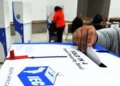
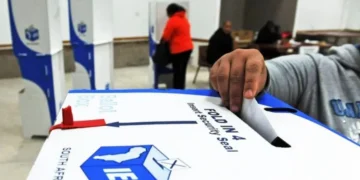
All three metros vote in the local government elections on 4 November, days after that announcement and in the same month as the IOC presentation. Political support is one of the factors the IOC says it will assess.
The bid is also being carried by an Olympic committee in flux. First vice-president Lwandile Simelane has acted as SASCOC president since the board suspended Barry Hendricks on 9 September pending an internal process, which SASCOC said is not a finding of wrongdoing.
The Olympic push sits alongside other hosting ambitions, including South Africa’s Formula 1 bids and the 2027 Cricket World Cup that South Africa co-hosts with Zimbabwe and Namibia.
Next: a host city, a November pitch and a 2027 shortlist
Several points remain unconfirmed. Southafriworld found no published cost estimate or funding plan for the bid, and because Cabinet’s decision covered 2036 or 2040, it is not yet clear whether 2040 remains a fallback.
The immediate dates are fixed. The IOC’s list closes on 31 October, presentations follow in November, feasibility assessments are due by March 2027, and the IOC Executive Board will then choose which interested parties enter Strategic Dialogue and begin lodging guarantees.
HOW WE REPORTED THIS
- The primary document was the IOC statement of 6 October 2026 setting out the 2036 host selection steps and naming the seven Interested Parties, which was read in full.
- South Africa's position was checked against the IOC's November 2024 statement welcoming the country's interest, the 13 November 2025 post-Cabinet briefing as reported, and the sport minister's budget vote speech of 12 May 2026.
- The cost context comes from the 2020 peer-reviewed University of Oxford study of Olympic costs, and the Durban precedent from the Commonwealth Games Federation's March 2017 decision as published at the time.
- Southafriworld converted the study's dollar average into rand at this week's exchange rate and compared it with the Department of Sport, Arts and Culture's 2026/27 allocation, and both figures are labelled as illustrative.
- No comment was sought from the Department of Sport, Arts and Culture, SASCOC or the IOC, and the expected host city announcement rests on one SASCOC board member's published remarks.