








How the local election results system is being tested
Experts from four political parties are testing the system that will produce the local election results on 4 November, in an audit that runs until 12 October. It comes less than three weeks after the Electoral Court rejected the MK Party’s claim that the results system was manipulated in 2024.
The Electoral Commission (IEC) said the ACDP, ANC, DA and MK Party designated information and communications technology experts to examine the Election Results System for integrity, functionality, security and reliability. The system captures and collates results and allocates council seats to parties and candidates.
The IEC said it had also concluded an independent external audit of the system, and that contesting parties had until 30 September to nominate experts for the review that began on 5 October. President Cyril Ramaphosa has said more than 10 500 council seats are being contested, East Coast Radio reported.
What the Electoral Court settled about 2024
On 25 September the Electoral Court dismissed the MK Party’s application challenging the 2024 national and provincial election results. The party alleged that votes were manipulated when the leaderboard at the national Results Operations Centre went blank for about two hours on 31 May 2024.
The court upheld the IEC’s account that there was no system crash, EWN reported, and the commission said the system kept working while the public display was blank. The IEC said it now regards the matter as closed.
The MK Party is one of the four parties now taking part in the audit. The IEC listed no other parties as having nominated experts.
How a ballot becomes a local election result
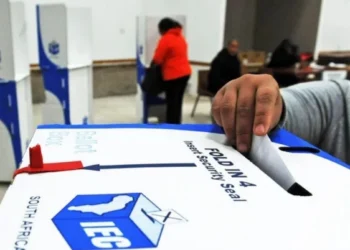
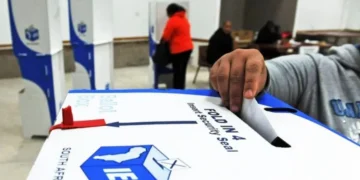
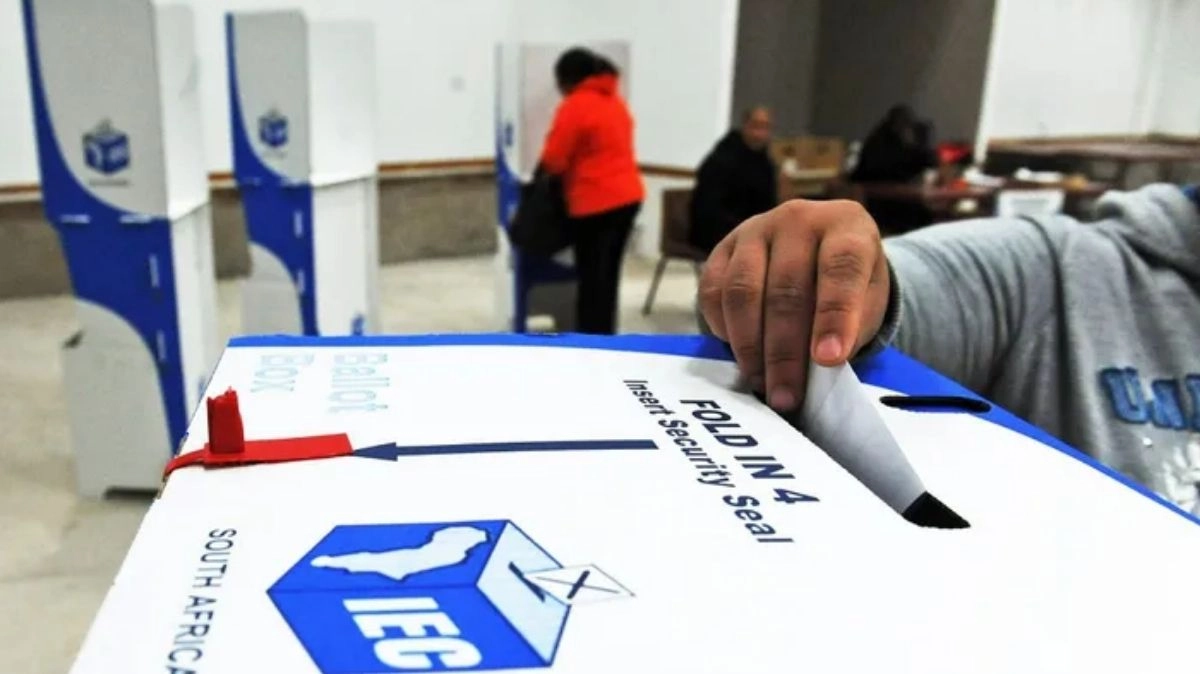
Chief Electoral Officer Sy Mamabolo told The Citizen’s podcast that ballots are counted at each voting station in front of party agents, who sign the results slip and can photograph it for their own records. He said the IEC plans to let parties view scanned slips in the results system and compare them with those photographs.
| Stage | What happens | Who can check it |
|---|---|---|
| Count at the voting station | Ballots are counted after voting closes | Party agents at the station |
| Results slip | Party agents sign the slip and may photograph it | Party agents |
| Capture | Results are captured into the Election Results System | Parties, through scanned slips the IEC plans to make available |
| Results Operations Centres | Results are shown at one national and nine provincial centres | Media, parties and observers |
| Objections | Objections material to a result must be lodged by 17:00 on 6 November | IEC first, then the Electoral Court on appeal |
Mamabolo urged political leaders to avoid unsubstantiated allegations and to raise concerns through the proper channels.
Who can vote on 4 November
The IEC this week rejected social media claims that asylum seekers who obtain documents will be able to vote. It said asylum seeker status gives no right to vote, and that only South African citizens aged 18 or older who are on the voters’ roll may vote, IOL reported.
That follows section 19 of the Constitution, which gives the vote to adult citizens. Voters need a green barcoded ID book, a smart ID card or a Temporary Identity Certificate.
IOL linked the confusion to a Constitutional Court judgment in July on access to the asylum system. That judgment concerns how asylum claims are considered, not who may vote.
The local election results deadlines after 4 November
Before voting day, applications for special votes close at 17:00 on 12 October, the same day the audit ends. Southafriworld’s guide to the special vote application explains who qualifies.
After voting, objections that could change a result must be served on the IEC’s national office by 17:00 on the second day after voting day, under section 65 of the Municipal Electoral Act. By Southafriworld’s calculation, that is Friday, 6 November 2026.
An objector unhappy with the IEC’s decision may appeal to the Electoral Court within seven days of that decision. The IEC has also proposed a regulation allowing such objections to be sent by email by the same deadline, but whether it has been finalised is not yet confirmed.
Several points remain open. The audit’s findings had not been published by 8 October, and Southafriworld found no commitment from the IEC to publish them.
Results will be displayed at one national and nine provincial Results Operations Centres from the night of 4 November. More on the 2026 local government elections is in Southafriworld’s main guide.
HOW WE REPORTED THIS CROSS-CHECKED
- The audit details were checked against the Electoral Commission's statement of 6 October 2026 on the Election Results System review, as published by the government news service.
- The objection deadline was taken from section 65 of the Local Government: Municipal Electoral Act, 2000, and Southafriworld calculated the date as Friday, 6 November 2026, the second day after voting day.
- The 2024 results challenge was described from published accounts of the Electoral Court's judgment of 25 September 2026, and the judgment itself was not read for this article.
- Voter eligibility was checked against section 19 of the Constitution and the Electoral Commission's published response to claims about asylum seekers.
- No comment was sought from the Electoral Commission or the four parties taking part in the audit before publication.