









Why the Nobel committee chose Navi Pillay
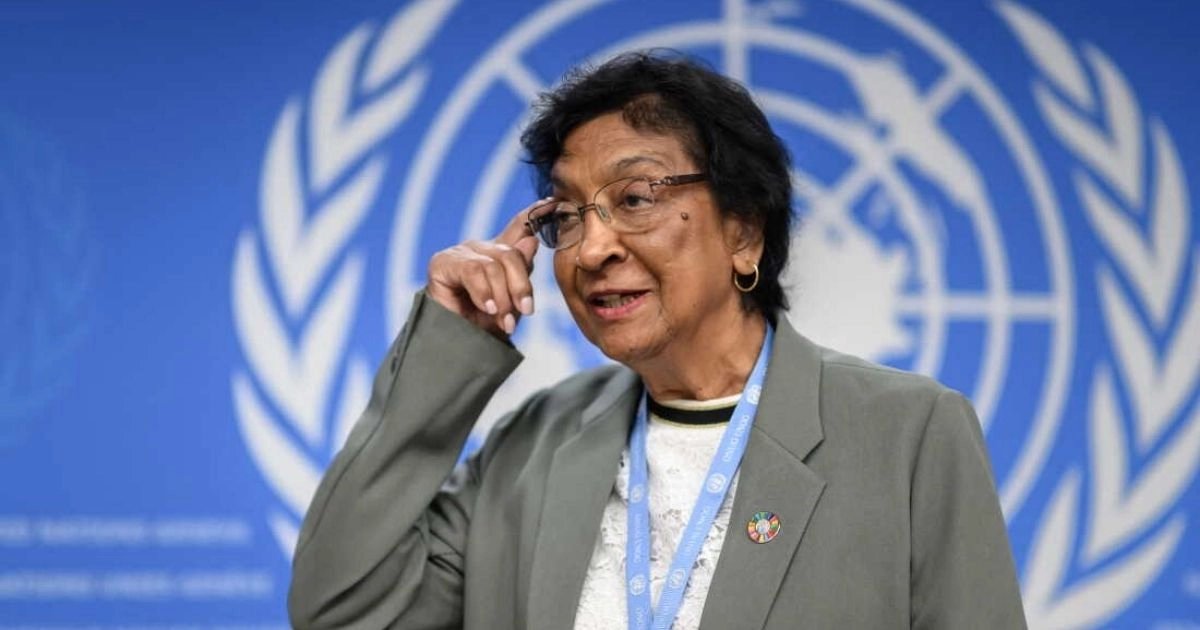
Navi Pillay, the Durban-born jurist who defended anti-apartheid activists before presiding over the Rwanda genocide tribunal, has won the 2026 Nobel Peace Prize. She is the first South African woman to receive it, and the country’s first Peace laureate since Nelson Mandela and FW de Klerk shared the prize in 1993.
The Norwegian Nobel Committee announced the award in Oslo on Friday, 9 October, citing Pillay “for her efforts to promote peace and international law”. It said she had been instrumental in ensuring that war crimes, crimes against humanity and genocide are prosecuted.
Committee chair Jørgen Watne Frydnes told reporters that international law is under heavy pressure and its institutions under attack, with power politics gaining ground at the expense of legal frameworks. The committee framed the prize as a defence of that system.
The prize carries 12 million Swedish kronor, about $1.2 million, according to the committee. That is roughly R20 million at this week’s exchange rate, by Southafriworld’s conversion.
South Africa’s five Nobel Peace Prize laureates
Pillay joins a short list of South Africans honoured in Oslo, and the first in 33 years.
| Year | Laureate | Role at the time |
|---|---|---|
| 1960 | Albert Luthuli | President-General of the African National Congress |
| 1984 | Desmond Tutu | Anglican cleric and general secretary of the South African Council of Churches |
| 1993 | Nelson Mandela | President of the ANC, shared with FW de Klerk |
| 1993 | FW de Klerk | State President, shared with Nelson Mandela |
| 2026 | Navi Pillay | Ad hoc judge at the International Court of Justice and former UN High Commissioner for Human Rights |
She is the second South African woman to win a Nobel Prize of any kind. The first was novelist Nadine Gordimer, who received the literature prize in 1991.
From a Durban law practice to the international courts
Pillay was born in Durban in 1941 into a family of Indian Tamil origin. The committee noted that she became a lawyer under apartheid while confronting deep structural discrimination, segregation and exclusion.
In 1967 she became the first woman to open a law practice in what was then Natal. She defended Mandela and other activists who opposed apartheid, and helped establish rights for prisoners held on Robben Island.
As a member of the Women’s National Coalition, she contributed to the equality clause in South Africa’s Constitution, which bars discrimination on grounds including race, religion and sexual orientation. That domestic legacy received less attention in Friday’s coverage than her international career.
In 1995 she became the first non-white woman to serve as a judge on the High Court of South Africa. The same year the UN General Assembly elected her to the International Criminal Tribunal for Rwanda, which she later led as president.
The committee singled out the tribunal’s 1998 judgment against former Rwandan mayor Jean-Paul Akayesu. That ruling established that rape and sexual violence could constitute genocide and crimes against humanity, and the committee said Pillay’s influence was a significant factor.
She went on to serve as a judge at the International Criminal Court, and as UN High Commissioner for Human Rights from 2008 to 2014.
A prize aimed at international courts under pressure
Pillay later chaired the UN Commission of Inquiry on the Occupied Palestinian Territory and Israel, which concluded in 2025 that Israel had committed genocide in Gaza. Israel has rejected that finding.
She now sits as an ad hoc judge at the International Court of Justice in the genocide case against Myanmar. That seat is separate from South Africa’s own ICJ case.
Pillay, who turned 85 in September, responded to the announcement with humour. She told an audience that “being a lawyer and a judge, I still want to verify this information”, AP reported.
What happens next for the 2026 laureate
The prize will be presented in Oslo on 10 December 2026, when laureates traditionally deliver a Nobel lecture.
Some points remain unconfirmed. No statement from the South African government had been published at the time of writing, and the rand value of the prize will move with the exchange rate.
Pillay continues to sit on the International Court of Justice bench in the Myanmar case while she prepares for the December ceremony.
HOW WE REPORTED THIS CROSS-CHECKED
- The award and its citation were taken from the Norwegian Nobel Committee's announcement of 9 October 2026, published on NobelPrize.org; the site blocked automated access, so the press release was read through its published extracts and checked against several outlets quoting it in full.
- Biographical details were checked against the United Nations' published biographies of Pillay and against the committee's own account of her career.
- The list of South African Peace Prize laureates was compiled by Southafriworld from the Nobel Prize record, and the rand value of the prize money is a Southafriworld conversion at this week's exchange rate.
- Remarks by Pillay and the committee chair were taken from coverage published after the announcement, and no South African government response had been published at the time of writing.
- No interview was sought with Pillay or the Norwegian Nobel Committee for this article.
- This article was drafted with AI assistance and the facts, figures and quotations were checked against the primary source by the editor before publication.