









What the repo rate South Africa decision means for your bond
The repo rate South Africa pays is now 7.25%, after the South African Reserve Bank’s Monetary Policy Committee raised it by 25 basis points on 23 September 2026. Prime moves to 10.75%.
Every variable-rate home loan, vehicle finance agreement and credit facility priced off prime reprices from the next billing cycle. For most South African households, that is the whole story.
| Bond over 20 years at prime | Extra per month from this hike | Extra per month against April 2026 |
|---|---|---|
| R750 000 | About R126 | About R252 |
| R1 000 000 | About R168 | About R336 |
| R1 500 000 | About R252 | About R504 |
| R2 000 000 | About R336 | About R672 |
On R300 000 of vehicle finance over five years, the increase is roughly R37 a month.
Those figures are Southafriworld calculations at prime with no lender margin. A borrower on prime plus one percentage point pays more, and anyone on a fixed rate is unaffected until their fixed period ends.
The second column matters more than the first. Against April 2026, before this tightening cycle began, a R1 million bond now costs about R336 a month more, or roughly R4 032 a year. That is the cumulative position, and it is not a figure the announcement provides.
The vote is the story
Buried in the announcement is the number that tells you most about what comes next.
| Date | Decision | Repo | Prime | Vote |
|---|---|---|---|---|
| 20 November 2025 | Cut 25bp | 6.75% | 10.25% | Unanimous |
| 28 May 2026 | Hike 25bp | 7.00% | 10.50% | 4 to 2 |
| 23 July 2026 | Hold | 7.00% | 10.50% | 4 to 2 |
| 23 September 2026 | Hike 25bp | 7.25% | 10.75% | Unanimous |
In May the committee split four to two on whether to hike at all. In July it split four to two on whether to hold, with two members wanting a further increase. In September all six voted to raise.
A committee that was divided twice is now of one mind. The May hike was the first increase since May 2023, reversing part of six consecutive cuts that had brought prime down from a cycle peak of 11.75%.
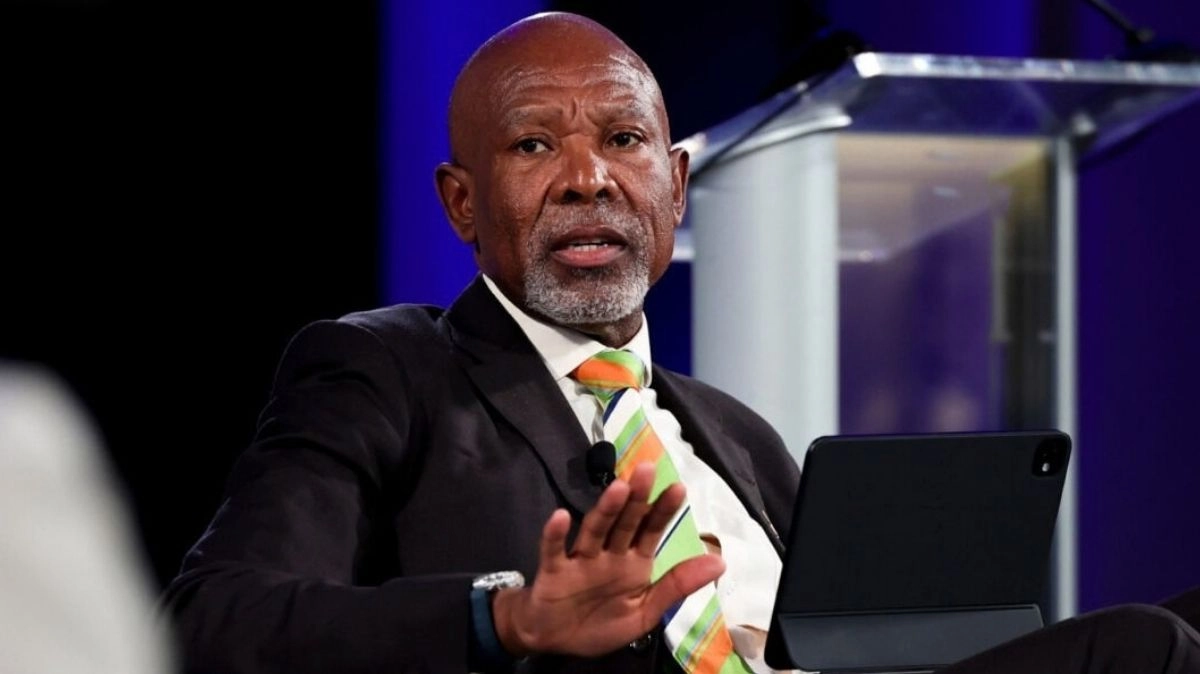
Kganyago said the bank is adopting a more restrictive stance, with rates above longer-term levels. The bank’s Quarterly Projection Model shows the policy rate broadly stable for the rest of the year, with cuts only later in the forecast period as inflation falls back toward 3%.
He described that path as a broad guide rather than a commitment, with decisions taken meeting by meeting. The committee meets again in November, its last of the year.
Everything except fuel argued against this
On the bank’s own account, almost every other indicator pointed the other way.
The economy contracted 0.2% in the second quarter. The bank still expects a rebound, with growth of 1.2% this year and 2% over the medium term, but said growth risks are skewed to the downside.
Food inflation is at its lowest level since 2010, which the Governor attributed to strong harvests and a levelling off in meat prices after the foot-and-mouth disease outbreak. That continues the easing already visible in recent food price data.
Import prices are contained and the rand has been notably resilient through the year.
What is left is fuel. Petrol began rising again after moderating between June and August, and the Governor put the current average under-recovery at R2.83 a litre. The bank now expects headline inflation above 5% later this year and into early next, before easing as the fuel shock recedes, returning to around 3% toward the end of 2027.
Kganyago said the committee’s approach is to look through the first effects of a price shock while preventing it from becoming entrenched. “Shocks are multiplying, and vulnerabilities are increasing,” he said, warning that large and sustained shocks are more likely to trigger second-round effects.
Put plainly, every household with a bond is now helping to absorb a petrol shock, whether or not they own a car.
Why 5% inflation triggers a hike now but would not have in 2024
This is the piece of context that explains the whole decision, and it is almost never stated.
South Africa’s inflation target changed in late 2025. National Treasury and the Reserve Bank replaced the old 3% to 6% band with a 3% target, allowing one percentage point of leeway either way. The working range is now 2% to 4%.
Under the old band, headline inflation of 5% sat comfortably inside target and would not on its own have prompted tightening. Under the new target it is a full percentage point above the ceiling.
The inflation number has not become more alarming. The line it has to stay under has moved. That is why rates are rising in a contracting economy, and it is the reason the higher-for-longer scenario flagged earlier this year has held.
October lands twice
The timing is the unkind part.
Mid-September data pointed to an October petrol price of about R29.54 a litre, an increase of up to R2.62. On a 50-litre tank that is roughly R131 more per fill. The Department of Mineral and Petroleum Resources had not confirmed the adjustment at the time of writing.
The bond increase arrives in the same month. A household with a R1 million bond filling one tank twice a month faces roughly R168 more on the home loan and roughly R262 more in fuel, against September.
The difference between the two is duration. The fuel increase can reverse, and the bank expects it to. The rate increase stays until the committee cuts, which its own model does not anticipate before next year at the earliest.
All of this lands on incomes that have not kept pace, with average salaries hitting a two-year low earlier this year.
Three things are now fixed. Prime is 10.75% from the next billing cycle. The committee is unanimous. And the next decision comes in November, with the bank’s own projection pointing to no change before then.
HOW WE REPORTED THIS CROSS-CHECKED
- This article was built from Governor Lesetja Kganyago's statement following the Monetary Policy Committee meeting of 23 September 2026, read in full, together with the published record of the committee's May 2026 and July 2026 decisions and their vote splits.
- The vote count was made the centre of the article because the committee moved from four to two in May, to four to two on a hold in July, to unanimous in September, and that progression is the clearest available signal in the announcement yet appears in most coverage only as a passing clause.
- Every rand figure for bond and vehicle repayments is a Southafriworld calculation using the standard amortisation formula at prime with no lender margin, over 20 years for home loans and five years for vehicle finance, and the article states those assumptions so readers can check the arithmetic against their own agreements.
- The cumulative figure showing what a bond costs compared with April 2026 was calculated across both hikes rather than only the current one, because the reader's position is the cumulative one and no published account had run it.
- Only the Governor is named in the material available, the other five committee members are not identified in the statement as reported, and no second named individual was padded in to meet the usual standard. No comment was sought from the SARB and this article reports figures rather than offering financial advice.
- This article was drafted with AI assistance and the facts, figures and quotations were checked against the primary source by the editor before publication.