






What happened to Micah Reddy in Djibouti
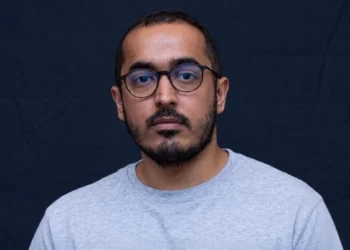
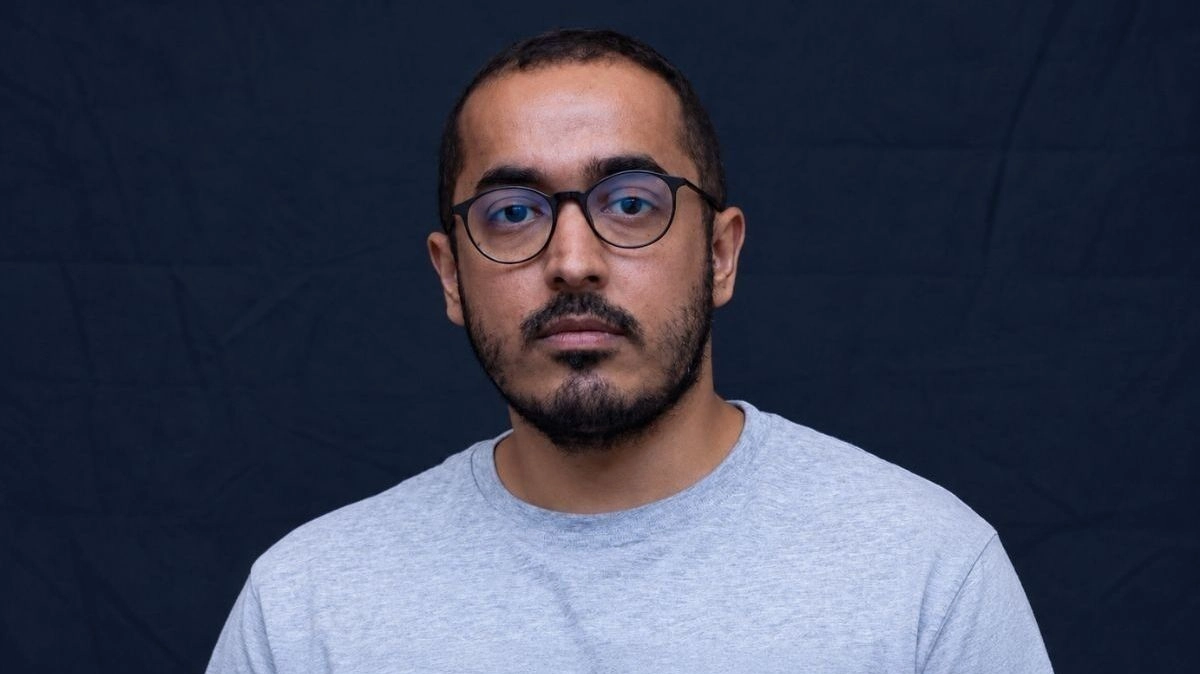
South African journalist Micah Reddy has been released from custody in Djibouti and deported, four days after contact with him was lost in Djibouti City.
Reddy is Africa coordinator at the International Consortium of Investigative Journalists and holds both South African and British citizenship. He was detained together with Mohamed Willo Ismael, known as Kooki Mahmoud, who has been released without charge.
Reddy arrived from Johannesburg by way of Addis Ababa on Thursday, 17 September 2026, intending to stay no more than three days. Contact with both men was lost at about 13:00 local time on Saturday, 19 September, from the Escale International Hotel.
Neither the family, nor the consortium, nor the South African, British and United States governments received official confirmation of his whereabouts until Tuesday, 22 September.
His brother, Niall Reddy, told broadcasters during the wait that “he was in Djibouti on a news story unrelated to that country”. Washington-based ICIJ managing editor Fergus Shiel said Reddy had travelled “in the hope of learning about something that was a long-term investigation”, and declined to say more because detail could place him at further risk.
Their mother told AFP that his last message had been about the heat, and that “he did not express any fear”.
Djibouti gave three different accounts in three days
This is the part that has not been assembled anywhere. Djiboutian officials made four public statements about the case across three days, amounting to three incompatible positions.
| Date | Who | What was said |
|---|---|---|
| 20 September | A government official, to AFP | Said he was unaware of the case |
| 20 September | A senior ruling party member, to AFP | Said the report was not true |
| 20 September | Naguib Ali Taher, senior official in the presidency, to Reuters | Said Reddy had not registered for media accreditation, adding “we need to check the tourist visa records” |
| 22 September | Omar Abdi, Interior Minister | Said Reddy had deliberately avoided obtaining the necessary accreditation |
The first position is that nothing happened. The second is that an accreditation registration is missing and that officials could not confirm whether Reddy was in the country at all. The third is that he knowingly evaded a requirement.
The three cannot all be correct. Djibouti has not reconciled them, and no legal provision authorising a four-day detention has been published.
Angela Quintal, the Committee to Protect Journalists’ regional director for Africa, said “four days in secretive intelligence custody is unacceptable treatment of an investigative journalist”, and that questions remain about the detention and about what she described as an opaque accreditation process.
Five hours in 2018, four days in 2026
There is a direct South African precedent, and it involves the same watchdog official.
In November 2018, Quintal, then CPJ’s Africa programme coordinator and a former Mail and Guardian editor, was detained with her Kenyan colleague Muthoki Mumo in Dar es Salaam. Tanzanian authorities gave the reason as an “immigration violation”.
That detention lasted about five hours. The South African High Commissioner worked through the night, and the two were returned to their hotel by about 03:00, with their passports handed back the following day. The Department of International Relations and Cooperation issued a public statement on the case within days.
Reddy’s detention ran four days. Three governments made representations. No official information reached anyone until the day of his release.
Both cases rest on the same category of stated offence, which is paperwork rather than conduct. The difference in how each was handled is a matter of record rather than interpretation.
The context around Djibouti’s press record
Djibouti ranks 167th of 180 countries in the 2026 Reporters Without Borders press freedom index. Freedom House rated it Not Free in its 2026 Freedom in the World report, scoring it 24 out of 100 on political rights and civil liberties.
The country hosts the only permanent United States military base in Africa, alongside French and Chinese bases, and sits on the Bab el-Mandeb approaches. Quintal argued that this strategic position should attract more scrutiny rather than serve as a reason for restraint.
Foreign journalists have historically faced fewer restrictions there than Djiboutian ones, though BBC journalists were expelled ahead of the 2016 national elections. Local journalists have been detained repeatedly, in several documented cases without any charge following.
Ismael’s position is worth noting on that point. Accounts describe him as a local journalist, a fixer, an assistant and a guide. Which of those he is matters, because a Djiboutian citizen has none of the consular protection that produced four days of diplomatic pressure on Reddy’s behalf.
What South Africans abroad can actually do
The practical lesson from both cases is narrow and worth stating plainly.
DIRCO operates a 24-hour call centre for South Africans in distress abroad on 012 351 1000. It also runs the Registration of South Africans Abroad system, a voluntary and free register that allows the department to assist citizens who hit an emergency overseas. Registering before departure is what allows a mission to act quickly.
In the 2018 case, the department’s own statement urged travellers to understand the immigration rules of the country they are visiting. The South African government has not said whether it regards Djibouti’s accreditation requirements as having been clearly published.
Reddy’s family has asked for privacy until they are ready to say more. In their statement they thanked the South African and United Kingdom governments, diplomatic missions, the consortium and colleagues across the region.
ICIJ director Gerard Ryle said the public response demonstrated “the solidarity that matters when a journalist’s safety is put at risk”.
Three things remain outstanding. Djibouti has not published the legal basis for the detention. It has not explained the contradiction between its own statements. And it has not said what its accreditation process requires of a visiting journalist, which is the question that would determine whether anything Reddy did was an offence at all.
HOW WE REPORTED THIS CROSS-CHECKED
- This article was built from the International Consortium of Investigative Journalists' own statements on the case, being its statement of 20 September 2026 on the disappearance and its statement of 22 September 2026 confirming the release, both read in full rather than summarised.
- The timeline was assembled by cross-checking the consortium's account against the family's public statement and the Committee to Protect Journalists' published positions, and one internal inconsistency in the arrival and disappearance dates is flagged in the article rather than smoothed over.
- Djibouti's position was assembled from four separate statements by Djiboutian officials given to news agencies on 20 and 22 September 2026, and all four are reported as given rather than reconciled, because reconciling them would require this article to decide which is correct.
- The 2018 detention of a South African journalist in Tanzania was checked against the Department of International Relations and Cooperation's own media statement on that case, and is used as a measured precedent rather than as an equivalent.
- The nature of the investigation Reddy was pursuing was deliberately excluded because his editor said publishing detail could place him at further risk and the family has asked for privacy, and no comment was sought from any party for this article.
- This article was drafted with AI assistance and the facts, figures and quotations were checked against the primary source by the editor before publication.