




What Mteto Nyati’s extension actually changes
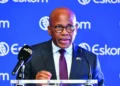
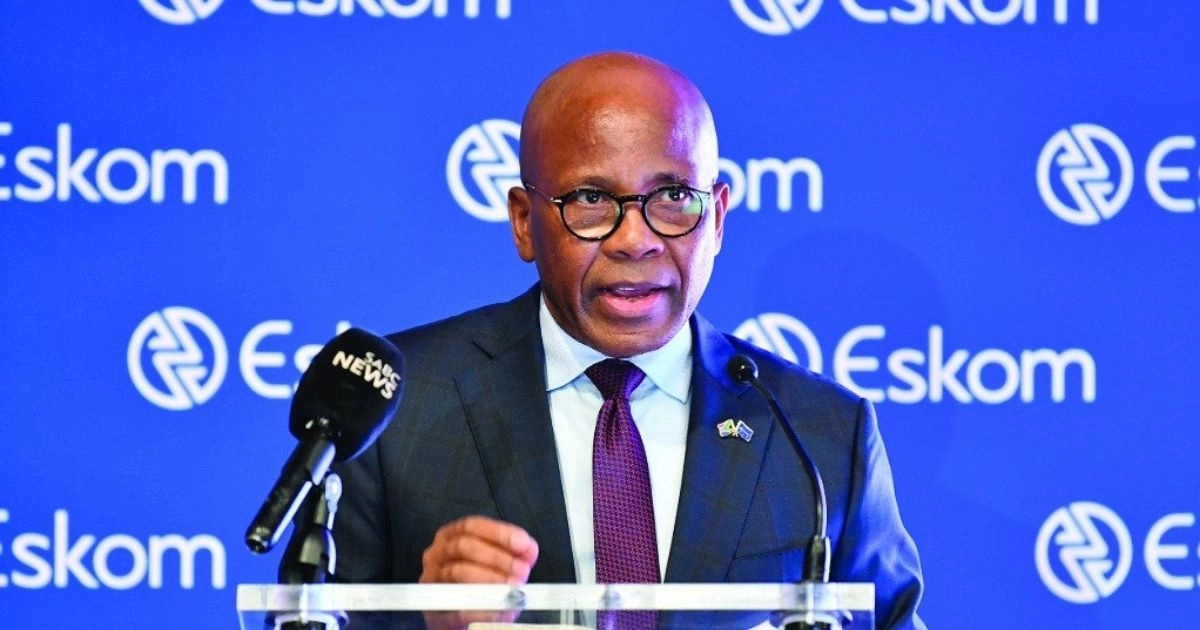
Cabinet has extended Mteto Nyati’s term as Eskom board chairperson by three years, running from 1 November 2026 to 2029. His existing term was due to expire at the end of October.
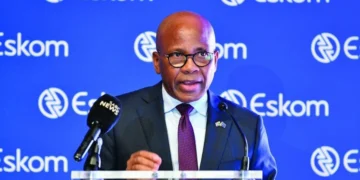
Minister of Electricity and Energy Kgosientsho Ramokgopa announced the decision at a media briefing on Friday, 25 September 2026, and put the reasoning bluntly. “If it ain’t broken, why fix it?” he said.
He credited Nyati with steering the utility through its worst period of load shedding, and said Cabinet had weighed the achievements of the previous board and the work of the current one before deciding. Nyati will continue alongside group chief executive Dan Marokane.
Two commitments made at the same briefing matter more to a household than the appointment does.
| Item | What was said |
|---|---|
| Nyati’s term | Extended three years, from 1 November 2026 to 2029 |
| Tariff increases | Minister said Eskom will not get double-digit increases |
| Bailouts | Minister said there will be no further bailouts |
| Price cuts | Eskom has ruled them out |
| 2026 financial year | About R30 billion profit, the second consecutive profit |
| Municipal debt | Could reach about R350 billion at the present rate |
| Free basic electricity | About R21 billion a year allocated |
| Pricing policy consultation | Public comment extended to 28 October 2026 |
The tariff commitment, and what it does not cover
Ramokgopa said on Friday that Eskom would not receive double-digit electricity tariff increases, and that there would be no further bailouts.
That is worth taking seriously and worth reading precisely.
Tariffs are not set by the minister. They are determined by the National Energy Regulator of South Africa through the multi-year price determination process, on an application from Eskom. Eskom is currently preparing its seventh such application. A ministerial undertaking is a political commitment about what government will support, not a regulatory ceiling.
The commitment also sets a floor by implication. Single-digit increases are still increases. Eskom has separately ruled out price cuts after reporting roughly R30 billion in profit for the 2026 financial year, its second consecutive profit.
So the corridor being described runs from zero to just under 10% a year. That follows the 8.76% increase implemented in April, which was itself a single-digit figure.
Nyati acknowledged the pressure directly. Consumers, he said, “are asking for electricity they can afford”.
R30 billion profit, R350 billion in municipal debt
The number that explains why a profitable utility is not cutting prices came in the same briefing.
Ramokgopa warned that Eskom’s municipal debt could reach about R350 billion if the present rate of accumulation continues, describing it as a threat to the utility’s financial sustainability.
Set against roughly R30 billion of annual profit, a R350 billion municipal debt is nearly twelve times a full year’s earnings. That ratio is Southafriworld’s arithmetic from the two figures given.
A second figure compounds it. About R21 billion a year is allocated for free basic electricity, and government is now considering routing that support directly to indigent households rather than relying on municipalities to distribute it. The money for poor households currently travels through the same municipalities that are not paying Eskom.
Ramokgopa also named electricity losses, theft, inaccurate metering and weak revenue collection as areas needing attention, along with the performance of Eskom’s distribution business.
None of that is fixed by generation performance, which is where Eskom’s recent improvement has been. It sits on the revenue side, and it is the reason a profit does not translate into a lower bill.
The transmission fight behind the reappointment
This reappointment was genuinely in question, and the reason is worth recording.
Nyati supported establishing an independent transmission company but questioned the timing of transferring Eskom’s transmission assets to it, saying the board supported the transfer at the “appropriate point in the future”.
Business Leadership South Africa challenged that position, arguing the direction toward an independent transmission company owning the assets had already been settled. The dispute was later resolved after Eskom and BLSA agreed to engage on implementation.
Cabinet has now extended the chairperson who took the more cautious line. Nyati said the public interest in whether his term would be renewed was legitimate. “There has been significant public interest in whether this term will be renewed,” he said, adding that the question was about whether the country still has the will to fix what matters.
What Eskom 2.0 has to decide
Ramokgopa framed the extension around what government calls Eskom 2.0, a single roadmap covering the utility’s public mandate, commercial position and investment plan over the next three to five years.
He said Eskom can no longer operate as the vertically integrated monopoly it has been for more than a century, as reforms bring new entrants into generation, transmission and distribution. “Eskom is indispensable to our industrialisation agenda,” he said.
The roadmap has to settle the future of the coal fleet, any role in gas and nuclear, the scale and funding of the green business, transmission, regional expansion and the distribution business. Ramokgopa also singled out data centres as an emerging source of demand, saying Eskom needs to understand the cost of serving large new customers and any dedicated network investment they require.
Two dates are fixed. Public comment on the revised Electricity Pricing Policy and the Electricity Sector Market Transformation Position Paper closes on 28 October 2026. Nyati’s new term begins on 1 November 2026.
What has not been published is the seventh price determination application, which is where the no-double-digit commitment will be tested against an actual number. Until that lands, the position for households is unchanged: prices are not falling, and the pressure that comes with higher borrowing costs and the warnings that preceded this year’s energy policy shifts remains in place.
HOW WE REPORTED THIS CROSS-CHECKED
- This article was built from the media briefing given by the Minister of Electricity and Energy on Friday, 25 September 2026, at which the Cabinet decision to extend the Eskom board chairperson's term was announced, together with the chairperson's own remarks at the same briefing.
- The reader-impact commitments made at that briefing, being the undertaking that Eskom will not receive double-digit tariff increases and that there will be no further bailouts, were treated as the lead rather than the appointment itself, because those are the statements that reach a household electricity bill.
- The distinction between a ministerial commitment and a regulatory determination was drawn explicitly, because tariffs are set by the National Energy Regulator of South Africa through the multi-year price determination process and not by the executive, and no coverage located had made that distinction.
- The municipal debt projection was set against the reported annual profit as a ratio, which is a Southafriworld calculation, and it is labelled as such in the article.
- The dispute over the timing of the transmission asset transfer was included because it is the context in which this reappointment was in question, and both the board's stated position and the position of the business organisation that challenged it are reported on their own terms.
- This article was drafted with AI assistance and the facts, figures and quotations were checked against the primary source by the editor before publication.