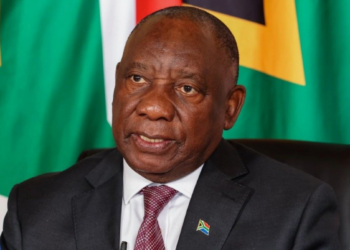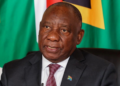
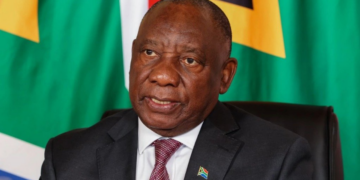


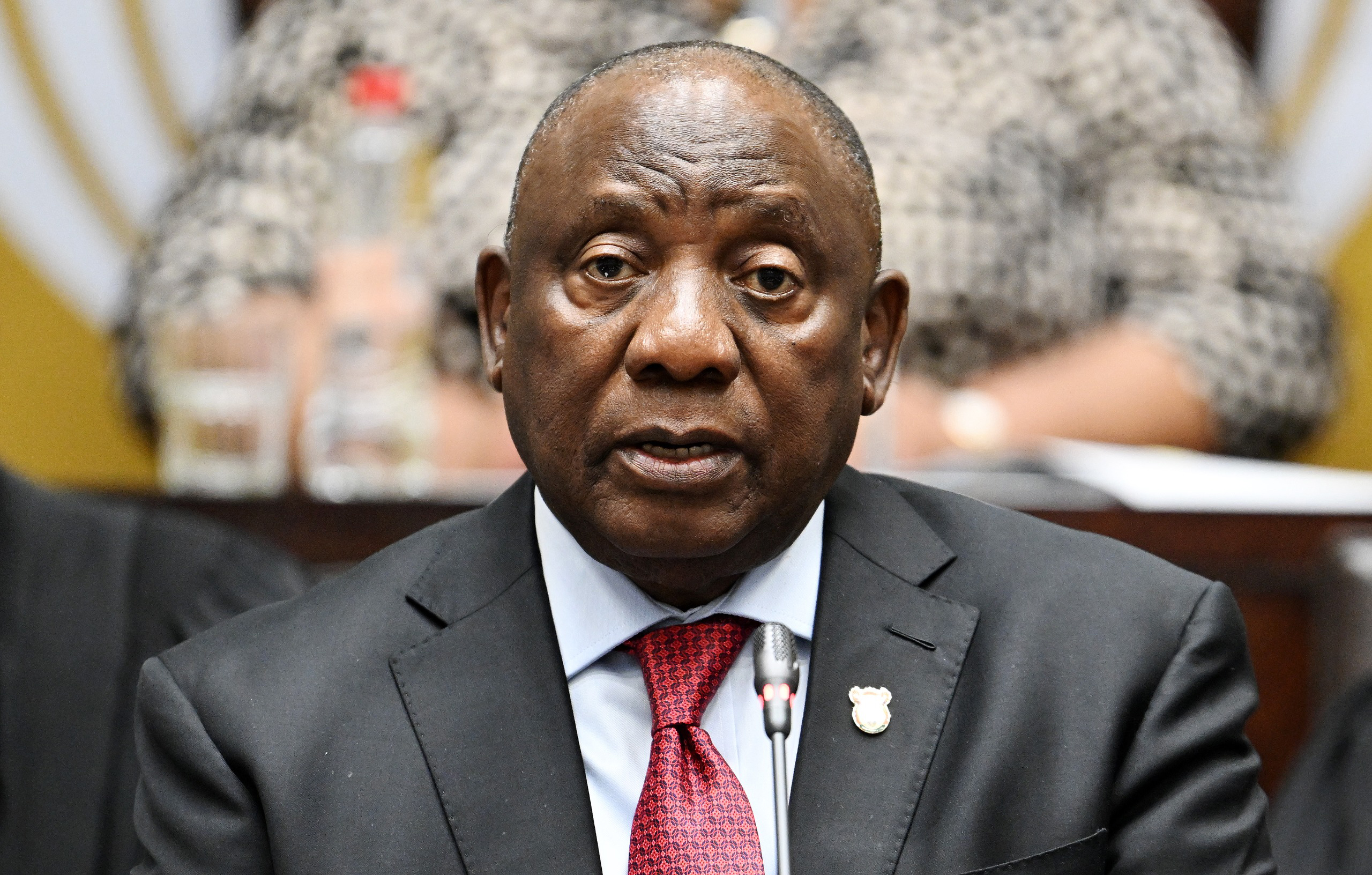
President Cyril Ramaphosa has warned that the escalating conflict in the Middle East is already putting pressure on African supply chains and driving up energy prices, adding a new external threat to South Africa’s fragile economy. Speaking at the Africa Energy Indaba in Cape Town, Ramaphosa said Africa was already feeling the effects of the conflict through supply-chain strain and higher energy costs.
The stronger and more accurate angle here is not that South Africa is facing an immediate domestic collapse. It is not. What Ramaphosa’s warning does show is that the country remains highly exposed to global disruptions it did not cause, especially when those shocks hit oil, gas, shipping routes and imported inputs.
That matters because South Africa imports most of its fuel and remains deeply dependent on global trade flows. When geopolitical conflict disrupts energy facilities and shipping routes, the effect does not stay in the Middle East. It shows up in local pump prices, inflation risks, business costs and the broader cost of living.
What we know so far
Reuters reported that Ramaphosa told the Africa Energy Indaba on 4 March that the Middle East conflict was already straining African supply chains and causing higher energy prices. He linked the current moment to earlier disruptions during Covid-19 and the Russia-Ukraine war, arguing that Africa’s import dependence leaves the continent vulnerable when global conflict escalates.
The warning came at a time of major volatility in global energy markets. Reuters said oil and gas prices surged after Israeli and U.S. strikes on Iran and retaliatory action by Tehran disrupted facilities and shipping through the Strait of Hormuz, one of the world’s most important energy chokepoints.
South Africa’s government has already had to respond to the domestic fallout. Reuters reported on 31 March that the state temporarily cut the general fuel levy by R3 a litre for one month to soften the blow of conflict-driven price increases. Even with that relief, petrol was still expected to rise by about 15% in April and wholesale diesel by about 40%, underlining how severe the external shock had become.
Government later extended that fuel tax relief into May and June. Reuters reported on 28 April that the extension would cost the fiscus about R17.2 billion in foregone revenue, although government said this would be funded through stronger revenue and underspending elsewhere without changing the overall fiscal framework.
Why it matters
Ramaphosa’s warning matters because it goes beyond energy-sector rhetoric. It is effectively a warning that South Africa’s economic weaknesses are still being amplified by global events. When the country depends heavily on imported fuel and other traded inputs, external wars can quickly become domestic inflation shocks.
That has already become a monetary-policy problem. Reuters reported in March that the South African Reserve Bank kept the repo rate at 6.75% and warned that higher energy prices would push inflation up in the near term. In April, Governor Lesetja Kganyago said it was difficult to see a near-term path for easing interest rates because the Middle East conflict was driving volatile moves in fuel and fertiliser prices.
In other words, Ramaphosa’s warning is not only about supply chains. It is also about the knock-on effects. Higher oil prices raise fuel costs, higher fuel costs feed into inflation, and higher inflation makes it harder for the SARB to cut rates. That leaves households and businesses under pressure from both prices and borrowing costs at the same time. This is an inference supported by Reuters’ reporting on the fuel levy cut and the central bank’s stance.
There is also a broader growth risk. Reuters reported that the government’s fuel-relief steps were aimed at cushioning households and key sectors of the economy because policymakers were worried that the conflict’s effects would weigh on growth as well as inflation. That is significant because South Africa’s economy was already weak before the latest shock arrived.
Key details and figures
The key political signal is Ramaphosa’s own wording: Africa is already experiencing the impact of the conflict through strains on supply chains and higher energy prices. That makes this more than a hypothetical warning about what might happen later. It is a statement that the shock is already being felt.
The key household figure is the fuel levy intervention. Reuters reported that government first cut the levy by R3 per litre for April, then extended relief into May and June. For May, petrol got a R3 per litre levy cut and diesel a R3.93 per litre cut, before the relief was due to halve in June.
The key financial number is the repo rate, which the SARB has kept at 6.75% as it weighs the inflationary impact of the conflict. Reuters reported that the bank viewed the shock as growth-negative and inflationary, a combination that makes monetary easing much harder.
Another key number is the fiscal cost of government intervention. Reuters said the extended fuel-relief package would cost R17.2 billion in forgone tax revenue. That illustrates the scale of the pressure: even cushioning the impact temporarily comes at a real budgetary cost.
What happens next
The next step depends largely on how long the conflict continues to disrupt oil and gas markets. If global energy prices remain elevated and shipping disruptions persist, South Africa will remain exposed through imported inflation, fuel costs and slower economic momentum.
For policymakers, the challenge is now twofold. They need to soften the blow where possible, as the fuel levy measures show, while also managing inflation risks that could keep interest rates higher for longer. That is not an easy balance, especially when the source of the problem sits far outside South Africa’s borders.
For now, the safest editorial conclusion is narrow and factual. Ramaphosa is warning that South Africa and the rest of Africa are already being hit by the Middle East conflict through strained supply chains and higher energy prices. The public record supports that warning clearly, and the government’s fuel-relief measures and SARB caution show that the economic fallout is already real.