







What we know so far
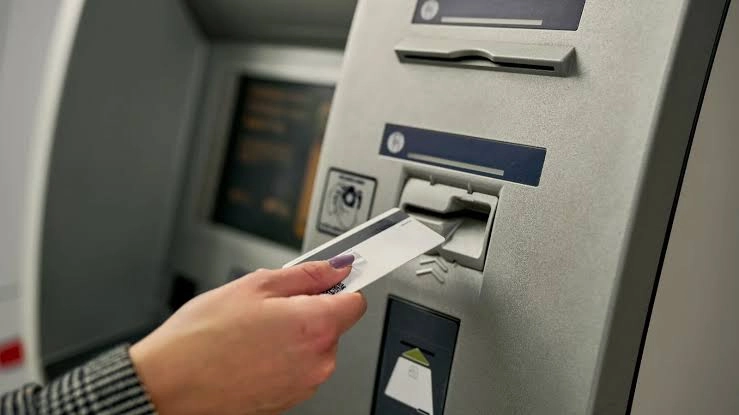
The South African Reserve Bank has proposed a major change to how South Africans access cash, centred on a shift away from bank-branded ATMs toward shared white-label machines.
The proposal is set out in the Reserve Bank’s Position Paper on Cash in South Africa, which frames the change as part of its broader Cash Smart Strategy.
White-label ATMs are independently owned machines that are not tied to a single bank. Customers from any bank can use them to withdraw cash and carry out basic transactions.
Under the plan, bank-owned ATMs would be brought into a national cash utility and converted to white-label facilities, with the aim of reducing fees toward zero through full interoperability.
The Reserve Bank is clear that this is not the end of ATMs or of cash. The paper proposes changing who owns and operates the machines, not removing them.
The position paper is also not binding regulation. The Reserve Bank states it sets out a policy rationale that will guide the development of detailed rules, with deployment, funding, and operational arrangements still to be determined.
The framework would apply across the cash sector, covering banks and non-bank players such as cash-in-transit operators, retailers, and ATM deployers.
Why it matters
Cash remains central to the South African economy despite the growth of digital payments. The Reserve Bank says cash still accounts for more than two-thirds of transactions, particularly in rural areas, informal markets, and lower-income households.
The current system is expensive for the people who rely on it most. The Reserve Bank’s analysis shows consumers carry about half the total cost of cash, working out to around R89 billion per year.
That consumer cost is made up of several components. Explicit fees account for 35 percent, time spent travelling to access cash 31 percent, the act of accessing cash 14 percent, losses including crime 13 percent, sourcing cash from retailers 4 percent, and the opportunity cost of holding cash 3 percent.
The white-label model is intended to cut the two largest components, travel time and the direct cost of reaching a machine, by rebalancing where ATMs are placed.
The Reserve Bank argues that market forces alone cannot guarantee universal access, cost efficiency, or system-wide resilience, especially as the commercial incentives of banks shift over time.
For consumers, the headline benefit would be lower withdrawal fees and wider access, particularly outside major cities. For banks, the change could reduce ATM fee revenue while also lowering the costs they carry to operate the machines.
The plan would also reshape the cash supply chain. A cash utility would model demand and distribution, replacing an indirect subsidy of around R480 million currently received by a small number of private cash-handling companies.
Key details and figures
The Reserve Bank says about R180 billion in cash moves through the economy, equal to roughly 2.5 percent of gross domestic product.
Managing, transporting, and securing that cash cost about R90 billion in the past year, with crime accounting for 13 percent of that burden. South Africa’s cash-in-transit heist rate is among the highest in the world.
The proposed cash utility would be co-owned by stakeholders including banks and retailers. The Reserve Bank has pointed to the Netherlands’ Geldmaat, a shared ATM network jointly operated by major Dutch banks, as a model.
The Reserve Bank’s own cost modelling finds that retailer cash back at the point of sale is currently the most efficient way for consumers to access cash, because it uses existing retail infrastructure and high transaction volumes.
It adds that ATMs become cheaper per transaction as volumes rise, and that bank-operated ATMs are already a more cost-effective channel than bank branches for cash transactions.
The Reserve Bank expects cash usage to fall by 30 to 40 percent over time as South Africa reaches digitisation levels comparable to India, Brazil, and the European Union.
Pradeep Maharaj, who heads the Reserve Bank’s Payments Ecosystem Modernisation Programme, has said full interoperability would allow fees to be reduced to almost zero. He has described the overall plan as a radical transformation of the industry.
What happens next
The position paper guides future regulation rather than imposing immediate change. The Reserve Bank says detailed deployment, funding, and operational arrangements will be addressed through a regulatory framework and supporting instruments still to be developed.
The strategy is at an early stage. Reserve Bank Deputy Governor Rashad Cassim told BusinessTech that more progress has been made in digital payments, such as the PayShap instant payment system, than in cash management so far.
Full rollout could take up to three years, according to the Reserve Bank’s earlier guidance on the strategy.
Several questions remain unresolved, including how the cash utility would be funded, how banks would be compensated for converting their ATM networks, and how quickly underserved areas would see new machines. The Reserve Bank has not published a final implementation timeline.