





• About us
  • Advertise
  • Terms and Conditions
  • Editorial Policy
  • Privacy Policy
  • Contact
Southafriworld
  • Home
  • News
    • All
    • Business
    • Crime
    • Economy
    • Tech
    • Tourism
    New car sales in SA hit a 12-year high | Southafriworld

    New car sales hit 12-year high: what’s driving the boom

    Smart ID bank branch finder now live | Southafriworld

    New online tool shows where to get your smart ID at a bank

    Petrol price cut 52c, diesel up in August | Southafriworld

    Petrol drops 52c but diesel jumps R1.38 from Wednesday

    Southern Africa growth set to slow in 2026 | Southafriworld

    AfDB sees Southern Africa growth slowing to 2.1% in 2026

    Tshwane loses R155 million in grants | Southafriworld

    Tshwane loses R155 million meant for water and roads

    Minimum Wage South Africa 2026: R30.23 | Southafriworld

    Minimum wage South Africa 2026: hourly and monthly rates

    SARS Tax Season 2026: Key Deadlines | Southafriworld

    SARS tax season 2026: deadlines and how to file

    SASSA Grant Amounts 2026: Full List | Southafriworld

    SASSA grant amounts 2026: the full list and payment dates

    South Africa tourism arrivals up 12.3% in 2026 | Southafriworld

    SA tourism arrivals climb 12.3% to 5.5 million in 2026

    • Business
    • Crime
    • Economy
    • Tech
    • Tourism
  • About us
    • Masthead
    • Editorial Policy
    • Privacy Policy
    • Terms and Conditions
    • Corrections Policy
  • Advertise
  • Contact Us
No Result
View All Result
  • Home
  • News
    • All
    • Business
    • Crime
    • Economy
    • Tech
    • Tourism
    New car sales in SA hit a 12-year high | Southafriworld

    New car sales hit 12-year high: what’s driving the boom

    Smart ID bank branch finder now live | Southafriworld

    New online tool shows where to get your smart ID at a bank

    Petrol price cut 52c, diesel up in August | Southafriworld

    Petrol drops 52c but diesel jumps R1.38 from Wednesday

    Southern Africa growth set to slow in 2026 | Southafriworld

    AfDB sees Southern Africa growth slowing to 2.1% in 2026

    Tshwane loses R155 million in grants | Southafriworld

    Tshwane loses R155 million meant for water and roads

    Minimum Wage South Africa 2026: R30.23 | Southafriworld

    Minimum wage South Africa 2026: hourly and monthly rates

    SARS Tax Season 2026: Key Deadlines | Southafriworld

    SARS tax season 2026: deadlines and how to file

    SASSA Grant Amounts 2026: Full List | Southafriworld

    SASSA grant amounts 2026: the full list and payment dates

    South Africa tourism arrivals up 12.3% in 2026 | Southafriworld

    SA tourism arrivals climb 12.3% to 5.5 million in 2026

    • Business
    • Crime
    • Economy
    • Tech
    • Tourism
  • About us
    • Masthead
    • Editorial Policy
    • Privacy Policy
    • Terms and Conditions
    • Corrections Policy
  • Advertise
  • Contact Us
No Result
View All Result
Southafriworld
No Result
View All Result
Home News Crime

Syndicates Targeting Solar Panels, Batteries and Gas at South African Homes

A private security expert warns that organised criminal networks have shifted from opportunistic theft to systematic targeting of high-value energy assets installed in residential properties.

Ezra Labuschagne by Ezra Labuschagne
7 June 2026, 07:19
in Crime, News
A residential rooftop solar panel installation in a South African suburb, representing the growing target for organised criminal syndicates stealing energy assets from homes

What we know so far

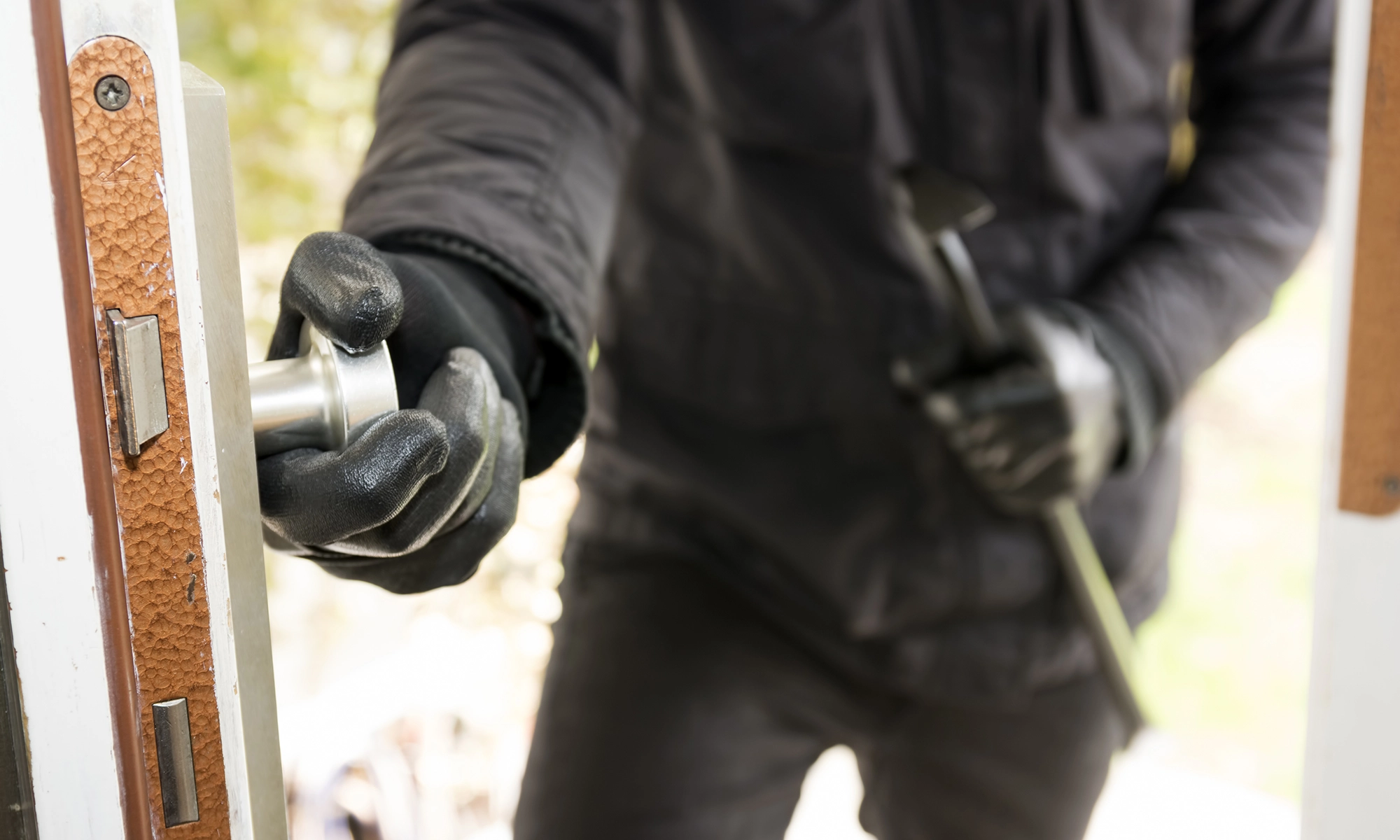
Organised criminal syndicates are now systematically targeting South African homes for solar panels, battery storage systems, and gas cylinders, moving well beyond the opportunistic break-ins that have long characterised residential crime in the country, according to Rodney Taylor, Managing Director of private security group Guardian Eye.

Taylor’s warning, delivered on Moneyweb Radio, comes against the backdrop of the latest crime statistics released by the South African Police Service (SAPS) on 22 May 2026. Those figures, covering the period from January to March 2026, recorded 32,387 home burglary cases and 4,507 house robberies during the quarter. The burglary figure translates to roughly 360 incidents every day, while house robberies averaged 50 per day over the same period.

The majority of residential crimes remain opportunistic in nature. But Taylor told Moneyweb that a growing subset involves professional syndicates with the resources, tools, and market connections to rapidly dismantle and monetise high-value energy infrastructure.

Why it matters

More than one million South African households have installed rooftop solar systems following years of load-shedding, according to estimates from the South African Photovoltaic Industry Association (SAPVIA) and the National Transmission Company of South Africa (NTCSA). Battery attachment rates reached 65% of new residential solar installations in 2024, meaning a substantial portion of those homes also hold expensive battery storage units on their properties.

South Africa imported an estimated R31 billion worth of solar panels over the past decade, creating a large pool of high-value, portable assets with strong resale demand. That combination of widespread adoption, high unit value, and a functioning black market has made energy infrastructure one of the most attractive new targets for organised crime.

Taylor described the shift clearly. Criminals, he said, are no longer grabbing whatever is accessible. They are arriving with the right equipment to dismantle systems quickly, and they know exactly how to move stolen goods.

The problem is compounded by a regulatory gap that Taylor identified as a critical vulnerability. Solar panels in South Africa are not comprehensively serialised or tracked, which means stolen units can re-enter legitimate supply chains. Consumers could unknowingly purchase stolen panels or batteries through standard retail and second-hand channels without any mechanism to detect the fraud.

Key details and figures

Taylor outlined three primary targets that syndicates are now treating as core theft categories: solar panels mounted on residential rooftops, battery storage systems, and gas cylinders installed at homes.

Unlike gate batteries, which have been a theft target for years, the current syndicate activity involves direct entry onto private property to reach roof-mounted panels, enclosed battery units, and gas installations. Taylor noted that criminals often exploit a basic but critical security oversight: homeowners protect their homes as one system while treating energy installations as separate, lower-priority infrastructure.

That separation creates blind spots. Taylor warned that poorly lit, enclosed areas where battery systems and gas cylinders are typically housed create exactly the conditions that favour undetected theft. He also pointed to a common mistake that gives criminals a material advantage: accessible ladders, crowbars, and garden tools left in yards or outbuildings provide the means for a rapid, professional-grade dismantling operation without the perpetrators needing to bring their own equipment.

“Often we see consumers leave ladders, crowbars, garden tools that are able for criminals to access quite easily,” Taylor said.

“These are high-value assets, they’re high in demand, and the consumer needs to ensure that they use technology,” he added, referring to the use of AI-enabled camera systems and tamper-detection sensors as the appropriate countermeasures.

Guardian Eye recommends that homeowners treat solar panels and gas installations with the same security priority given to vehicles or safes. Practical measures include specialised anti-theft bolts for solar panels, protective enclosures for gas cylinders, and sensors hidden on panels and gas bottles that trigger immediate alerts to security response companies when tampering is detected.

On the technology side, Taylor confirmed that artificial intelligence is being used by advanced monitoring operators to detect suspicious activity around energy installations, and that AI-powered drones are now deployed to surveil large solar plants in remote areas. These capabilities are increasingly being adapted for the residential market.

The R31 billion in solar equipment imported into South Africa over the past decade has created a ready supply for a black market that Taylor described as active and organised. Because panels lack mandatory serial number registration or government-enforced tracking, a stolen unit is functionally identical to a legitimately purchased one once it leaves the original installation site.

Taylor called directly on government to close this gap. He urged authorities to crack down on informal second-hand solar markets, introduce stricter regulation of second-hand solar cell trading, and enforce serial number tracking for panels as a minimum standard. He also called for mandatory minimum security standards to be applied to residential and commercial solar installations.

The SAPS Q4 2026 data provides broader context for the environment in which these syndicates operate. While house robberies fell by 20.4% and overall violent contact crimes dropped by 4.6% compared to the same quarter in the prior year, the absolute numbers remain very high. The 22 May release also confirmed that organised crime syndicates accounted for 57.1% of all carjackings, 54.8% of kidnappings, and 48.4% of cash-in-transit robberies nationally during the period, indicating that the infrastructure of organised criminal networks in South Africa is extensive and well-resourced.

What happens next

There is no current regulatory framework in South Africa requiring solar panel serial number registration or second-hand market licensing, and Taylor’s call for government intervention has not yet been met with a public policy response. The Department of Mineral and Petroleum Resources, which oversees aspects of the energy sector, and the South African Police Service have not announced any dedicated programme to address energy asset theft specifically.

For homeowners, the risk is active and growing. With load-shedding declared effectively over by Eskom for the 2026 winter period, the rate of new residential solar installations has slowed from the record 2.6 gigawatts added in 2023. However, the existing base of over one million installed residential systems remains in place, and the value embedded in those installations is not diminishing.

Insurance recovery is an option for homeowners who suffer theft, but the absence of serialisation makes it difficult to recover stolen assets once they enter the black market. Taylor’s advice is prevention-first: secure the assets before they become a target rather than rely on recovery after the fact. The secondary consequence he highlighted, that stolen panels and batteries could be re-sold to legitimate buyers, means the problem extends beyond the direct victims of crime to anyone purchasing second-hand solar equipment without a verified provenance trail.

Get South Africa’s Biggest Stories

Join the Southafriworld newsletter for top stories and weekly news highlights, sent straight to your inbox.

We don’t spam! Read our privacy policy for more info.

Thanks for subscribing. Please check your inbox to confirm your email address.

Source: SAPS Q4 Crime Statistics
Tags: News
Previous Post

Burger Brands Lose Customers as Beef Prices Surge 30%

Next Post

Ramaphosa Confirms Green ID Book Will Be Discontinued

Ezra Labuschagne

Ezra Labuschagne

Ezra Labuschagne is the founder, editor, and publisher of Southafriworld, an independent South African digital news publication. Based in Pretoria, South Africa, he leads the publication’s editorial direction, publishing standards, content review, and audience strategy. His work focuses on current affairs, public interest reporting, business, the economy, public policy, and major developments that affect daily life in South Africa. As founder and editor, he is responsible for final editorial oversight, including source review, accuracy, updates, corrections, and publishing standards across Southafriworld.

Related Posts

New car sales in SA hit a 12-year high | Southafriworld
Economy

New car sales hit 12-year high: what’s driving the boom

08/04/2026
Smart ID bank branch finder now live | Southafriworld
News

New online tool shows where to get your smart ID at a bank

08/04/2026
Petrol price cut 52c, diesel up in August | Southafriworld
News

Petrol drops 52c but diesel jumps R1.38 from Wednesday

08/03/2026
Southern Africa growth set to slow in 2026 | Southafriworld
Economy

AfDB sees Southern Africa growth slowing to 2.1% in 2026

08/03/2026
Tshwane loses R155 million in grants | Southafriworld
News

Tshwane loses R155 million meant for water and roads

08/03/2026
Minimum Wage South Africa 2026: R30.23 | Southafriworld
Economy

Minimum wage South Africa 2026: hourly and monthly rates

08/03/2026
Next Post
Green ID book south african holding it in their hand. News South Africa

Ramaphosa Confirms Green ID Book Will Be Discontinued

  • Trending
  • Latest
US Issues Sanctions Warning to South Africa | Southafriworld

United States Issues Formal Sanctions Warning to South Africa Over Foreign Policy Positions

01/28/2026
Big Smoking Law Changes Coming To South Africa | Southafriworld

Big Change Coming For Smoking Laws In South Africa As New Controls Take Shape

01/12/2026
FlySafair sold to black empowerment investors | Southafriworld

FlySafair sold to black empowerment investor group

02/11/2026
New work hours laws proposed | Southafriworld

New work hours laws proposed for South Africa

02/28/2026
New car sales in SA hit a 12-year high | Southafriworld

New car sales hit 12-year high: what’s driving the boom

08/04/2026
Smart ID bank branch finder now live | Southafriworld

New online tool shows where to get your smart ID at a bank

08/04/2026
Petrol price cut 52c, diesel up in August | Southafriworld

Petrol drops 52c but diesel jumps R1.38 from Wednesday

08/03/2026
Southern Africa growth set to slow in 2026 | Southafriworld

AfDB sees Southern Africa growth slowing to 2.1% in 2026

08/03/2026

Recent News

New car sales in SA hit a 12-year high | Southafriworld

New car sales hit 12-year high: what’s driving the boom

08/04/2026
Smart ID bank branch finder now live | Southafriworld

New online tool shows where to get your smart ID at a bank

08/04/2026
Petrol price cut 52c, diesel up in August | Southafriworld

Petrol drops 52c but diesel jumps R1.38 from Wednesday

08/03/2026
Southern Africa growth set to slow in 2026 | Southafriworld

AfDB sees Southern Africa growth slowing to 2.1% in 2026

08/03/2026
Southafriworld

Southafriworld is an independent South African digital news platform delivering timely, credible reporting on national news, business, politics, technology, lifestyle, and major stories shaping South Africa and the world.

Follow Us

Browse by Category

  • Business
  • Crime
  • Economy
  • News
  • Tech
  • Tourism

Recent News

New car sales in SA hit a 12-year high | Southafriworld

New car sales hit 12-year high: what’s driving the boom

08/04/2026
Smart ID bank branch finder now live | Southafriworld

New online tool shows where to get your smart ID at a bank

08/04/2026
  • About us
  • Advertise
  • Terms and Conditions
  • Editorial Policy
  • Privacy Policy
  • Contact

© 2026 | Designed by Ezra Labuschagne.

No Result
View All Result
  • Home
  • News
    • Economy
    • Business
    • Tech
    • Crime
    • Tourism
  • About us
    • Terms and Conditions
    • Privacy Policy
    • Editorial Policy
    • Corrections Policy
    • Masthead
  • Advertise
  • Contact Us

© 2026 | Designed by Ezra Labuschagne.

This website uses cookies to personalize content and ads, analyze traffic, and improve your experience. By continuing to use this site, you consent to the use of cookies. View our Privacy & Cookie Policy.