










What we know so far
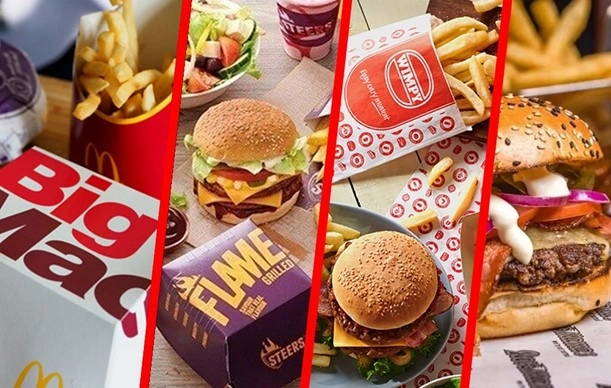
South Africa’s major burger chains, including McDonald’s, Wimpy, and Steers, have lost foot traffic over the past year as consumers eat out less frequently and shift toward more affordable protein options, according to new data from consumer analytics firm Eighty20.
The findings draw on the Marketing All Products Survey (MAPS), a nationally representative survey of 20,000 South Africans conducted quarterly by the Marketing Research Foundation. While the total number of people who purchase fast food has remained broadly stable, a rising share of respondents reported not visiting any fast-food outlet in the past four weeks, indicating a clear drop in visit frequency rather than a collapse in the overall customer base.
Eighty20 Director Andrew Fulton said the shift is visible across the sector’s competitive rankings. Chicken-focused brands, including KFC, Hungry Lion, Pedro’s, and Nando’s, along with two pizza chains, gained ground over the past year. Burger-centred brands lost it.
Why it matters
The trend reflects the combined pressure of South Africa’s worst foot-and-mouth disease (FMD) outbreak in decades and a sustained period of beef price inflation that has directly raised menu costs at chains whose core products depend on beef.
For millions of South Africans, fast food represents one of the primary ways they eat outside the home. Roughly one in two adult South Africans purchased fast food in the past year, according to Eighty20’s most recent figures. When those consumers pull back on visit frequency or trade down to cheaper options, the impact is felt directly in customer counts at brands positioned around beef.
Wimpy and Steers both dropped out of Eighty20’s MAPS top-ten restaurant rankings by the most recent measurement period, reducing the monthly count of unique beef customers eating at top-ten outlets from 6.7 million to 5.2 million people. Meanwhile, chicken-focused brands in the top ten collectively grew their unique monthly customer base from 14.8 million to 15.5 million.
The data also signals a structural affordability shift, not simply a temporary dip. With beef dominating the list of highest-inflation food items for over a year, and no near-term price relief signalled, consumers appear to be recalibrating which proteins they associate with a meal worth buying.
Key details and figures
Beef price inflation reached close to 30% year-on-year during the peak of South Africa’s FMD outbreak in mid-2025, according to data cited by Eighty20. Three beef products recorded the highest annual inflation rates among all 391 items in the consumer inflation basket: beef steak, beef mince, and beef stew each surged between 28% and 31.2%, according to Statistics South Africa data cited by Business Day.
The price impact has carried through to fast-food menus. A Big Mac, using the McDonald’s app as a reference point, rose from approximately R55 in May 2025 to R70.90 by 17 May 2026, an increase of nearly 30% in rand terms and 43% in dollar terms.
South Africa’s FMD crisis recorded 24,406 cases in 2025, the highest annual total ever measured, according to industry data reported by African Farming. The disease spread to at least eight of the country’s nine provinces, reducing cattle availability through both livestock deaths and quarantine of healthy animals. President Cyril Ramaphosa declared the outbreak a national disaster earlier this year. Cattle slaughtering was running approximately 15.6% below year-on-year levels at the peak of the crisis, according to figures from Red Meat Industry Services cited by Business Day.
The cost impact extends beyond the restaurant sector. Eighty20 tracked the input costs of a homemade burger and found that most core ingredients, including beef, cheese, and bread rolls, increased at more than double the general inflation rate over the past year. Only tomato sauce tracked below inflation.
On visit frequency, the MAPS data shows that one in four South Africans dined at KFC in the past month alone, with KFC’s monthly customer base now exceeding the combined count of six other outlets in the top ten. That dominance reflects both KFC’s scale and the broad consumer preference for chicken as South Africa’s most affordable mainstream protein.
Financial results from the sector’s two largest listed restaurant groups provide additional context. Famous Brands, whose Leading Brands portfolio includes Steers, Wimpy, Debonairs, Fishaways, and Mugg and Bean, reported revenue of R8.74 billion for its financial year ending February 2026, up 5.6% from R8.28 billion the prior year. Operating profit rose 4.5% to R955 million. The group’s CEO, Darren Hele, noted during results that mall foot traffic remained soft, particularly through the peak summer trading period, presenting a challenge for Wimpy and Mugg and Bean, which rely more heavily on sit-down mall dining. Hele confirmed that investment is being directed toward smaller-format restaurants, drive-thrus, and delivery channels to adapt to changing consumer demand patterns.
Spur Corporation’s interim results for the first half of its 2026 financial year showed revenue of R2.18 billion, up 8.5% from the prior period, with earnings per share rising to R2.04 from R1.79. However, customer count growth was described as marginal, suggesting that revenue growth is being driven predominantly by higher average spend rather than by attracting more diners.
A separate consumer dataset, BrandMapp, which surveys South Africans in households earning R10,000 or more per month, points to a longer-term dietary trend layered on top of the immediate price pressure. According to BrandMapp, 1.7 million South Africans in this income bracket plan to reduce their meat consumption, 400,000 intend to become vegetarian, and around 250,000 plan to go vegan. This suggests that the pullback from beef-centred fast food may not reverse fully even if prices moderate.
What happens next
The immediate outlook for beef prices offers limited comfort to burger chains. Eighty20’s Fulton said fuel price increases and broader inflationary pressures are expected to keep food costs elevated. South Africa’s FMD vaccination campaign is underway, with vaccine doses sourced from Botswana and Argentina and domestic production being scaled up by the Agricultural Research Council. However, a full recovery in beef supply and price normalisation is a medium-term prospect at best.
Famous Brands has signalled a deliberate strategic pivot toward convenience formats. The group opened six new drive-thrus in its 2026 financial year and said its restaurant pipeline remains active, with franchise partners building multi-brand networks. The company’s own delivery platform, which allows customers to order at restaurant prices without third-party aggregator markups, is a key part of its response to shifting consumer behaviour.
For McDonald’s, Wimpy, and Steers, the challenge is not simply one of price. The MAPS data indicates that their customer bases have contracted even as overall fast-food participation remained stable. Rebuilding those customer counts will require either a price response, a product response, or both, at a time when input costs remain elevated and the competitive advantage held by chicken and pizza chains is structural rather than cyclical.
What remains unresolved is the pace of the beef price correction and whether South Africa’s FMD situation will be brought under control quickly enough to ease cost pressure before further customer share is lost. The government has committed to a national vaccination rollout, but the timeline for restoring South Africa’s beef trade credentials internationally, including with China, which banned South African red meat in 2025, remains uncertain.