



What we know so far
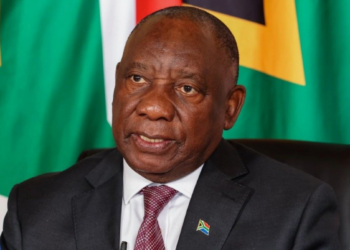
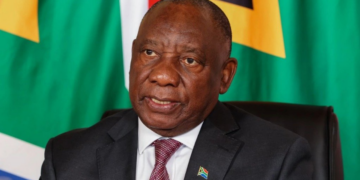
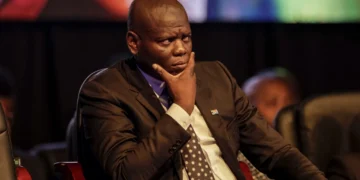
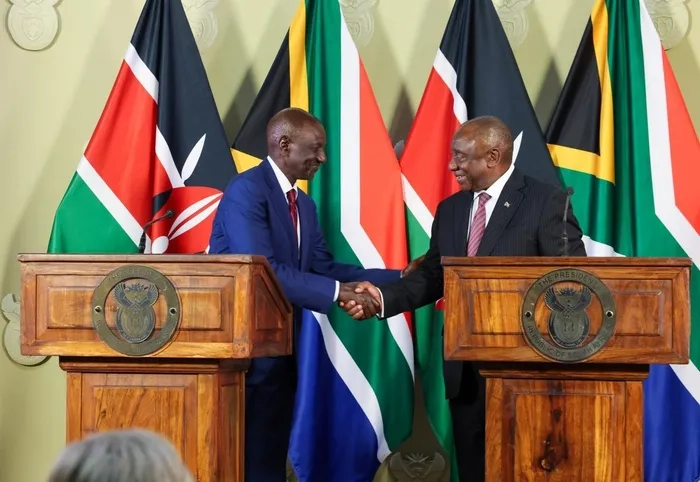
Presidents Cyril Ramaphosa and William Ruto on Thursday oversaw the signing of six Memoranda of Understanding at the Union Buildings in Pretoria, bringing the total number of formal bilateral agreements between South Africa and Kenya to 34.
The six agreements cover trade facilitation, maritime cooperation, gender equality and women’s empowerment, technical and vocational education and training, arts and culture, and sports and recreation. They were formalised at a signing ceremony at the Union Buildings following official bilateral talks between the two heads of state.
President Ruto described the agreements as a clear reflection of the growing partnership between the two countries, noting that they would build on decades of cooperation between Nairobi and Pretoria.
The State Visit, which runs from 3 to 5 June 2026, was undertaken at the invitation of President Ramaphosa. It marks a reciprocal visit following engagements between the two countries in 2021 and 2022, and comes as both governments formally pursue an elevation of relations to the level of a Strategic Partnership.
Why it matters
The visit is one of the most substantive diplomatic engagements between South Africa and any African partner in recent years, and it carries direct economic and geopolitical weight for both countries.
Kenya remains South Africa’s largest trading partner on the African continent outside the Southern African Development Community, with South Africa exporting goods worth approximately R11.1 billion to Kenya in 2025, while imports from Kenya amounted to approximately R464 million.
More than 75 South African companies currently operate in Kenya across sectors including financial services, information and communications technology, energy, logistics, retail and hospitality.
Beyond commerce, the visit carries significance for South Africa’s broader diplomatic posture. The state visit has been described by analysts as highly significant, as South Africa seeks to elevate the relationship to that of a strategic partnership.
Hours before his departure for Pretoria, President Ruto formally granted accreditation to South Africa’s new high commissioner to Nairobi, Salome Zulu-Baloi, who previously served as the G20 engagement lead coordinator for South Africa’s G20 Presidency. The high commissioner post had been vacant for more than eight months following the death of her predecessor, Mninwa Mahlangu. Her accreditation, formalised on the eve of the visit, is expected to accelerate implementation of agreements between the two governments.
Key details and figures
At the joint media briefing following the bilateral talks, President Ramaphosa stated directly that Kenya is one of South Africa’s top trading partners on the continent outside SADC, with over 60 South African companies already operating in Kenya.
Both presidents rejected the framing that Africa is a spectator in a shifting global order, with Ramaphosa asserting that both countries possess elevated influence capable of shaping developments not only on the continent but at a global level. He was explicit that the relationship is built on complementarity rather than competition, stating that South Africa and Kenya do not see themselves as rivals.
On the global governance front, President Ruto pointed to Africa’s inclusion in the G20 as a major diplomatic achievement driven by African advocacy, and praised South Africa’s leadership during its G20 Presidency for positioning African priorities on the world stage. He confirmed he will carry the same priorities to the G7 Summit later this month.
On migration, President Ramaphosa confirmed that South Africa will deploy envoys, not only on the continent but around the world, as part of a coordinated diplomatic effort to address migration challenges. He stated that discussions on migration had featured during his meeting with President Ruto, and that South Africa is in active dialogue with a number of African countries on the issue.
Ramaphosa reiterated that South Africans are not xenophobic and that the country’s people want to live peacefully alongside other Africans, but called on leaders to resolve the challenges that migration has created.
President Ruto framed the long-term answer to irregular migration as the development of economic opportunities across the continent, so that citizens can access services and prospects without needing to move.
The two leaders also discussed opportunities presented by the African Continental Free Trade Area, infrastructure development projects such as the LAPSSET Corridor, and investments in renewable energy and logistics.
Following the signing ceremony, both presidents attended the South Africa-Kenya Business Forum at Gallagher Estate in Midrand, Johannesburg, bringing together government and business leaders from both countries to deepen economic cooperation and identify new trade and investment opportunities.
On the reform of global financial institutions, President Ruto cited the establishment of an African credit rating agency and growing calls for reform of the Bretton Woods institutions as evidence that Africa’s sustained advocacy is producing results. He argued that the global financial architecture’s recognition that it needs to redesign its engagement with Africa represents a significant shift from where the debate stood just years ago.
President Ruto also called for greater mobilisation of African capital through development finance institutions on the continent, arguing that African resources should finance African development rather than being invested elsewhere and borrowed back at higher cost.
What happens next
The State Visit runs until 5 June 2026, with further engagements between the two delegations expected before President Ruto’s departure.
The deployment of South African diplomatic envoys on migration, confirmed by President Ramaphosa during Thursday’s briefing, represents a new strand of foreign policy activity to watch. The scope, timing and specific mandates of those envoys have not yet been publicly specified.
South Africa’s new High Commissioner to Kenya, Salome Zulu-Baloi, is expected to play a central role in the implementation of the agreements concluded during this week’s visit. Her accreditation immediately before the state visit positions her to drive momentum while bilateral goodwill is high.
The six MoUs signed on Thursday will require domestic implementation steps in both countries. The agreement on technical and vocational education and training, and the maritime cooperation pact, are likely to attract further attention given South Africa’s skills development priorities and Kenya’s logistics ambitions in the Indian Ocean corridor.
President Ruto’s planned participation in the G7 Summit later this month will be the next high-profile test of whether the coordinated African voice that he and Ramaphosa described on Thursday translates into concrete outcomes at the world’s most influential economic table.