





What we know so far
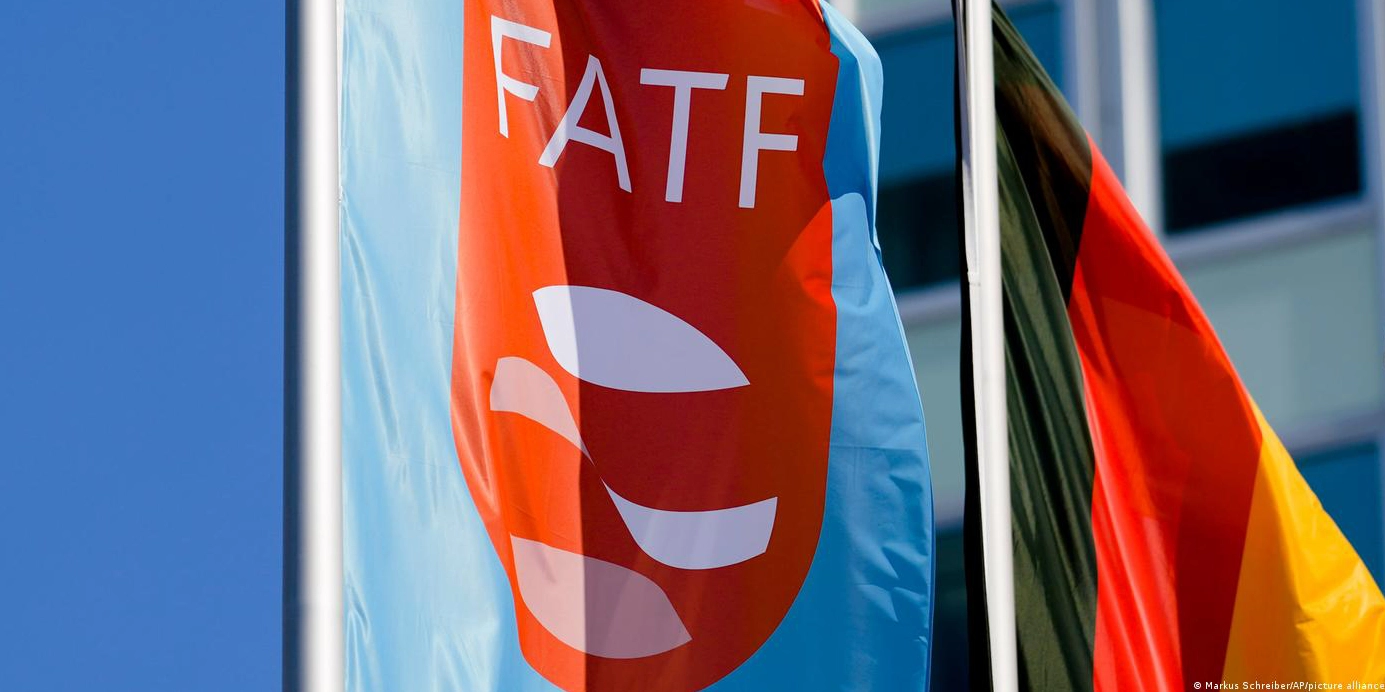
The FATF greylist South Africa worked two and a half years to escape is back in view, less than a year after the country got off it, as a tougher new assessment cycle begins.
National Treasury submitted its initial technical compliance report to the Financial Action Task Force on Monday, 27 July 2026, according to reporting on the process.
That submission opens the country’s next mutual evaluation, the peer review that will decide whether South Africa stays off the greylist or returns to it.
The evaluation runs until October 2027. It assesses two things: whether South Africa’s anti-money laundering laws meet international standards, and whether authorities can actually investigate and prosecute complex financial crime.
The second test is the harder one, and it is where the rules have changed.
South Africa is expected to meet most of the legal requirements. The FATF’s tougher methodology now places greater weight on proven enforcement outcomes than on legislative reform alone.
Steven Powell, head of the forensics practice at law firm ENS, put the shift plainly in an interview on The Money Show. He said the rules themselves have not changed but the game has, because the country now has to demonstrate effectiveness rather than just show that laws have passed.
South Africa exited the greylist on 24 October 2025, after clearing all 22 action items the FATF had set. The question now is whether it can prove those reforms produce convictions.
What a return to the FATF greylist would cost South Africa
The greylist is not an abstraction for ordinary South Africans. It feeds through to the price and speed of moving money.
A return would increase compliance costs, slow cross-border financial transactions and deter foreign investment, adding pressure to an already fragile economy.
During the previous greylisting, from February 2023 to October 2025, accountable institutions such as banks faced heightened scrutiny from international partners, higher compliance costs, and delays in cross-border transactions.
Those costs do not stay with the banks. They are passed on through fees and slower service, and they weigh on investment decisions that affect jobs and growth.
The reputational effect matters too. Greylisting dampened investor sentiment and cast a shadow over South Africa’s standing, including in the lead-up to its 2025 G20 presidency.
Powell argued that the enforcement test is also a domestic one, not only a signal to the FATF. He said people need to be convicted so the public can see that the criminal justice system works and that crime does not pay.
He said that where fraud or corrupt tenders are involved, the state must show it will take away the proceeds of crime and that perpetrators will go to jail.
Key details and figures
The greylisting timeline and the terms of the next test:
| Date | Development |
|---|---|
| November 2019 | FATF mutual evaluation identifies major deficiencies |
| October 2021 | Mutual evaluation report published |
| December 2022 | General Laws Amendment Act passed |
| February 2023 | South Africa greylisted for weak effective implementation |
| June 2025 | All 22 action items completed |
| July 2025 | FATF on-site assessment confirms reforms sustainable |
| 24 October 2025 | South Africa exits the greylist |
| 27 July 2026 | Treasury submits initial technical compliance report |
| October 2027 | Mutual evaluation concludes |
One procedural change raises the stakes sharply. Under the FATF’s new procedures, a country that fails to address deficiencies within three years of its mutual evaluation report will automatically face stricter measures.
That automatic trigger did not exist in the same form during the last cycle, and it narrows the room for slow progress.
A mutual evaluation examines both technical compliance, meaning whether the laws are adequate, and effectiveness, meaning whether they are enforced in practice. South Africa’s weakness has consistently been the second.
When the country was greylisted in 2023, it had already passed the General Laws Amendment Act in December 2022. It was listed anyway, precisely because passing laws was not enough to show effective implementation across the eight areas the FATF flagged.
Treasury made the same point when the country exited. It warned that delisting was only the start of a broader process, and that neither government agencies nor private-sector firms could afford to become complacent and stop improving.
The inter-departmental effort that secured the exit involved Treasury, the State Security Agency, the National Prosecuting Authority and the Directorate for Priority Crime Investigation, according to Cabinet.
Powell pointed to the Madlanga Commission, which he said has heard revelations of large-scale corruption and even sabotage of the criminal justice system, as an indication of both the scale of the problem and of some positive action now under way.
What happens next
The immediate legislative step is a bill. Government is pushing for Parliament to pass the General Laws (Anti-Money Laundering and Combating Terrorism Financing) Amendment Bill before the end of 2026, to close remaining gaps in the legal framework.
That bill addresses the technical compliance side, which South Africa is largely expected to satisfy.
The effectiveness side cannot be legislated. It requires sustained investigations, prosecutions, convictions and asset recovery in serious financial crime matters, demonstrated over the period to October 2027.
The measurable checkpoints between now and then are convictions secured, and proceeds of crime recovered, in significant AML and terror-financing cases. Those are the outcomes the assessors will weigh.
There is genuine uncertainty here. It is not yet established whether the National Prosecuting Authority and the Directorate for Priority Crime Investigation can deliver the volume of successful prosecutions the tougher methodology now demands, and that is the central open question of the entire cycle.
Treasury has said preparations for the evaluation are already under way and that it remains confident South Africa can sustain its progress. The FATF assessors, not Treasury, will make that determination in 2027.
For consumers and businesses, nothing changes today. The consequences, in the form of transaction costs and investor confidence, would only follow a negative finding more than a year from now.