









What we know so far
Artificial intelligence could add more than R1 trillion to the South Africa AI economy by 2030, according to a projection delivered at a Huawei conference in Johannesburg on Monday, 27 July 2026.
Kui Zheng, deputy general manager of Huawei South Africa, put the figure at between R1 trillion and R1.4 trillion, roughly $56 billion to $78 billion at current exchange rates. He said AI could create up to 400,000 new jobs over the same period.
That projection should be read for what it is. It is an estimate presented by a hardware and cloud vendor at its own flagship event, South Africa Connect 2026, not an independent forecast or a government figure.
The event drew what Huawei said were 2,900 leaders from government and industry.
The harder, more immediate number came in the same address. Zheng said South Africa faces a shortfall of around 200,000 AI and information and communications technology professionals by 2030.
He also said fewer than 35% of South African enterprises have identified where AI could unlock value in their own data.
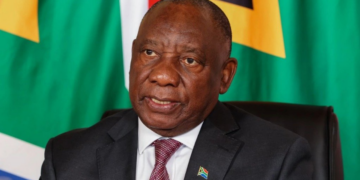
Communications and Digital Technologies Minister Solly Malatsi, who addressed the conference, framed AI as an opportunity rather than a threat, and called for closer partnership between government and industry.
He said connectivity and affordable devices were immediate priorities.
The catch behind the South Africa AI economy numbers
The projected windfall depends on people who do not yet exist in the numbers required, and the size of that gap is disputed.
Huawei’s figure of a 200,000-professional shortfall is at the high end. Independent estimates are considerably lower and do not all agree that the problem is a shortage at all.
Industry analyses over the past year have put the deficit of qualified IT professionals in fields such as cybersecurity, data analytics, AI and software development at between 20,000 and 70,000.
A 2025 study by the skills non-profit Collective X found about 118,500 ICT vacancies nationally, of which more than 40,000 were junior-level roles left unfilled.
Deidre Samson, head of skills and training partnerships at Collective X, has argued that South Africa does not have a digital talent shortage so much as a work-ready talent gap, with thousands graduating each year while employers say applicants are not job-ready.
That distinction matters for readers, because it points to different solutions. A shortage argues for importing skills or training more graduates. A work-readiness gap argues for changing how existing graduates are trained and placed.
The digital divide sits underneath both. According to International Telecommunication Union data cited this month, only about 26% of South African households have a computer at home, and an entry-level machine can cost more than a month’s wages for roughly half the workforce.
For most South Africans, in other words, the trillion-rand opportunity is not yet within reach at the household level.
Key details and figures
The projections and the constraints, set side by side:
| Measure | Figure | Source |
|---|---|---|
| Projected AI contribution to GDP by 2030 | R1 trillion to R1.4 trillion | Huawei South Africa |
| Projected new jobs by 2030 | Up to 400,000 | Huawei South Africa |
| AI and ICT professional shortfall by 2030 | About 200,000 | Huawei South Africa |
| Enterprises that have identified AI value in their data | Fewer than 35% | Huawei South Africa |
| Independent estimate of IT professional deficit | 20,000 to 70,000 | Industry analyses, 2025-2026 |
| ICT vacancies nationally | About 118,500 | Collective X, 2025 |
| Households with a computer at home | About 26% | ITU data |
The Huawei figures in the table are the company’s own projections, presented at its event, and have not been independently verified.
Zheng cited one deployment as evidence that AI is already delivering locally, a rail security system he said had cut cable theft by 80%. Huawei did not publicly release the underlying data for that claim at the event.
Will Meng, chief executive of Huawei South Africa, set out a three-stage path to what he called AI readiness, moving from connectivity to data use to new economic value.
Meng argued that large-scale AI deployment cannot be built without solid digital infrastructure, and that developing economies must build up networks, data and industry digitalisation in sequence.
That argument aligns closely with Huawei’s own commercial offering, which spans networks, cloud and enterprise systems, and readers should weigh it with that in mind.
Lucas Xia, Huawei’s Sub-Saharan Africa director of enterprise partner development, said the company works with more than 1,400 South African partners, naming projects with BCX, Altron, Gijima and CoCre8.
The conference also noted that South Africa joined the newly formed World AI Cooperation Organisation as a founding member, following the World Artificial Intelligence Conference in Shanghai. That membership is a government-level commitment rather than a corporate one.
What happens next
The projection sets a 2030 horizon, which means there is no near-term deadline against which it can be tested.
The nearer question is policy. Malatsi has signalled that connectivity and affordable devices are the government’s immediate priorities, but no new funding commitment or programme was announced at the event.
The skills shortfall is where the projection will succeed or fail, and it is measurable. Whether South Africa closes a gap of tens of thousands, or the 200,000 Huawei cites, will become visible in graduate output and vacancy data over the coming years.
South Africa’s own National AI Policy Framework, published by the Department of Communications and Digital Technologies, remains the reference point for how the state intends to govern and grow the sector. Its implementation timeline is the document readers should watch rather than any single vendor’s target.
A note of caution belongs on the concentration of infrastructure. Much of the connectivity that AI adoption would rely on runs on equipment from a small number of vendors, Huawei prominent among them, and that dependence carries its own strategic and cost considerations that were not the focus of Monday’s event.
For now, the R1.4 trillion figure is a projection by an interested party, the 400,000 jobs are a projection, and the skills gap that stands between them is real but contested in size. None of the three is settled.