








What we know so far
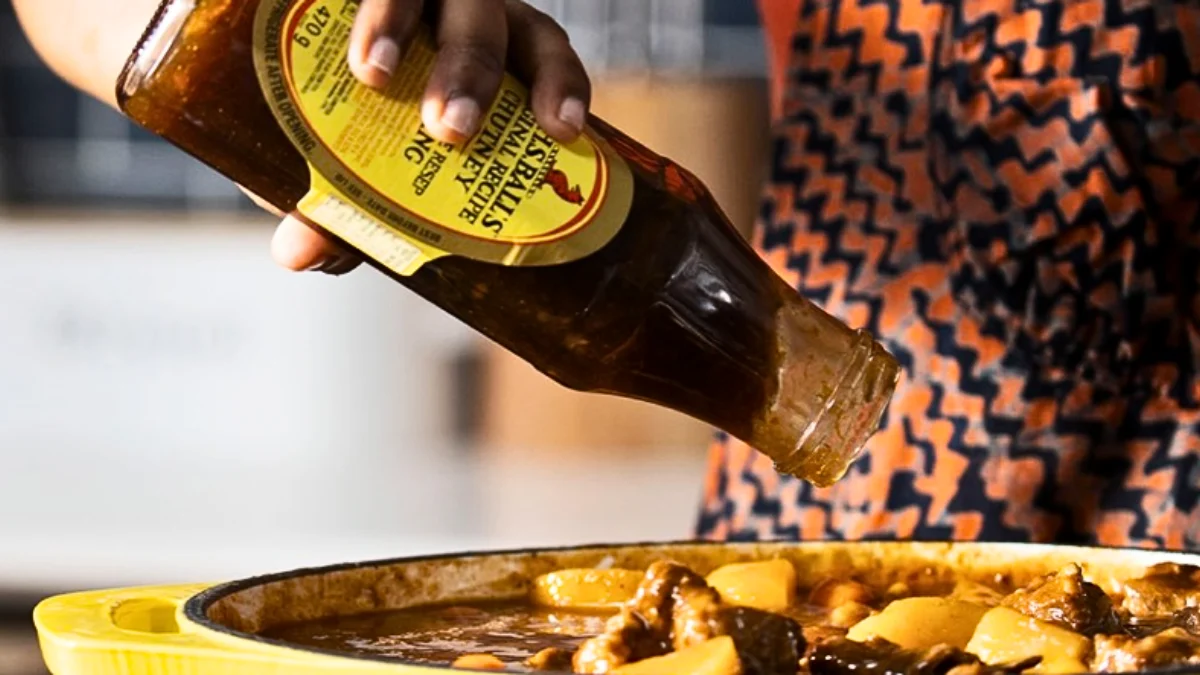
The Mrs Ball’s Chutney era of outsourced production has ended, with Tiger Brands bringing manufacturing of the iconic condiment back in-house for the first time in 13 years.
The company unveiled its upgraded Paarl Culinary site in the Western Cape on Monday, 27 July 2026, after investing more than R200 million to expand and modernise the facility.
For more than a decade, Mrs Ball’s Chutney was made by third-party manufacturer Libstar. It will now once again be produced by Tiger Brands itself.
The change matters beyond nostalgia. It affects where the product is made, who is employed to make it, and which Western Cape farms supply the ingredients.
Tiger Brands chief executive Tjaart Kruger said the company wanted greater control over quality and safety, adding that it does not like having someone else pack its products because it cannot control the quality and safety that way.
Kruger said the move also made practical sense because the ingredients are sourced from the Western Cape, making Paarl the natural production location.
The Paarl project is the first major completion under a broader Tiger Brands strategy to strengthen its manufacturing across South Africa.
What the Mrs Ball’s move means for shoppers and Western Cape farmers
For shoppers, the label changes rather than the recipe. The product stays on shelves, now made in-house, and the company frames the shift as being about tighter quality and safety control rather than any change to the chutney itself.
The more concrete impact is local. The revamped site draws its ingredients from Western Cape growers, and the company has tied specific crops to specific towns.
Strawberries from Paarl and Stellenbosch go into All Gold and Hugo’s jams. Onions from Villiersdorp and Grabouw supply Mrs Ball’s Sweet Chilli Sauce. Seville oranges from Ceres are used for KOO Seville Jam for export markets.
Tiger Brands said seven Western Cape farming businesses supply these ingredients, collectively employing more than 300 permanent workers and around 700 seasonal workers during harvest periods.
Securing production in Paarl therefore supports an existing agricultural supply chain in the province, though the company has not published a separate figure for jobs created at the factory itself by the upgrade.
Dumo Mfini, managing director of Tiger Brands’ Culinary division, framed the investment as being about supply security and modernisation.
He said bringing Mrs Ball’s in-house, securing vinegar supply and improving packaging were aimed at driving growth and meeting consumer needs with more convenient packaging.
Key details and figures
What the R200 million-plus Paarl upgrade delivers:
| Element | Detail |
|---|---|
| Investment in Paarl site | More than R200 million |
| Mrs Ball’s Chutney | Returns to in-house production after 13 years |
| Dedicated production plants | Three |
| New vinegar plant capacity | Three million litres a year |
| Jam packaging | New recyclable PET containers in 290g, 480g and 900g |
| Western Cape supplier farms | Seven |
| Permanent jobs at supplier farms | More than 300 |
| Seasonal jobs at supplier farms | Around 700 at harvest |
The vinegar plant is a strategic piece rather than a side detail. Vinegar is a key ingredient in Mrs Ball’s Chutney, All Gold Tomato Sauce and Crosse and Blackwell Mayonnaise.
Producing it internally reduces Tiger Brands’ reliance on outside suppliers and helps secure production of those products.
On packaging, Tiger Brands said it is the first South African food producer to move jams into recyclable polyethylene terephthalate containers instead of traditional cans, with the new lines also allowing for future packaging formats.
The Paarl site carries deep history in South African food manufacturing. It was established in 1903 and later became home to H. Jones and Co, which had expanded from Australia to South Africa during a downturn in the local wine industry to use surplus fruit.
The site was the birthplace of All Gold Tomato Sauce, first commercially launched in 1908. Today it produces All Gold Jam, Mrs Ball’s Chutney, Hugo’s Jam, Colman’s Worcestershire Sauce and Mustard, and Crosse and Blackwell Kasi Sauces.
The investment sits within a much larger capital programme. Tiger Brands has committed to spending about R1.5 billion a year on capital projects over the next three years, with annual investment expected to peak at R2 billion.
What happens next
The Paarl completion is the first of several large projects in that programme, and the others give a sense of where the spending goes next.
Tiger Brands has flagged a R1 billion super bakery in Pretoria, a new mega distribution centre in Gauteng, the consolidation of its Durban snacks operations, upgrades at its Pietermaritzburg mill and an expansion of its Boksburg culinary facility.
None of those has a completion date on the public record from this announcement, and their individual budgets beyond the Pretoria bakery were not disclosed.
For the Mrs Ball’s brand, the immediate question is operational continuity as production transfers fully to Paarl. The company has not published a timeline for the changeover from Libstar to full in-house output.
The wider strategic aim, as set out by management, is supply security through vertical integration, making more inputs such as vinegar internally rather than buying them in.
Whether that lowers input costs enough to affect shelf prices is not something the company has quantified, and no pricing change has been announced. That remains the open question for consumers.
The Western Cape agricultural supply relationships are the clearest measurable benefit stated so far, anchored to the seven named supplier farms and the roughly 1,000 permanent and seasonal jobs they support at peak.