


What we know so far
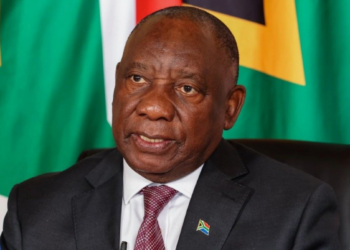
The Ramaphosa interdict was granted on Friday morning, 24 July 2026, when the Western Cape High Court ordered Parliament’s Section 89 Impeachment Committee to halt its public hearings.
The order stands until the president’s separate review application against the Section 89 independent panel report is decided.
That review is set down for hearing from 2 to 4 September 2026 in the same court.
The bench was not unanimous. Judge André le Grange said the court delivered three judgments, the first of which concluded that President Cyril Ramaphosa had not made out a case for an interim interdict and proposed that the application be dismissed.
The second and third judgments concluded that he had made out a case, and proposed an interdict of limited duration. The majority carried.
Le Grange said the court had carefully considered the arguments advanced by the parties in the limited time available, given the urgency of the matter.
The order binds National Assembly Speaker Thoko Didiza, cited as first respondent, and the chairperson of the Impeachment Committee.
Costs of the urgent application were not decided. The court ordered that they stand over for determination by the court hearing the review.
The Presidency responded through spokesperson Vincent Magwenya, saying the president reaffirms his respect for judicial independence and the separation of powers, and will continue to cooperate with and abide by processes of accountability.
What the Ramaphosa interdict does and does not do
The ruling decides timing. It does not decide the impeachment question, and it makes no finding on the underlying allegations.
The Impeachment Committee has not heard evidence, has made no findings, and the president denies wrongdoing.
Committee chairperson Makashule Gana said the committee notes that the interdict is directed at the public hearings pending the review application, and that members will study the full judgment to establish which aspects of the work may proceed.
That distinction matters. Preparatory work on terms of reference and the appointment of an evidence leader was already under way, and the committee will now determine what of that survives the order.
The Democratic Alliance said the ruling does not bring the impeachment process to an end, and that it would study the court’s reasoning before deciding on next steps.
DA member of Parliament Glynnis Breytenbach described the judgment as unusual, given that one judge found the president had not met the requirements for relief.
ActionSA chief whip Lerato Ngobeni said the Section 89 committee exists to establish the facts, evaluate the evidence, and determine whether the constitutional threshold for impeachment has been met.
Inkatha Freedom Party chief whip Nhlanhla Hadebe said the party respects the judgment of the court and the independence of the judiciary, and will continue to participate in parliamentary processes subject to the court’s directives.
For voters, the practical effect is that a process ordered by the Constitutional Court in May now waits on a September hearing date.
Key details and figures
How the matter has moved:
| Date | Development |
|---|---|
| February 2020 | Theft of foreign currency at Phala Phala game farm, Limpopo |
| November 2022 | Section 89 panel finds prima facie evidence of possible violations |
| 13 December 2022 | National Assembly votes 214 to 148 against referring the report |
| 8 May 2026 | Constitutional Court sets that vote aside as irrational |
| 1 June 2026 | Makashule Gana elected chairperson of the 31-member committee |
| 15 and 16 July 2026 | Urgent interdict heard, judgment reserved |
| 24 July 2026 | Interim interdict granted, public hearings halted |
| 2 to 4 September 2026 | Review of the panel report heard |
The panel report referred to the theft of approximately $580,000, about R9.6 million at current rates.
Advocate Wim Trengove SC, appearing for the president, argued that subjecting him to a public impeachment inquiry on the basis of a report that is itself under challenge would amount to a humiliation from which he could not easily recover.
The parties opposing the application were the African Transformation Movement, the Economic Freedom Fighters, uMkhonto weSizwe and United African Transformation, alongside the Impeachment Committee itself.
They argued that the president had failed to establish irreparable harm, and that harm would instead fall on the public if accountability were delayed.
During argument, Judge Matthew Francis referred to former president Nelson Mandela giving evidence in the South African Rugby Football Union litigation, putting to counsel that appearing in court is not inherently humiliating.
The central ground of the review itself concerns the legal test the panel applied.
Ramaphosa’s legal team contends that the parliamentary rules required the panel to determine whether there was sufficient evidence of serious misconduct, whereas the panel assessed only whether there was prima facie evidence.
A prima facie finding is a preliminary assessment that there is a case to answer. It is not a finding of guilt, and the panel conducted no trial.
What happens next
The review hearing from 2 to 4 September is now the decisive proceeding. If the panel report is set aside, the foundation of the inquiry falls away. If it survives, the committee resumes.
The Mail and Guardian reported that hearings would resume from that point and consider the implications of a reviewed report.
No date has been set for judgment on the review, though the court was told during argument that a decision could be expected shortly after the hearing.
The Impeachment Committee’s immediate task is to determine what work may lawfully continue. Gana has not indicated when that assessment will be complete.
An unresolved question inside the committee concerns whether the president would testify in person. Draft terms of reference indicate he may testify and could do so through a representative, with no adverse inference drawn should he decline.
Several parties, including the MK party, the EFF, ActionSA and the ATM, have argued that he should appear in person. That contest is now suspended along with the hearings.
Costs remain open and will be argued before the review court.
Removal of a president under section 89 ultimately requires a resolution supported by at least two thirds of members of the National Assembly, a threshold no such motion has ever reached in South Africa.