







What we know so far
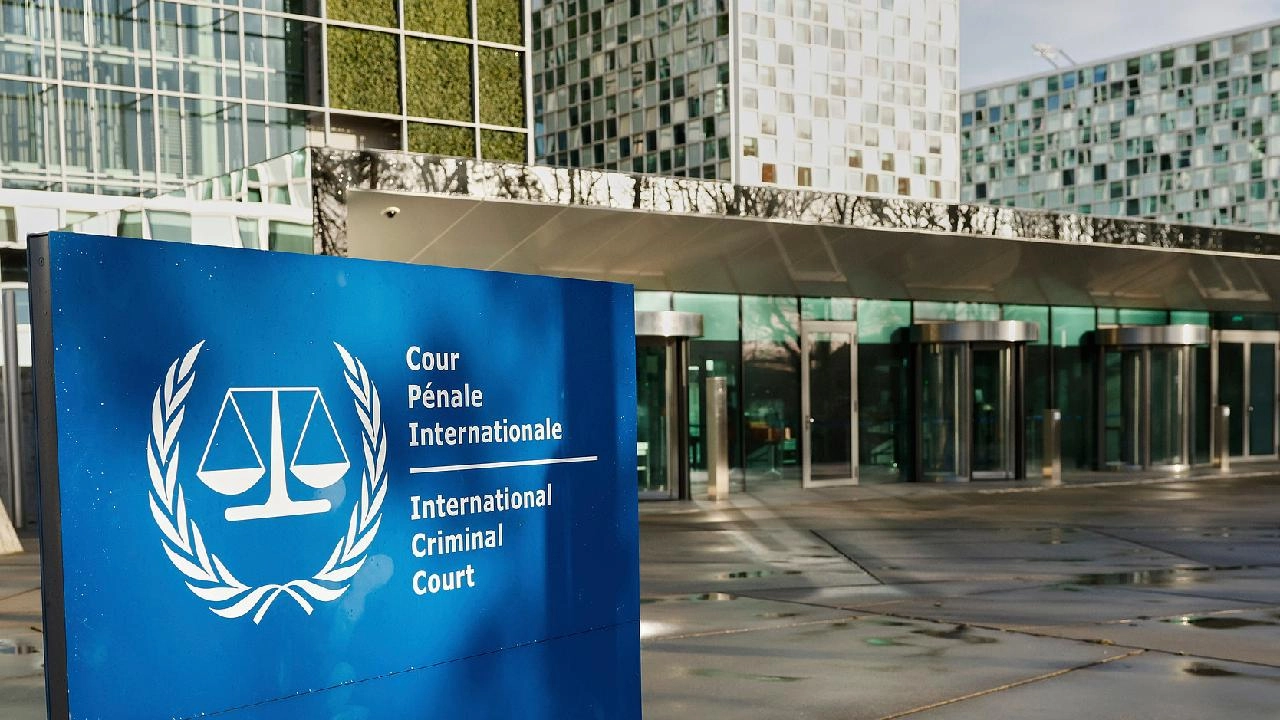
An ICC petition South Africa’s government has now formally rejected was submitted to the Office of the Prosecutor of the International Criminal Court on 15 July 2026, asking the court to examine attacks on African migrants in the country.
The Department of International Relations and Cooperation described the filing as opportunistic in its response on Thursday, 23 July.
DIRCO spokesperson Chrispin Phiri said South Africa notes that the filing fails to satisfy the statutory legal triggers and jurisdictional requirements necessary for action by the court, and that the country maintains full confidence in its domestic legal framework.
The government said South Africa has laws to punish hate crimes and hate speech.
The petition was filed by two Ghanaian nationals acting privately. They are Palgrave Boakye-Danquah, a former Ghanaian government spokesperson on governance and security, and Emmanuel Kotin, a counter-terrorism and security analyst.
Kotin told the Associated Press that the initiative is private and is not backed by Ghana’s government.
Nothing in the petition has been tested, verified or accepted by the court. The ICC has confirmed only that it received the communication, which it did after the petitioners made the filing public.
No preliminary examination has been opened. No investigation has been authorised. No individual has been charged, and no finding of any kind has been made against any person or institution.
Why the ICC petition South Africa faces matters
The significance is diplomatic and reputational rather than immediate or legal, and the distinction is worth stating plainly.
Communications of this kind are submitted to the Office of the Prosecutor in large numbers each year. The overwhelming majority never proceed to a preliminary examination, and fewer still result in an investigation.
Under the Rome Statute, the prosecutor must first assess whether a communication provides a reasonable basis to proceed. Opening an investigation on the prosecutor’s own initiative then requires authorisation from a Pre-Trial Chamber of the court.
A further hurdle is complementarity, the principle that the ICC acts only where a state is genuinely unwilling or unable to investigate and prosecute itself. That is the ground on which Pretoria has framed its rejection.
The context in which the filing lands is what gives it weight.
More than 160,000 foreign nationals have left South Africa over roughly two months, according to an AFP tally compiled from figures released by the repatriating governments.
Relations with several African states have been strained. Ghana postponed a planned visit by President Cyril Ramaphosa to Accra following the death of a Ghanaian national, although South African authorities said that killing was not linked to the anti-immigrant protests.
President Ramaphosa this week sent International Relations and Cooperation Minister Ronald Lamola to meet Ghanaian President John Mahama.
Mahama said afterwards that Ghana holds no ill will toward South Africa but remains deeply concerned about the attacks and about capital losses suffered by Africans affected by the violence.
Key details and figures
Departures recorded by the repatriating governments and by South African authorities:
| Country | Nationals returned |
|---|---|
| Zimbabwe | 108,366 as at 18 July, according to the Zimbabwean cabinet |
| Malawi | More than 46,890 since early June, on 699 government buses |
| Mozambique | Nearly 2,000, according to South African government figures |
| Nigeria | About 1,490, according to government figures |
| Ghana | At least 926, according to government figures |
Malawi’s government said six people died during the journey home.
On deaths inside South Africa, the record is contested and should be read as such.
AFP reports that the current wave of protests has claimed the lives of at least four migrants, while noting that some foreign governments put the toll higher.
Two Mozambican nationals were killed at the end of May following a protest in Mossel Bay, the first deaths of the current wave. Mozambique later said five of its citizens had died.
South African authorities subsequently confirmed the deaths of an Ethiopian national and a Malawian national amid what was described as anti-foreigner sentiment.
Nigeria has said two of its nationals were killed. Ghana has said one of its citizens died in a Cape Town township. South African authorities have rejected both of those claims and have warned that disinformation is circulating online.
The petition itself alleges a pattern of widespread and systematic attacks against African migrants between 2015 and 2026, including killings, assaults, looting and forced displacement.
It cites Article 7 of the Rome Statute, which defines crimes against humanity as certain acts committed as part of a widespread or systematic attack directed against a civilian population.
The petitioners allege a failure by state authorities to prevent, investigate and prosecute those acts, which they characterise as acquiescence and potential state responsibility.
They have asked the prosecutor to open a preliminary examination and to summon and question President Ramaphosa and other senior officials in order to determine the extent of command responsibility.
The petitioners have also called on the African Union, ECOWAS and human rights institutions to support the process.
South Africa is a state party to the Rome Statute. It signed on 17 July 1998 and deposited its instrument of ratification on 27 November 2000, and the Rome Statute Implementation Act 27 of 2002 gives the treaty effect in domestic law.
The Presidency confirmed in April 2023 that South Africa remains a signatory, after an earlier decision to withdraw was rescinded.
What happens next
The next step rests entirely with the Office of the Prosecutor, which has not indicated whether it will act on the communication.
No timeline applies. The office is under no obligation to respond publicly, and communications may remain unaddressed indefinitely.
Should a preliminary examination be opened, the prosecutor would assess jurisdiction, admissibility and the interests of justice before deciding whether to seek authorisation for an investigation.
The petitioners have said they are ready to supply further evidence and to cooperate with the prosecutor’s office.
Domestically, the position of the South African Police Service and the National Prosecuting Authority on individual cases will be the material test of the complementarity argument the government has advanced.
No consolidated public account has been published of how many prosecutions have followed the violence of recent months.
The diplomatic track continues in parallel. Nigeria and Ghana have called for what they term Afrophobia to be placed on the agenda of the next African Union summit.
The March and March movement has said it will hold weekly demonstrations until the local government elections in November, which means the underlying situation the petition describes remains live.