








What we know so far
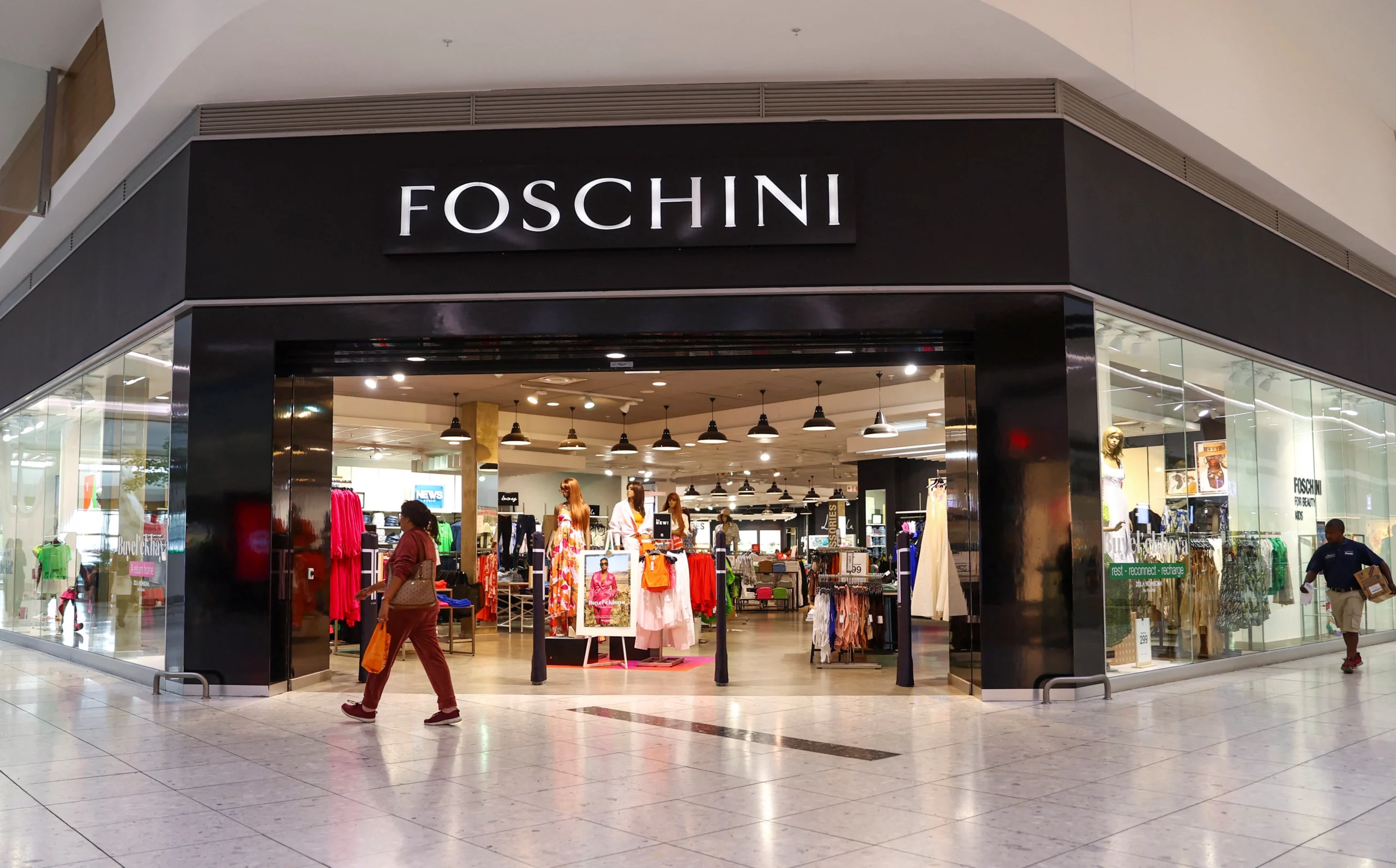
TFG store closures are set to remove more than 100 shops from South Africa in the current financial year, as The Foschini Group shifts spending toward online sales.
The plan was set out by chief executive Anthony Thunstrom at the group’s annual results presentation on 5 June 2026, and the closures are rolling out through the year to March 2027.
TFG is one of South Africa’s largest fashion retailers. Its brands include Foschini, Jet, Markham, @home, American Swiss, Sportscene, TotalSports, Exact, Coricraft and Fabiani.
The group has identified about 300 stores it considers marginal or underperforming. It will close just over 100 of them in the year ahead, on top of about 100 closed in the previous financial year.
Thunstrom described the loss-making stores as generally only minimally loss-making, and said the group would close stores as quickly as the lease profiles allow.
The driver is a shift to digital. Thunstrom said the growth of TFG’s online platform, Bash, lets the company reduce store numbers while still reaching customers.
This is a strategy set out in June and now being executed, not a fresh announcement. The closures are part of an ongoing programme tied to the group’s results. [INTERNAL LINK: South Africa retail sector]
What the TFG store closures mean for shoppers and staff
For shoppers, the immediate uncertainty is which stores near them might close, and TFG has not answered that.
The group has named a pool of about 300 marginal stores but has not published a list of which specific outlets or brands will shut. Until it does, no individual store or town can be confirmed as affected.
What is clear is the direction. TFG said R1.1 billion in online sales generated by Bash in the 2026 financial year was equivalent to opening more than 100 physical stores.
Thunstrom said the group would aggressively leverage Bash and its omni-fulfilment capabilities to move toward a more capital-light model, and was optimising its store footprint in light of economic reality.
For staff, the position is more serious but less defined. TFG employs roughly 30,000 people, and store closures raise obvious questions about jobs.
The group has not published a job-loss figure. A shift toward online fulfilment can absorb some roles rather than remove them, so the number of closures does not translate directly into an equivalent number of retrenchments.
That said, the absence of a stated figure is itself the uncertainty here. Until TFG confirms the employment impact, the effect on workers cannot be quantified from the available material. [INTERNAL LINK: South Africa unemployment]
Key details and figures
TFG’s results for the year to 31 March 2026, as filed with the JSE:
| Measure | FY2026 |
|---|---|
| Group revenue | Up 7.2%, to about R62 billion |
| Group sales excluding White Stuff | Up 2.8% |
| Headline earnings per share | Down 33.5%, to 675.4 cents |
| Operating profit before impairments and acquisition costs | Down 22.1% |
| Gross margin | Down 120 basis points, to 48.2% |
| Group online sales | Up 31.7%, now 14.8% of retail sales |
| Total dividend | Down 30.8%, to 270 cents |
| Marginal SA stores identified | About 300 |
| SA stores to close in FY2027 | More than 100 |
The revenue growth flatters the picture. TFG’s own filing notes that group sales excluding its United Kingdom acquisition White Stuff grew just 2.8%, against reported group growth of 7.2%.
The profit fall is the real story. Headline earnings per share dropped 33.5% to 675.4 cents, and operating profit before brand impairments and acquisition costs fell 22.1%.
TFG recognised non-cash impairment charges against the Phase Eight brand in the United Kingdom and the Tarocash and yd. brands in Australia, reflecting reduced long-term expectations for those businesses.
The results were prepared under the supervision of chief financial officer Ralph Buddle, a chartered accountant, and reflect what the company called a weaker second half as trading deteriorated across all regions.
The competitive pressure is a specifically South African concern for readers. TFG cited low economic growth, high unemployment and rising input costs, alongside increased competition from online fast-fashion retailers Shein and Temu.
Those two platforms sell directly to South African consumers at low prices, and their growth has coincided with pressure on local clothing retailers.
The market has taken a cautious view. Analysts moved to a Hold stance on the stock after the results, with at least one price target cut to R93, citing execution and macroeconomic risks.
What happens next
The closures proceed through the financial year to March 2027, at a pace TFG has tied to its lease commitments. Stores on shorter or expiring leases can be exited sooner than those locked into long agreements.
TFG is also reviewing its marginal brands and simplifying its brand structures in South Africa and the rest of Africa. Thunstrom said the breadth of the group’s 28-brand African portfolio had increased complexity and diluted returns.
He said the group would consolidate operating structures, remove layers and fold marginal brands into a simpler structure. No brands have been named for discontinuation.
Capital spending is being cut. TFG has said capital expenditure for the 2027 financial year will be lower than in 2026, with investment proceeding only where it is de-risked.
The measurable checkpoints ahead are the group’s interim results around November 2026, which will show how many stores have actually closed, and the full-year results in mid-2027.
Two things remain unresolved and worth watching. The first is the employment impact, which TFG has not quantified. The second is whether the pivot to Bash and the store cuts restore the margins that fell this year, a recovery the group itself has framed as a three-year effort rather than a quick fix. [INTERNAL LINK: South Africa online shopping]
For shoppers, nothing changes overnight, and affected stores will close gradually as leases allow rather than all at once.