

What Rubio announced
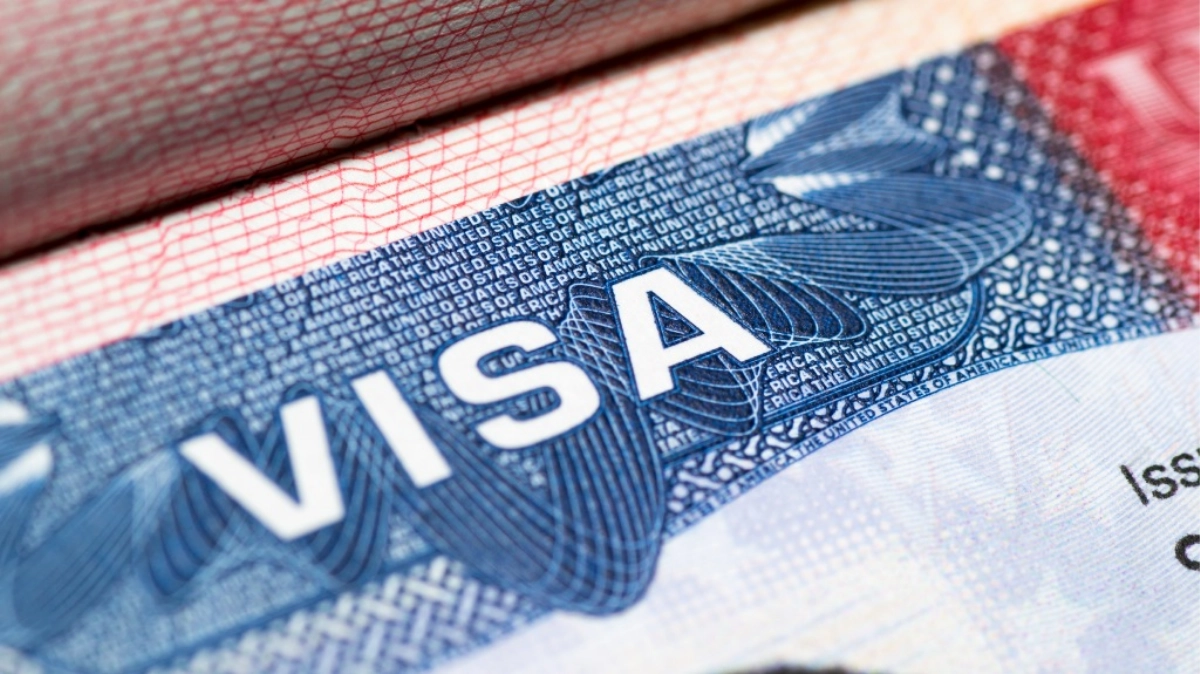
United States Secretary of State Marco Rubio announced a new visa restriction policy on Tuesday, 15 September 2026, aimed at people the Trump administration holds responsible for policies in South Africa that it describes as race-based discrimination, uncompensated land seizures and incitement of violence against minority groups.
The US visa restrictions South Africa is now dealing with are narrower than the headlines suggest. The policy targets foreign nationals who, in the State Department’s determination, enact or enable those policies. It is not a restriction on South African passport holders.
“Those responsible for these injustices have no place in the United States,” Rubio said.
In his statement, Rubio said the United States remains gravely concerned about racially motivated crime and what he called government-sponsored discrimination against Afrikaners and other minority populations in South Africa, citing race-based discriminatory legislation, threats of land expropriation without compensation, and incitement of racial violence through what he described as dehumanising chants and slogans.
He framed the announcement as an escalation. “The South African government has not adequately addressed the previously laid out concerns,” Rubio said, before announcing the policy.
What the US visa restrictions South Africa faces cover
| Question | Position as at 16 September 2026 |
|---|---|
| Who is covered | Individuals the State Department determines enact or enable the policies it names |
| Are ordinary South African travellers affected | Not by this announcement |
| Have any names been published | No |
| Is a list expected | The announcement does not say |
| What the policy cites | Race-based discriminatory legislation, threats of expropriation without compensation, and incitement of racial violence |
| What it does not do | Impose a country-wide visa ban, tariff, sanction or travel advisory |
Visa restriction policies of this kind are applied case by case at the point of application, which means a person subject to one usually learns of it when a visa is refused rather than through a published designation.
That distinction matters for South African readers planning travel. A student, tourist or business traveller applying for a US visa is not within the stated scope of Tuesday’s announcement.
The visa change that already affects South Africans
The change that has actually altered how South Africans apply for US visas happened six weeks ago and had nothing to do with this dispute.
From 1 August 2026, the State Department realigned routine visa services across Sub-Saharan Africa into a smaller number of regional hubs. The US Consulate General in Durban is on the list of posts where routine visa services ceased, alongside posts in Gaborone, Harare, Maseru, Mbabane, Maputo, Windhoek and more than a dozen others.
Applicants from those countries must now schedule appointments and pay fees at a designated regional hub. For South Africa, that consolidation affects where a Durban-based applicant is processed rather than whether they can apply.
Separately, Presidential Proclamation 10998 took effect on 1 January 2026, suspending or limiting entry and visa issuance for nationals of 39 countries. South Africa is not among the countries named in the material Southafriworld reviewed.
The dispute over the Expropriation Act
The legislation at the centre of the disagreement is the Expropriation Act 13 of 2024, signed by President Cyril Ramaphosa on 23 January 2025. It replaces an apartheid-era law from 1975 and sets out when property may be expropriated for a public purpose or in the public interest, including circumstances in which nil compensation may be just and equitable.
The two governments describe the same statute in incompatible terms, and neither characterisation is settled by the other.
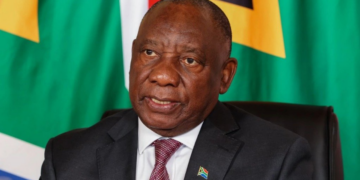
Ramaphosa has said the Act is “not a confiscation instrument” but a constitutionally mandated process, and has said no land has been confiscated under it. The White House executive order of February 2025, titled Addressing Egregious Actions of The Republic of South Africa, describes the Act as enabling the government to seize Afrikaners’ agricultural property without compensation.
Southafriworld could not establish from published sources whether any property has been expropriated under the Act since it was signed.
On the chants Rubio referred to, Ramaphosa has drawn a distinction between political speech and state policy. “Our government policy is completely, completely against what he was saying,” he said of one such incident, adding that South Africa’s multiparty democracy allows people to express themselves.
What has not been said
Tuesday’s announcement is the latest step in a sequence running since early 2025.
- 23 January 2025: Ramaphosa signs the Expropriation Act into law.
- February 2025: Rubio announces he will not attend the G20 summit in Johannesburg. The White House issues an executive order on South Africa.
- 2025 into 2026: The United States admits Afrikaner refugees under a reshaped programme, more than 7,700 by late June 2026, while largely closing the refugee programme to applicants from elsewhere.
- 1 August 2026: Routine US visa services cease at the Durban consulate under an Africa-wide realignment.
- 15 September 2026: Rubio announces the visa restriction policy.
Several things remain unresolved. No individual has been named. No figure has been given for how many people the policy is expected to affect. The announcement carries no stated review mechanism or end date.
No published South African government response to the announcement was available at the time of writing.
The commercial relationship is a separate track and has not been altered by this announcement. Southafriworld has reported on the pressure in the trade and investment relationship, including the African Growth and Opportunity Act extension to December 2028 and the tariffs applied to South African goods.
What would make the policy visible is a refusal. Because visa determinations are made individually and are not published, the first indication that it has been applied is likely to be a South African official saying publicly that a US visa has been denied.