









The regulator is formally asking why prices stay high
The communications regulator has opened a market inquiry into the data prices South Africa pays, along with the cost of voice calls and fixed broadband. ICASA gazetted the notice of intention on Friday 4 September 2026 under section 4B of the ICASA Act, signed by chairman Mothibi Ramusi.
The stated purpose is an evidence-based, policy-relevant assessment of affordability. The inquiry is meant to identify the structural cost drivers behind prices, measure the impact on household spending, and set out potential regulatory or market interventions.
ICASA said that despite progress in network coverage and mobile broadband penetration, concerns persist about the affordability of voice and broadband services, particularly for lower income households, rural communities, young people and informal sector workers.
Nothing changes on your bill because of this. An inquiry is a research process, not a price ruling.
The four phases and the dates
| Phase | What happens | Timing |
|---|---|---|
| 1 | Notice and questionnaires published, stakeholders submit clarification questions | Clarification questions close 18 September 2026 |
| 1 | ICASA publishes a briefing note on its website | Within 10 working days of that deadline |
| 2 | Discussion document published for public comment | 45 working days for comment |
| 3 | Public hearings, if ICASA decides to hold them | Announced by notice on the ICASA website |
| 4 | Findings document published | Not yet dated |
The 18 September date is 10 working days from the gazette date. Reporting on the notice differs slightly on where the 45 working day window attaches, with some accounts placing it on written responses in phase one and others on comment on the phase two discussion document. Check the gazetted notice itself before you diarise it.
Realistically this runs well into 2027 before there is a findings document, and longer before anything binding follows from it.
This ground has been covered before
The awkward part is that South Africa has been here already.
The Competition Commission ran a Data Services Market Inquiry that produced findings and price reductions. ICASA itself has done affordability work. The Department of Communications and Digital Technologies ran its own process last month. Communications Minister Solly Malatsi has put cost to communicate at the top of his department’s agenda and told Parliament in May that faster and cheaper internet was the central objective of his budget.
There is also a procedural reason for this particular inquiry. It forms part of ICASA’s obligations under a settlement agreement with Telkom, reached over litigation that threatened the 2022 spectrum auction.
So the inquiry is real, but a consumer waiting for cheaper data should not treat it as a price cut in the post.
The rule that will actually change your bill
The more consequential item is not the inquiry. It is the amended end user and subscriber service charter regulations that ICASA gazetted in January 2026.
Those rules require operators to roll over unused data at least once, and stop them applying out of bundle rates without your explicit consent. They are due to take effect on 23 January 2027.
MTN and Vodacom have each taken those regulations to court. The operators argue that ICASA exceeded its powers, did not properly assess the economic impact and consulted inadequately. This is the second time in about a decade that data expiry rules have ended up before a judge.
That is the fight worth watching. If the regulations survive, out of bundle billing without consent ends and unused data rolls over. If they do not, the position stays as it is.
The second inquiry, into Netflix and WhatsApp
ICASA gazetted a second notice on the same day, into the impact of over the top services on licensees in the telecommunications, broadcasting and postal sectors. Over the top means services delivered over the internet rather than by a licensed operator, so streaming platforms and messaging apps.
Be clear about what this is not. ICASA has not announced any new charge, tax or regulation on Netflix, WhatsApp or any other platform. The inquiry is asking what effect those services are having on companies that already operate under South African licences.
The background is a long running argument from network operators that large platforms generate enormous traffic volumes and should contribute to the cost of building and maintaining networks. ICASA’s own annual performance plan flagged the disruption to traditional broadcasting and the competition for audiences and advertising revenue.
Communication on that inquiry goes to [email protected], marked for the attention of the Chairperson, OTT Market Inquiry.
If the outcome ever did include a levy or a licensing requirement, the cost would land on consumers rather than on the platforms. That is a long way off and nothing has been proposed.
What this means for you now
- Your data prices do not change because of the inquiry. Shop on current deals, not on an expected outcome.
- Watch 23 January 2027, not this inquiry, for a change to data expiry and out of bundle billing.
- Network coverage and technology shifts move prices faster than regulation does. The 3G shutdown and the rollout of new 5G capacity both affect what you can buy and at what price.
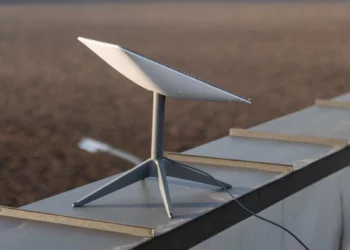
- In areas where mobile data is the only option, satellite is becoming an alternative, and the status of Starlink in South Africa is worth following.
Where to check
ICASA publishes gazetted notices, inquiry questionnaires, briefing notes and hearing announcements on its website at www.icasa.org.za. The affordability inquiry and the over the top inquiry are separate processes with separate documents. Correspondence on the over the top inquiry goes to [email protected]. Government Gazette notices are published by the Government Printing Works at www.gpwonline.co.za.