







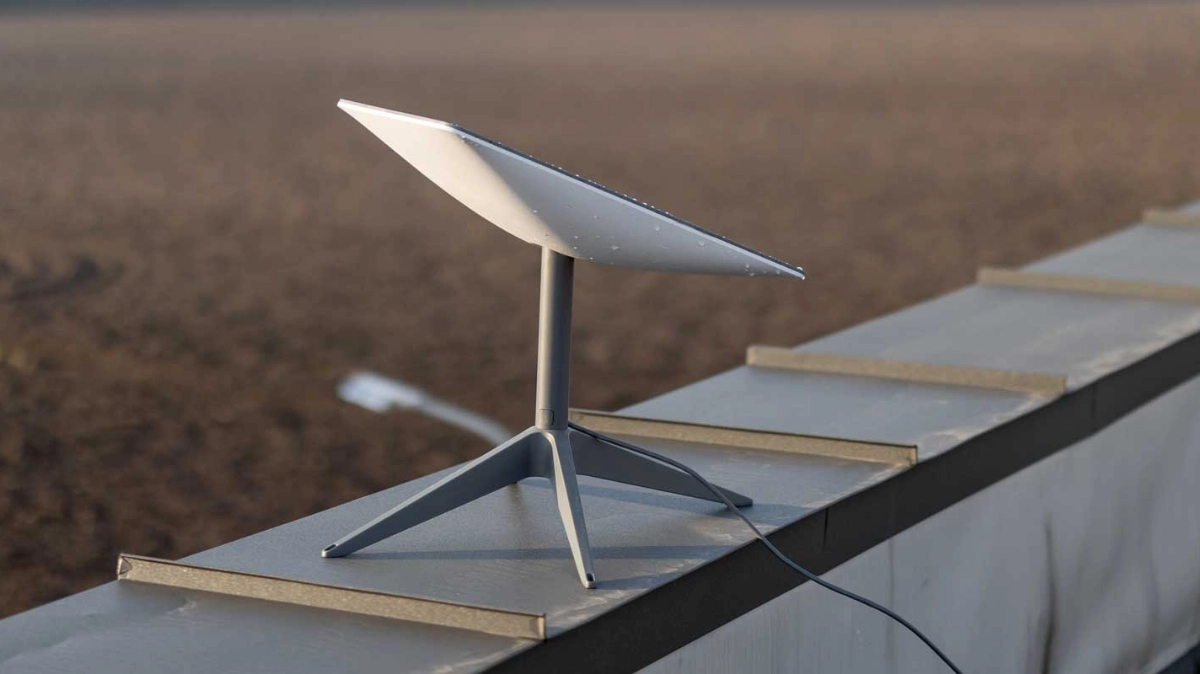
Starlink South Africa is still not legally available. SpaceX holds no licence from the Independent Communications Authority of South Africa, and a parliamentary reply dated 11 June 2026 confirmed that ICASA had received no licence applications from the company at all. The obstacle is section-level: the Electronic Communications Act requires individual licence holders to have at least 30% ownership by historically disadvantaged groups, and SpaceX does not sell local equity stakes anywhere in the world. Using an imported kit on international roaming inside South Africa is unlawful.
How the standoff developed
| Date | Development |
|---|---|
| May 2024 | ICASA publicly confirms Starlink holds no South African licence |
| May 2025 | The communications minister publishes a draft policy direction proposing equity equivalent investment programmes for the ICT sector |
| May 2025 | ICASA says it will act against unlawful use of Starlink kits in South Africa |
| 12 December 2025 | Final policy direction gazetted, directing ICASA to recognise equity equivalents |
| 13 May 2026 | ICASA responds that full recognition would require an amendment to the Electronic Communications Act |
| 15 May 2026 | Draft spectrum and spectrum fee amendments published in Government Gazette No. 54677 |
| 11 June 2026 | Parliamentary reply confirms no Starlink licence applications received |
| 29 June 2026 | ICASA gazettes a notice setting out exactly which licences satellite operators need |
| 19 to 20 August 2026 | ICASA holds oral hearings in Centurion, with SpaceX presenting |
What ICASA says an operator actually needs
The June 2026 notice was issued because prospective satellite operators kept asking for clarity. To provide services directly to South African customers using a satellite constellation, an operator needs:
- An Individual Electronic Communications Service licence, known as an I-ECS.
- An Individual Electronic Communications Network Service licence, known as an I-ECNS.
- One or more radio frequency spectrum licences.
There is a procedural catch in the second item. The licensing process for an I-ECNS only begins once ICASA publishes an Invitation to Apply, and that follows a policy direction from the minister. Even a willing applicant cannot simply submit paperwork on demand.
The 30% ownership condition attaches to individual licences. That is the point on which the entire matter turns.
ICASA is the regulator responsible for electronic communications and broadcasting in South Africa, the same body whose mandate came up in the debate over proposed social media regulation, and it acts under the Act as it currently stands rather than under ministerial preference.
Why the policy direction did not solve it
In December 2025 the minister gazetted a final policy direction telling ICASA to recognise equity equivalent investment programmes as an alternative to selling 30% of the local subsidiary. Under such a programme, a multinational meets empowerment obligations through investment in local businesses, skills or infrastructure instead of ceding shares. The model already operates in the automotive sector.
On 13 May 2026 ICASA gave its answer. It said the amended ICT sector code must be applied in licensing qualification criteria, but that full alignment with all provisions of the code, including equity equivalents, would require a legislative amendment to the Electronic Communications Act.
That is a regulator telling a minister that a policy direction cannot rewrite a statute. The minister has since said the department will pursue amendments to the Act.
Policy handling in this portfolio has drawn scrutiny before, including when the department withdrew its draft national artificial intelligence policy over problems in the document.
The August 2026 hearings
ICASA held hybrid oral hearings on 19 and 20 August 2026 at its Centurion auditorium, on draft amendments to the Radio Frequency Spectrum Regulations of 2015 and the Radio Frequency Spectrum Fees Regulations of 2010.
SpaceX appeared on day one in a 30-minute slot, represented by Ryan Goodnight, its senior director for market access and development. This mattered mainly because the company had skipped an earlier ICASA hearing.
The hearings were not about granting Starlink a licence. They dealt with a registration regime for satellite constellation operators, revised spectrum fee formulas, blanket licensing for satellite terminal networks and radio astronomy protections.
In a written submission dated 29 June 2026, SpaceX said it intends to serve South African customers through a local subsidiary. It supported the introduction of a frequency factor into the gateway earth station fee formula, arguing that high-throughput systems in higher bands should not be penalised, and pushed for a flat annual licence fee rather than bandwidth-based charges.
Separately, written submissions on the Electronic Communications Amendment Bill closed at 16:00 on Friday, 21 August 2026. As introduced, that bill deals with spectrum, roaming, wholesale pricing and competition. It says nothing about ownership or equity equivalence, which is the provision that would need to change.
Using a Starlink kit in South Africa
Some households and businesses have bought hardware from resellers or in neighbouring countries and used the international roaming option. ICASA has stated that this is unlawful because the operator is unlicensed, and it has said it intends to act against it. SpaceX has itself disconnected users detected outside authorised service areas.
The practical risks are that the service can be cut off without notice, that there is no local consumer recourse through ICASA, and that the equipment is of limited value if enforcement tightens.
Affordability is the other consideration. Satellite broadband is generally more expensive than terrestrial options, and Southafriworld has reported that internet prices have been tracking below inflation with stronger ICASA bundle rules due to take effect.
Frequently asked questions
Is Starlink available in South Africa?
No. It is not licensed and cannot lawfully sell service in the country.
Has SpaceX applied for a licence?
Not as at the parliamentary reply of 11 June 2026. ICASA confirmed it had received no application for spectrum, I-ECS or I-ECNS licences, nor any transfer application.
Why is Starlink blocked?
The Electronic Communications Act requires individual licensees to have at least 30% ownership by historically disadvantaged groups. SpaceX does not sell local equity.
Can I use a roaming Starlink kit?
ICASA has stated that unlicensed satellite services in South Africa are unlawful, and SpaceX has disconnected users outside authorised areas.
Does Starlink work in neighbouring countries?
Yes. It operates in a number of other African markets, including several of South Africa’s neighbours.
When will it launch here?
No date exists. A launch would require either an amendment to the Act or a change in SpaceX’s global ownership policy.
What to watch
Three things would move this. First, the tabling of amendments to the Electronic Communications Act dealing with ownership or equity equivalence, which the minister has said the department will pursue but which the current amendment bill does not contain. Second, ICASA finalising its satellite regulations, which the regulator has described as a multi-year project due for Council approval in the 2026/27 financial year. Third, an actual licence application from SpaceX, which would be the first concrete signal that the company is prepared to work within the existing framework.