





What we know so far
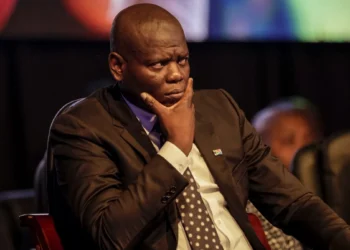
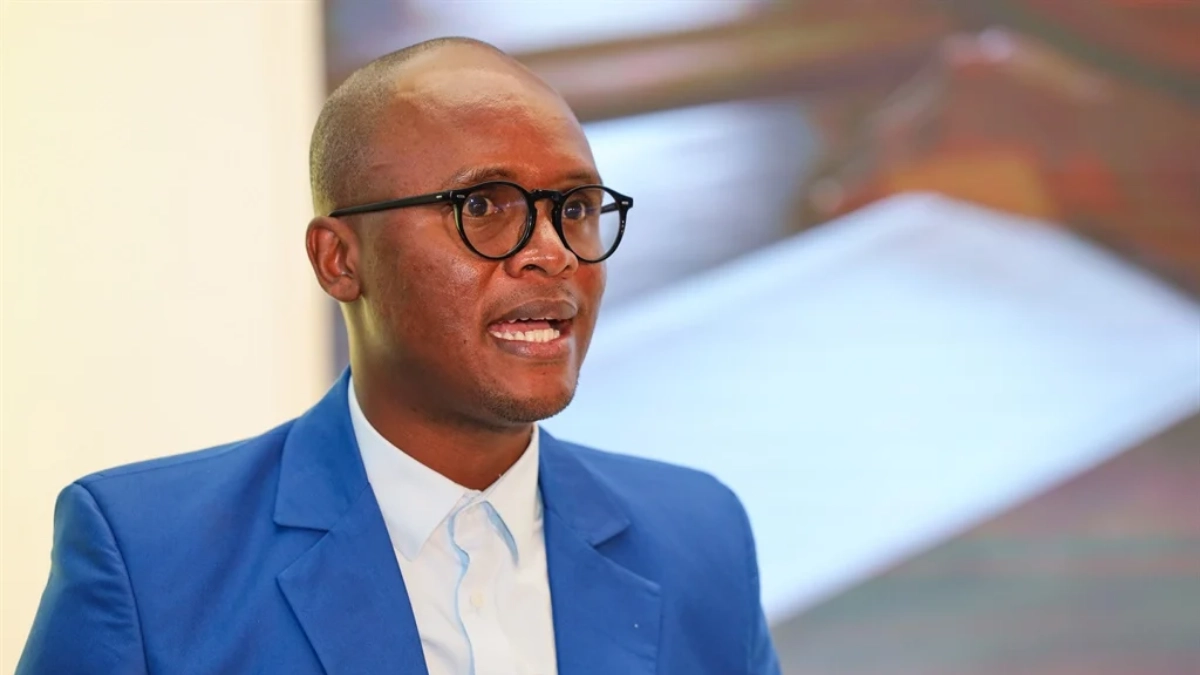
Communications and Digital Technologies Minister Solly Malatsi withdrew South Africa’s Draft National Artificial Intelligence Policy on Sunday, 26 April 2026, after internal checks confirmed that the document’s reference list contained fictitious academic sources.
The 86-page draft policy, which carried 67 citations, was gazetted on 10 April for a 60-day public comment period set to close on 10 June. Cabinet had approved it on 25 March 2026, with a follow-up special sitting on 1 April. The policy was intended to establish national priorities and norms for AI governance, covering sectors including manufacturing, energy, infrastructure, transport and trade.
The scandal broke after News24 reported that at least six citations in the reference list pointed to academic journal articles that do not exist. Editors from the South African Journal of Philosophy, AI & Society and the Journal of Ethics and Social Philosophy each independently confirmed to News24 that the articles attributed to their publications had never appeared.
In an official statement carried by SAnews, the government’s news agency, Malatsi said the fabricated references had fatally undermined the document. He acknowledged that the likeliest explanation was that AI-generated citations had been inserted into the document without anyone checking whether they were real.
He pledged consequence management for those responsible for drafting and quality assurance, and ordered the department’s director-general to investigate and act against anyone found to have committed wrongdoing.
Why it matters
The withdrawal marks an extraordinary failure for a government department tasked with leading South Africa’s digital policy environment. It is the first known case in South Africa of a cabinet-approved policy document being pulled because its academic foundations were fabricated by artificial intelligence.
The irony is sharp: a document designed to govern how South Africa regulates and adopts AI was itself assembled with unchecked AI tools. The episode demonstrates the exact risk the policy was meant to address, namely that AI outputs can appear authoritative while containing entirely fabricated information, a phenomenon known as hallucination.
The fallout carries political weight. Malatsi is a senior DA figure. The party entered the government of national unity in 2024 positioning itself as a guarantor of sharper governance and accountability. A cabinet-approved policy built on invented sources undermines that claim directly.
Khusela Diko, the ANC MP who chairs parliament’s portfolio committee on communications and digital technologies, called on Malatsi to withdraw the policy before he did so. In a post on X, she urged him to subject the document to rigorous review, this time without using ChatGPT, and to re-release it only once it was a product he could stand behind fully. She accused the minister of seeking a scapegoat rather than accepting responsibility.
Phumzile van Damme, Malatsi’s predecessor as DA national spokesperson before her departure from the party in 2021, also condemned the failure. Van Damme, who served as the DA’s shadow minister of communications for over five years and now works internationally on disinformation and platform accountability, rejected the idea that blame could be pinned on a junior official. She argued that the failure of due diligence sat with both the department and the ministry, and warned that the incident risked becoming a global cautionary tale about AI in government. She drew a parallel to a recent scandal in which Deloitte was forced to refund the Australian government after an AI-assisted report was found to contain fabricated citations.
Fellow DA cabinet member Dean Macpherson defended Malatsi publicly, dismissing Diko’s intervention as grandstanding. Diko responded that DA ministers would soon discover that governing was harder than they had assumed.
Key details and figures
The draft policy proposed creating seven new institutions to govern AI in South Africa: a National AI Commission, an AI Ethics Board, an AI Safety Institute, an AI Insurance Superfund modelled on the Road Accident Fund, and additional oversight bodies. The document positioned itself as building on principles of intergenerational equity, aiming to ensure that AI-driven innovation serves both current and future generations.
Of the 67 references in the document, at least six have been identified as fictitious. Three separate journal editors confirmed to News24 that articles credited to their publications never existed. The full scale of fabricated citations may be wider, but has not yet been independently verified beyond what News24 reported.
The policy had already attracted substantial criticism on its substance before the citations scandal emerged. Technology investor Stafford Masie published an open letter to Malatsi through TechCentral arguing that the draft risked regulating away South Africa’s ability to participate in the global AI economy. Masie’s central argument was that the document proposed an elaborate governance architecture before government had committed any funding to compute infrastructure.
At ITWeb’s AI Summit 2026 earlier in April, DCDT deputy director-general Mlindi Mashologu defended the draft, saying the framework was designed to balance innovation with inclusion and technological progress with ethics and cultural preservation. That defence is now significantly weakened.
Deputy President Paul Mashatile had publicly endorsed the policy process at a Fourth Industrial Revolution lab launch in Mpumalanga earlier in April, describing it as a comprehensive government response to AI that would set national priorities and sector-specific strategies.
The withdrawal leaves South Africa without a formal AI policy framework at a time when the technology is reshaping industries globally. No timeline has been provided for a revised draft.
What happens next
Malatsi has ordered a departmental investigation. The director-general has been instructed to identify who was responsible for the drafting and quality assurance failures and to take action against anyone found to have committed wrongdoing.
No date has been given for when a revised policy will be published for public comment. The original 10 June deadline for submissions is now void.
Parliament’s portfolio committee on communications, chaired by Diko, is expected to question Malatsi on the failure. Whether the committee convenes a formal hearing or takes up the matter in scheduled proceedings remains to be seen.
The incident raises immediate procedural questions for government. It is unclear what quality assurance processes applied to the draft before it reached cabinet for approval on 25 March, and whether any officials flagged concerns about the reference list before the document was gazetted.
For the broader policy landscape, the withdrawal creates a gap. South Africa’s financial services sector, its business process outsourcing industry and its growing technology ecosystem all operate without a national AI governance framework while the policy is rewritten. Businesses that had been preparing submissions for the public comment period must now wait for a replacement document.
The affair also serves as a concrete case study in the risks of deploying AI tools without adequate human oversight, precisely the lesson Malatsi himself acknowledged in his withdrawal statement. Whether government applies that lesson to the next draft remains the central question.