










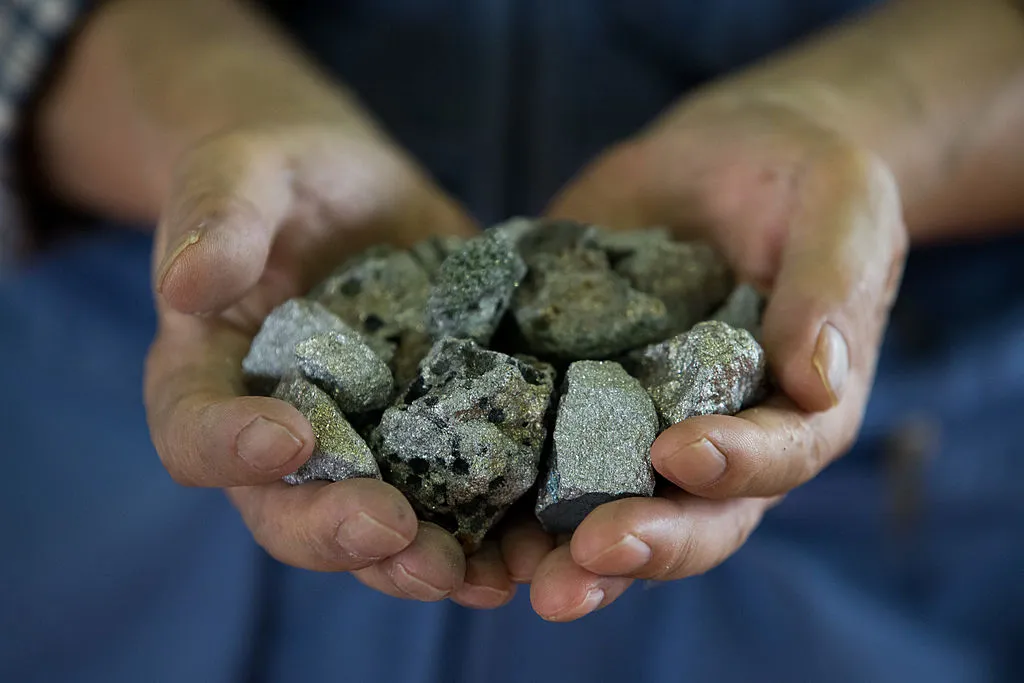
The South African government has formally approved its Critical Minerals and Metals Strategy 2025, marking a significant policy shift aimed at expanding the country’s role in the global supply of minerals essential to clean energy and advanced manufacturing.
The strategy, approved by Cabinet, seeks to provide regulatory certainty, encourage domestic value addition, and strengthen South Africa’s competitiveness as global demand accelerates for minerals used in electric vehicles, renewable energy systems, and emerging technologies.
Government outlines long-term vision
The strategy was announced by the Government of South Africa, with Gwede Mantashe, Minister of Mineral Resources and Energy, stating that the policy is designed to deliver clearer regulation and attract long-term investment.
According to official government communication, the strategy aims to position South Africa as a reliable supplier of critical minerals while ensuring that greater economic value is retained locally through processing and industrial development 【GovSA†L1-L4】.
Priority minerals identified
The strategy identifies a range of minerals considered critical to future industrial growth, including:
- Lithium
- Platinum-group metals (PGMs)
- Manganese
- Vanadium
- Rare-earth elements
Government documents state that these minerals are essential inputs for electric vehicle batteries, hydrogen technologies, wind turbines, and high-tech manufacturing industries 【GovSA†L5-L9】.
Four core pillars of the strategy
The Critical Minerals and Metals Strategy is structured around four main policy pillars.
Exploration and geological mapping
The government plans to expand geoscience and exploration programmes to better map South Africa’s mineral potential, particularly in underexplored regions.
Domestic beneficiation and value addition
Rather than exporting raw ore, the strategy promotes local processing and refining of minerals. Officials say this approach is intended to grow industrial capacity and create sustainable employment across the value chain.
Research, development, and innovation
The strategy places strong emphasis on research into advanced mineral processing, new material applications, and environmentally responsible extraction techniques.
Regulatory reform
In parallel with the strategy, government is advancing amendments through the proposed Mineral Resources Development Bill of 2025. These reforms aim to streamline licensing, support junior and small-scale miners, and align environmental regulation more closely with industrial policy 【GovSA†L10-L15】.
Why the strategy matters for South Africa
Economists and industry analysts say the strategy could have wide-ranging implications for the South African economy.
A shift toward beneficiation could allow the country to retain more value from its mineral wealth, extending economic activity beyond mining into refining, manufacturing, and technology development.
The government has also framed the strategy as a job-creation initiative, with new opportunities expected in mining operations, processing facilities, and research-intensive roles linked to green technologies.
Global demand strengthens the case
International demand for battery metals and critical minerals has surged as countries accelerate energy transition plans.
Global industry bodies have noted that competition for secure mineral supply chains is intensifying, prompting resource-rich countries to prioritise domestic processing and strategic control of critical inputs.
South Africa’s strategy aligns with this global shift, positioning the country as a potential supplier of refined minerals rather than only raw materials.
Projects already drawing attention
Several mineral projects highlighted in public reporting align with the strategy’s objectives.
Lithium exploration activity is expanding in parts of the Northern Cape, while manganese and vanadium projects continue to attract foreign and domestic investment. Rare-earth development projects in the Western Cape have also been referenced in policy discussions as strategically important.
Government officials say the strategy is designed to support such projects through clearer policy direction and improved regulatory efficiency.
Challenges to implementation
Despite the strategy’s ambitions, analysts caution that several challenges remain.
Reliable electricity supply, transport infrastructure, and water availability will be critical for large-scale mineral processing. Skills development will also be required to support advanced refining and research activities.
Environmental management remains another key consideration, with the strategy emphasising the need for sustainable mining practices and responsible land use.
What it means for South Africans
For investors, the strategy signals long-term policy direction and potential opportunities in mining, processing, and green technology supply chains.
For workers and communities in mining regions, successful implementation could translate into more diverse employment opportunities and stronger local economies if beneficiation targets are achieved.
For the broader economy, analysts say the strategy could strengthen South Africa’s position in global clean energy markets while supporting industrial growth and export diversification.