








What we know so far
The South African Reserve Bank held its benchmark repo rate unchanged at 6.75% on 26 March 2026, a decision the Monetary Policy Committee described as unanimous. The prime lending rate used by commercial banks to price home loans, vehicle finance, and business credit remains at 10.25%. It was the second consecutive hold, following the same outcome in January 2026, and it came with a warning: if the war in the Middle East does not resolve quickly, the SARB’s next move could be upward, not down.
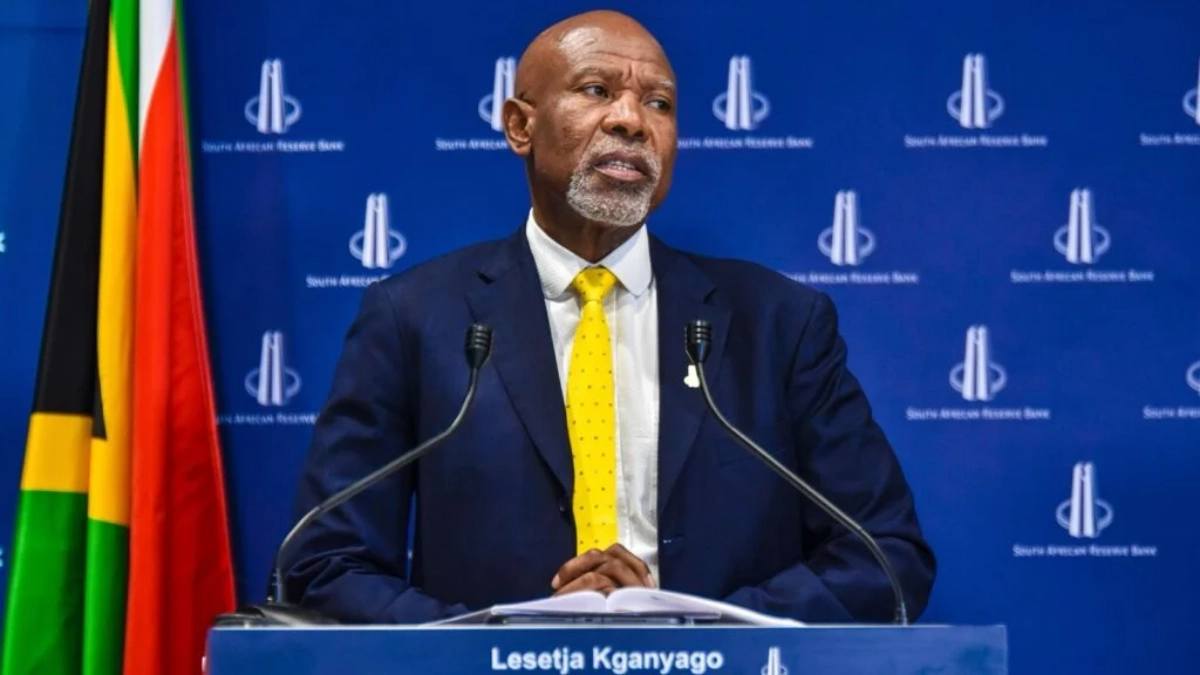
In the MPC statement issued by Governor Lesetja Kganyago, the Reserve Bank identified the outbreak of conflict in the Middle East as the defining event since its previous meeting. The United States and Israel launched attacks on Iran on 28 February 2026. Iran shut down the Strait of Hormuz in response. Brent crude oil prices, which had averaged $69.08 per barrel during the January review period, surged to an average of $93.67 per barrel during the March review. South Africa imports both crude oil and refined petroleum products, which means the country absorbs every global energy shock directly through its fuel pump prices.
Kganyago told the public the situation remained “extremely uncertain” and that the coming months would be “crucial for assessing the longer-term inflation consequences.”
Why it matters
South Africans had entered 2026 with reasonable expectations of further interest rate relief. The Reserve Bank had cut rates four times between September 2024 and November 2025, reducing the repo rate by a cumulative 150 basis points from its 15-year peak of 8.25%. Economists had widely pencilled in at least two additional cuts of 25 basis points each for 2026, with some forecasting 75 basis points of easing over the year.
Those forecasts have now been substantially revised. The SARB’s own Quarterly Projection Model, which serves as a broad policy guide, now projects only one implied cut for 2026, in the second half of the year. This compares with two cuts anticipated at the January meeting. The projected rate path averages 6.75% for the first quarter, 6.83% for the second, 6.63% for the third, and 6.47% for the fourth.
For households carrying home loans, vehicle finance, and personal debt, the practical consequence is continued pressure. On a R1.5 million bond over 20 years at the current prime rate of 10.25%, the monthly repayment sits around R14,800. Each 25-basis-point cut would reduce that by roughly R230 per month. Relief that many homeowners had expected by mid-year is now pushed back at minimum to late 2026, and contingent on the war not escalating further.
Inflation, which had reached exactly 3.0% in February and was precisely on target, is now forecast to accelerate sharply. The Reserve Bank projects headline inflation will peak at 4.3% in April 2026, with the second quarter average at 4.0%. Fuel inflation is expected to exceed 18% in that period. The 2026 average inflation forecast has been revised upward to 3.7%, from the 3.3% projected at the January meeting.
Key details and figures
The SARB’s March statement presented two formal adverse scenarios alongside its baseline, each more severe than the central forecast.
In the first scenario, the conflict lasts approximately two more months, oil prices average close to $100 per barrel during that period, and the rand weakens by around 5% against the dollar. Under those conditions, inflation would exceed 4% and the SARB’s model calls for one interest rate hike this year.
In the second, more severe scenario, the war drags on for more than a year, oil prices remain above $100 per barrel for a sustained period, and the rand weakens by 10%. Inflation would exceed 5% and the model calls for several rate hikes, with the projected peak roughly aligned with the 8.25% repo rate that prevailed at the height of the 2021 to 2023 hiking cycle. That would imply a prime lending rate returning to 11.75%.
Kganyago said the standard policy response to a supply shock is to look through first-round price effects, which interest rate changes cannot stop. However, he said the SARB would be watching carefully for second-round effects, where an initial energy shock triggers broad price increases across the economy. “It is always difficult to assess second-round effects in time,” the statement noted. “Waiting for clear evidence risks leaving the policy response too late.”
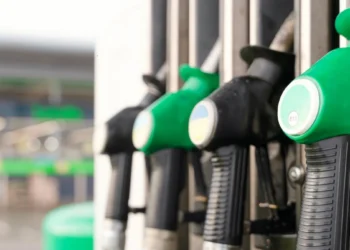
On the fuel side, the April 2026 price adjustment confirmed petrol rising by R3.06 per litre and diesel by between R7.37 and R7.51 per litre. The government, through a temporary reduction of R3 per litre in the General Fuel Levy, absorbed part of the shock. Without that relief, April increases would have been approximately R6 per litre for petrol and R10 per litre for diesel. That levy reduction is currently set to expire on 5 May 2026.
Looking ahead to the May price adjustment, effective 6 May, Central Energy Fund data as of 14 April showed continuing under-recoveries of approximately R2.99 per litre for 95 octane petrol and around R9.07 per litre for diesel with 0.005% sulphur content. If the temporary levy relief is not extended and current under-recoveries hold, petrol could rise by more than R6 per litre in a single month and diesel by close to R14 per litre, which AutoTrader described as potentially the largest overnight jump in South African history.
Current inland pump prices, following the April increase, stand at R23.25 per litre for 93 octane and R23.36 for 95 octane. Wholesale diesel prices inland range from R25.90 to R26.11 per litre depending on sulphur content.
What happens next
The SARB’s next Monetary Policy Committee meeting is scheduled for 28 May 2026. The Monetary Policy Review is due for release on 21 April. Both events will be watched closely by markets, mortgage lenders, and the more than 2.5 million active home loan accounts in South Africa.
Kganyago has stated publicly that the bank will not attempt to be pre-emptive but equally cannot afford to be complacent if second-round inflationary effects materialise. Whether the May meeting results in a hold, a cut, or a hike will depend heavily on three variables: whether the Middle East ceasefire holds and oil prices pull back below $100 per barrel; whether the National Treasury extends the temporary R3 per litre fuel levy reduction beyond 5 May; and whether incoming inflation data shows second-round effects spreading into food, transport, and services costs.
Analysts at Investec and FNB have revised their 2026 rate outlooks since the March decision, with most now projecting that any further easing will be deferred into the second half of the year, and that the endpoint for the repo rate in 2026 will be closer to 6.50% than the 6.25% that had been the earlier consensus.
South Africa’s economic growth forecast remains largely unchanged for now at approximately 1.4% in 2026, with the SARB projecting growth rising toward 2% over the next few years. However, Kganyago acknowledged that the oil shock would likely force downward revisions to the growth outlook at the May meeting, as higher fuel and input costs reduce household consumption and business investment.