








What we know so far
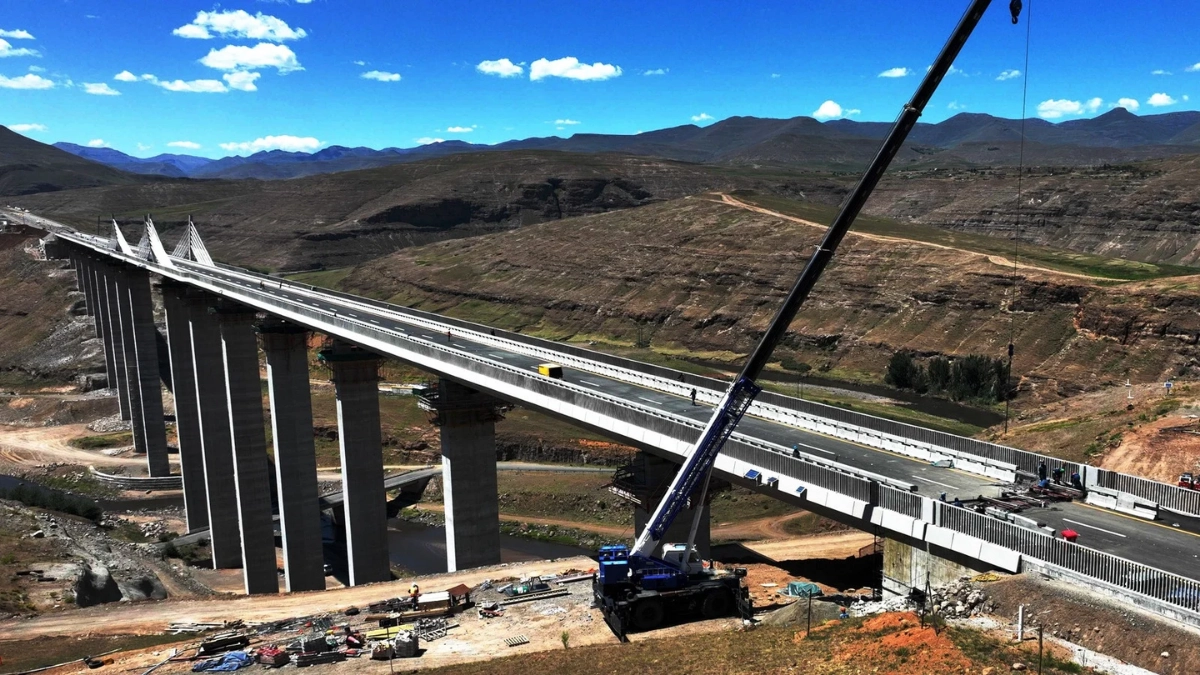
President Cyril Ramaphosa will on Wednesday travel to Mokhotlong in the Kingdom of Lesotho to jointly open the Senqu Bridge alongside King Letsie III and Lesotho’s Prime Minister, the Rt Honourable Samuel Matekane.
The co-launch marks the completion of an 825-metre, R2.4 billion crossing built under Phase II of the Lesotho Highlands Water Project (LHWP), according to a statement issued by the Presidency in Pretoria on Monday.
The ceremony is scheduled for 22 April 2026 and will include a ribbon-cutting and walkabout by the three principals, followed by a formal programme, the Presidency said.
The Senqu Bridge is the largest of three major bridges being built to span the future Polihali Reservoir. Its opening comes two days after the planned unveiling of the Tunnel Boring Machine that will drill the 38-kilometre tunnel linking the Polihali and Katse reservoirs.
Why it matters
The Senqu Bridge is one of the most visible physical milestones to date in Phase II of the LHWP, a binational programme that underpins water security for South Africa’s economic heartland and expanded hydropower generation for Lesotho.
Once the neighbouring Polihali Dam is impounded, the existing bridge at the site will be submerged. The new structure is designed to keep Mokhotlong, the popular Sani Pass route and surrounding highland communities connected, the Presidency said.
For South Africa, the launch signals that Phase II is moving toward first water delivery, scheduled for the 2028/29 financial year. Phase II is intended to raise the volume of water piped from the Lesotho highlands into South Africa’s Integrated Vaal River System, which supplies Gauteng and neighbouring provinces.
For Lesotho, the LHWP is a source of royalties, hydropower and investment in highland districts. Lesotho has earned royalties of roughly R13.6 billion from Phase I water transfers since commissioning in 2004, according to figures published by the Lesotho Highlands Development Authority (LHDA) and cited by Engineering News.
Key details and figures
The Senqu Bridge measures approximately 825 metres in length and 90 metres in height, at a construction cost of about R2.4 billion, the Presidency confirmed. It is the largest of three major bridges crossing the Polihali Reservoir footprint.
Phase II was established under the 1986 Treaty between South Africa and Lesotho and the 2011 Phase II Agreement. It is implemented jointly by Lesotho’s LHDA and South Africa’s Trans-Caledon Tunnel Authority (TCTA).
At the heart of Phase II is the Polihali Dam, a 165-metre-high concrete-faced rockfill embankment being built downstream of the confluence of the Khubelu and Senqu-Orange rivers in Mokhotlong district, according to LHDA project documents. Water from the new reservoir will be transferred to the existing Katse Dam through a 38-kilometre concrete-lined gravity tunnel, before flowing into the Vaal system.
On Monday, South Africa’s Minister of Water and Sanitation, Pemmy Majodina, and her Lesotho counterpart, Minister of Natural Resources Mohlomi Moleko, will unveil the Tunnel Boring Machine that will drill the Polihali-to-Katse link. The Presidency described the TBM as state-of-the-art equipment central to the tunnel works.
On volumes, the Presidency said Phase II will increase annual water transfers from the current 780 million cubic metres to more than 1.27 billion cubic metres per year. That represents an additional 490 million cubic metres flowing into South Africa’s Integrated Vaal River System each year, a figure also cited by the LHDA and in South African parliamentary briefings.
The broader programme carries an estimated total budget of R53 billion. Of that, R21 billion had been spent by December 2025, according to a statement issued by the Department of Water and Sanitation following Minister Majodina’s oversight visit to the site.
President Ramaphosa will be accompanied to Lesotho by Minister Majodina, Deputy Minister of Water and Sanitation David Mahlobo, and Deputy Minister of International Relations and Cooperation Alvin Botes, the Presidency confirmed.
What happens next
The most immediate step is Monday’s unveiling of the Tunnel Boring Machine, marking the start of mechanised drilling of the Polihali-to-Katse transfer tunnel. Completion of the tunnel is central to unlocking the additional water volumes envisaged under Phase II.
Government has previously committed to the 2028/29 deadline for the start of water delivery. Speaking during her oversight visit in December 2025, Minister Majodina said no further extensions would be granted, noting that the project had already slipped by about nine years.
Alongside the water transfer works, Phase II includes a hydropower component. The Oxbow scheme on the Malibamatšo River is in detailed engineering design, with an installed capacity of 80.3 MW and commissioning targeted for 2030/31, according to LHDA statements reported by Engineering News. Hydropower generated at Muela currently supplies a substantial share of Lesotho’s electricity demand.
For communities in the Mokhotlong district, the functional shift begins with Wednesday’s opening. Once the Polihali Dam begins to fill, the old crossing will go under. From that point, the new Senqu Bridge will carry daily road traffic linking the highland district to the rest of Lesotho and to the Sani Pass border crossing into KwaZulu-Natal.