






What the Competition Commission found about internet prices
South African wireless internet prices rose faster than the cost of everything else in the first seven months of 2026. Wired internet did not.
The Competition Commission published its third Cost of Living report on Friday 4 September 2026. It measured internet price inflation from January 2022 to July 2026, using consumer price index data that Statistics South Africa collects monthly from major telecommunications providers.
The Commission’s finding is narrower than it has been reported. In its own words, wired internet service inflation increased by 3.5% and wireless internet service inflation by 4.1% in 2026, against headline inflation of 3.8% from January to July.
That means wireless internet outpaced general inflation. Wired internet, at 3.5%, stayed below it.
The Commission stated the point explicitly, saying the figures indicate that wireless internet service inflation has increased above headline inflation in 2026. It made no such finding for wired services.
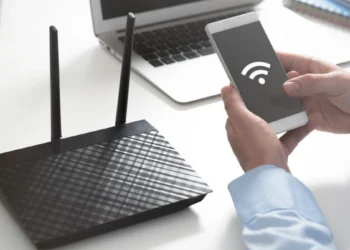
The distinction matters for a household deciding between fibre and an LTE or 5G router. One of those two categories is getting more expensive faster than the general basket. The other is not.
Fibre is still below inflation, wireless is not
The six-year picture reverses the ranking, and it is the part most likely to surprise readers.
Over six years, cumulative wired internet inflation reached 18.6% and cumulative wireless internet inflation 6.4%. The Commission said cumulative inflation over that period for both wired and wireless internet services is below headline inflation.
In plain terms, internet access has become cheaper relative to everything else since 2020. It has not become cheaper in rand. A fibre package that tracked the measured rate costs 18.6% more today than it did six years ago.
What changed in 2026 is that wireless crossed the line for the first time in this series. The Commission had observed in earlier editions that cumulative inflation for both categories remained relatively stable through most of 2025, before increases in April and May 2026 pushed market prices above headline.
Southafriworld covered July’s headline inflation figures separately. Headline inflation at 3.8% for the year to July also sits above the midpoint of South Africa’s 3% inflation target, though within the one percentage point tolerance band.
The numbers, and what they mean on a monthly bill
| Measure | Figure |
|---|---|
| Wired internet inflation, January to July 2026 | 3.5% |
| Wireless internet inflation, January to July 2026 | 4.1% |
| Headline inflation, January to July 2026 | 3.8% |
| Cumulative wired internet inflation, six years | 18.6% |
| Cumulative wireless internet inflation, six years | 6.4% |
| MetroFibre average package increase | 5.29% |
| Average inflation, 2025 | 3.2% |
Applied illustratively, a R500 a month wireless package rising at 4.1% costs about R20.50 more a month, or roughly R246 a year. A R700 a month fibre package rising at 3.5% costs about R24.50 more a month, or roughly R294 a year.
Those two figures are calculations by Southafriworld from the Commission’s measured rates. They are illustrations of what the index describes, not increases announced by any provider.
Individual providers have moved by more. MetroFibre told MyBroadband it raised package prices by an average of 5.29%, against average inflation of 3.2% in 2025, citing inflation, exchange rate pressure, intensified power outages, and theft and vandalism.
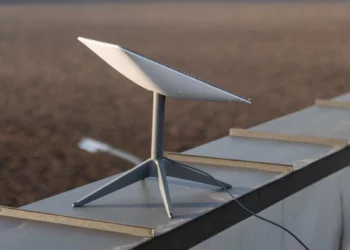
The Commission said some operators have cited macroeconomic pressures including inflation, exchange rate pressures and power outages as the reason behind the increases. Southafriworld has reported on a new 5G network in South Africa and on Starlink’s arrival in South Africa, both of which affect the wireless side of this market.
Why wholesale fibre increases reach your account
Retail internet prices in South Africa are not set only by the company that bills you.
Fibre network operators charge internet service providers a wholesale rate for access to the physical network. When that wholesale rate rises, providers either absorb it or pass it on.
Vumatel and Openserve, the two largest fibre network operators in the country, implemented wholesale price increases in April 2026. That is the month the Commission identifies as the start of the shift.
The reach is substantial. As at June 2026, Openserve’s network passed 1.54 million homes with 817,540 connected, a connectivity rate of 53.1%. Vumatel remained the largest fibre-to-the-home provider, passing more than two million homes and connecting close to 900,000.
Together that is more than 1.71 million connected homes directly exposed to the two wholesale increases, with more connecting to both networks.
The Commission frames internet access as an essential service rather than a discretionary one, saying connectivity underpins participation in a modern economy and enables access to employment, education, healthcare, financial services and government programmes. It applies the same reasoning to electricity, water, transport and healthcare, which Southafriworld has tracked through the 2026 municipal tariff increases.
What the report does not say
Several things are worth stating plainly, because the report is a price monitor rather than an investigation.
The Commission has not found wrongdoing by any company, has not attributed the increases to a competition problem, and has not named any provider as the cause. Its earlier editions state that the analysis is not meant to draw conclusions about wrongdoing.
The figures are also index measurements. They describe how the prices of packages collected by Statistics South Africa moved, not what any individual household actually pays after promotions, bundling or a change of package.
Commissioner Doris Tshepe set out the Commission’s standing position when the second report was released in March 2026, saying addressing the cost of living requires “greater scrutiny of administered price-setting mechanisms”. No equivalent statement attached to Friday’s report had been published at the time of writing.
The report does not extend past July 2026, so it does not establish whether wireless internet inflation has continued above headline since. Nor does it forecast the next round of wholesale increases.
Two things follow from here. The Commission publishes these reports roughly every four to six months, which places the next edition around the turn of the year, and Statistics South Africa’s next consumer price index release will show whether the July gap has widened or closed.