






The formalities that decide it
Will requirements South Africa families run into are set out in section 2 of the Wills Act 7 of 1953, and they are strict. The Master of the High Court, where deceased estates are reported, will reject a will that does not comply.
There are four core requirements.
In writing. Handwritten, typed or printed. A verbal instruction is not a will.
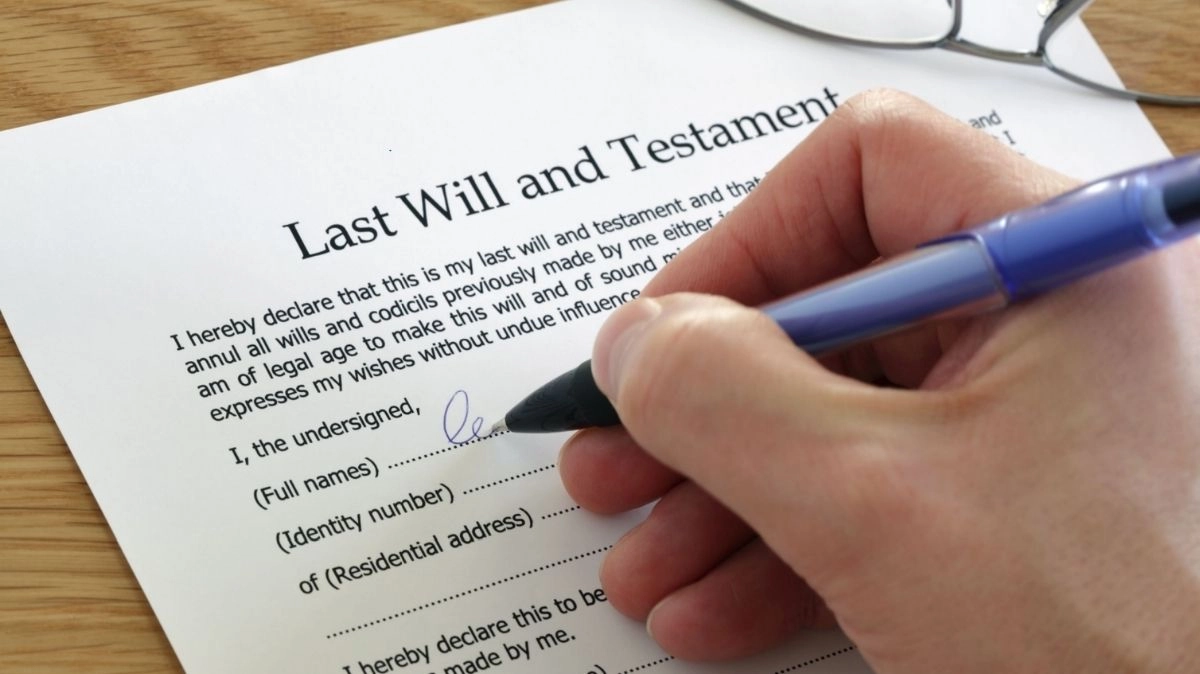
Signed at the end by the testator. The person making the will signs at the end of it, or another person signs in their presence and at their direction. The testator should also sign each page, anywhere on the page, in addition to the last one.
Two competent witnesses, present at the same time. The signature must be made in the presence of two or more competent witnesses who are there simultaneously.
The witnesses must sign too, in the presence of the testator and of each other.
A competent witness is defined in the Act as a person aged 14 or over who, at the time of witnessing, is not incompetent to give evidence in a court of law.
Why “at the end” is not a technicality
The courts have taken this seriously enough to invalidate wills over it.
In Kidwell v The Master, the testator signed at the bottom of the page, but roughly 17 centimetres below where the will and the witnesses’ signatures ended. The court held the will invalid for not complying with section 2(1)(a)(i). The decision has been criticised as formalistic, but it stands as a warning.
In Liebenberg v The Master the outcome went the other way. The testator signed at the top of a single-page will, and the court held it valid, because the Act does not dictate where on the page each page must be signed, only that every page is signed.
The lesson is practical: sign immediately after the last line of text, with nothing left between your signature and the end of the will.
Witnesses cannot inherit
This catches families out constantly, and it is the most expensive mistake on the list.
A person who signs a will as a witness cannot benefit from that will unless expressly provided otherwise. Certain people involved in drafting or executing the will may also be disqualified from benefiting under it.
So do not ask your children, your spouse, or anyone left something in the document to witness it. Use neighbours, colleagues or friends who are getting nothing.
The Master needs the original
A certified copy is not enough. The Master of the High Court will only accept an original signed will.
Store the original somewhere safe and tell someone where it is. A will nobody can find does the same damage as a will that was never written.
Electronic wills
South African law does not currently accept a digitally signed will. Wills must be signed by hand. The Electronic Communications and Transactions Act 25 of 2002 expressly excludes wills from its provisions on electronic signatures.
There is a narrow exception, and it runs through a court rather than around it. Section 2(3) of the Wills Act allows a court, if satisfied that a document drafted or executed by someone who has since died was intended to be their will, to order the Master to accept it even though it does not meet all the formalities.
In Macdonald v The Master, the deceased left handwritten notes pointing to a document on his password-protected work computer. It was signed by nobody, and the Master rejected it. The court accepted it as a will because the evidence showed the deceased must have drafted it himself.
That is a remedy for a family already in court, at their own cost. It is not a plan.
Changing or revoking a will
You revoke a will by making a new one, or by destroying the existing one with the intention of cancelling it.
Amendments are made by executing a codicil, a separate document that changes specific provisions. A codicil has to meet the same formalities as a will.
Any deletion, addition or alteration made in a will is presumed to have been made after execution unless the contrary is proved, which is why you do not simply cross something out and initial it.
If there is no valid will
If a person dies without a valid will, the estate is distributed according to the rules of intestate succession rather than their wishes.
That is the real cost of a defective will. Not a delay, but a different set of heirs.
Executors also need identity documents and a death certificate to report the estate, which are handled through Home Affairs.
Where to check
The Wills Act 7 of 1953 is published in full and section 2 is short enough to read for yourself. The Master of the High Court, under the Department of Justice and Constitutional Development, administers deceased estates.
This is general information, not legal advice. Wills are one of the few documents where a mistake is discovered only when it is too late to fix, so anything beyond a simple estate is worth taking to an attorney.