








Your free report is a legal right
Checking your credit report South Africa costs nothing, because section 72 of the National Credit Act entitles you to one free credit report per year from each registered credit bureau.
It is not a promotional offer or a trial. You do not have to give a reason, and the bureau cannot charge you for it. All you need is your South African ID number to verify who you are.
That matters because a whole industry exists selling access to something the law already gives you. Anyone charging you to pull your statutory annual report is selling you your own rights.
One report per bureau, not one in total
The entitlement is per bureau, not per person. Each registered bureau owes you one free report a year.
The main ones are TransUnion, Experian and XDS. Compuscan, once a large independent bureau, was acquired by Experian in 2019 and now sits under that umbrella.
Pulling all of them matters, because they do not hold the same data. Most large banks and retailers report to several bureaus, but smaller credit providers sometimes report to only one or two. An account that appears on one report can be missing from another.
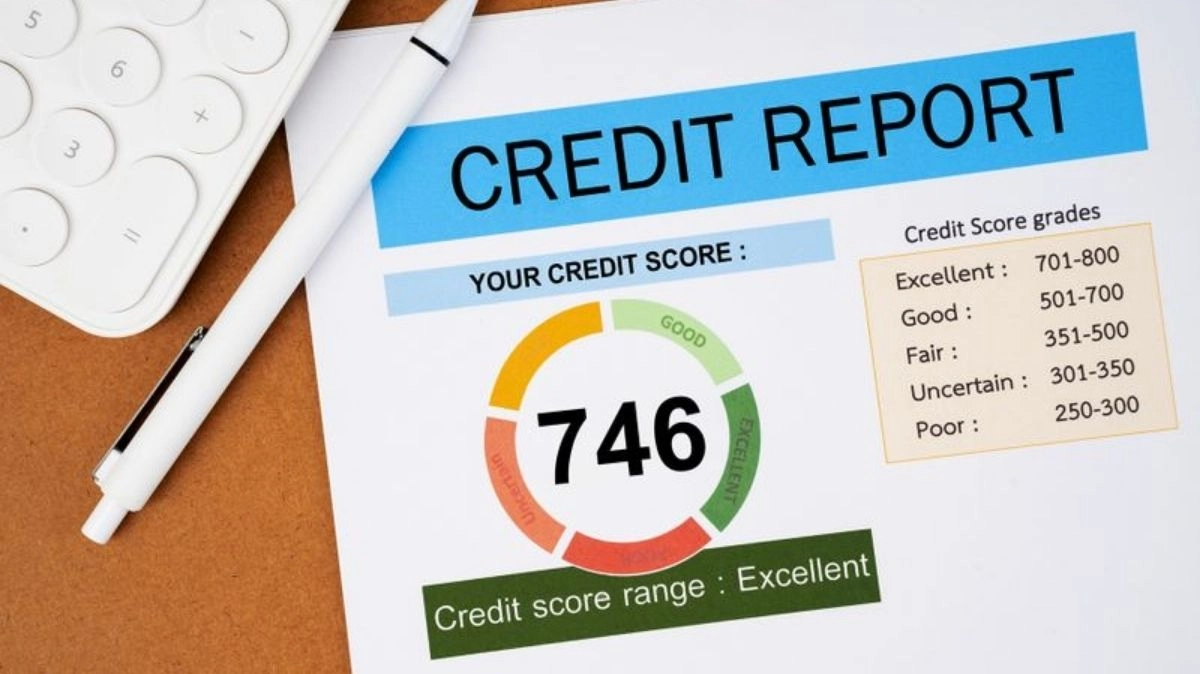
Your score will also differ between them, sometimes noticeably, because each bureau runs its own model on its own data. The numbers are not interchangeable, and the scales differ too. A number from one bureau is not the number a bond originator will see if they use another.
How to pull them
Go to each bureau’s own website and register using your ID number. TransUnion is at transunion.co.za, Experian at experian.co.za, XDS at xds.co.za.
Save the PDFs. You will want them if you dispute something later, and having last year’s copy makes changes easy to spot.
Checking your own report does not damage your score. That is a self-check, not a credit application.
What to look for
Work through it line by line rather than skipping to the score.
- Accounts you do not recognise. The most serious thing on the list. An unfamiliar account can mean identity theft.
- Wrong balances or limits. These affect your utilisation, which affects your score.
- Payments marked late that were not. Common after a debit order date change or a bank switch.
- Listings that should have fallen away. Adverse information has a maximum retention period and must come off when it expires.
- Enquiries. You are entitled to see who has checked your report. An enquiry you cannot account for is worth asking about.
- Your personal details. An old address or a misspelled name can cause your file to be mixed with someone else’s.
Disputing an error
You have the right to dispute incorrect information, and it is free.
Raise the dispute directly with the bureau that is showing the error, through its own consumer portal. Under the National Credit Act the bureau must investigate and respond within 20 business days.
If the entry is wrong or the credit provider cannot support it, it must come off.
Two practical points. First, correcting an error at one bureau does not fix it at the others, so check all your reports and dispute separately at each. Second, let the bureau’s 20 business days run before escalating.
If the bureau’s answer is unsatisfactory after that, take it to the National Credit Regulator or the Credit Ombud.
What the law also gives you
Beyond the free report and the dispute right, you are entitled to be notified before negative information is listed against you, to know who has accessed your report, and to have time-expired listings removed automatically.
Your information is also protected under POPIA, which places obligations on bureaus over how they handle your data.
When the report is not the problem
If your report is accurate and it shows several defaults, judgments or balances you cannot service, the report is describing a real situation rather than misrepresenting one.
No amount of disputing fixes that, and firms promising to remove accurate listings for a fee cannot deliver it lawfully. The route in that case is a genuine conversation with your creditors or advice from an NCR-registered debt counsellor.
Time limits work in your favour in some situations too, so it is worth understanding how prescribed debt works before you agree to pay something old.
Where to check
Pull your reports from the bureaus directly. For your rights, the National Credit Act and the National Credit Regulator are the authorities, and the Credit Ombud handles disputes the bureaus fail to resolve.