




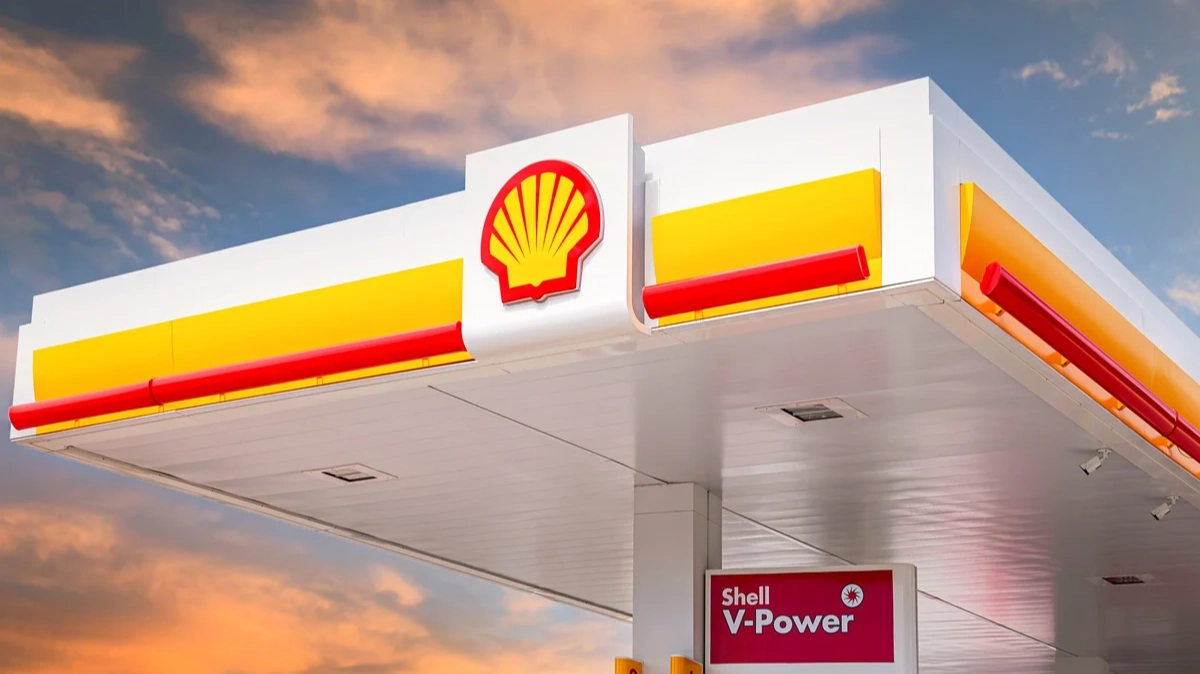
The 580 Shell petrol stations across South Africa are being sold to Abu Dhabi’s state-backed ADNOC Distribution, and the buyer has now named the South African company that will take a minority stake alongside it.
ADNOC Distribution and Johannesburg-based Reatile Group announced on Friday that they have agreed terms for Reatile to acquire a minority equity interest in Shell Downstream South Africa. The agreement is conditional on ADNOC Distribution first completing its own purchase from Shell South Africa Holdings.
For motorists, the practical answer is that very little changes. The forecourts will keep the Shell brand under a long-term licensing agreement, and the pump price is set by the Department of Mineral and Petroleum Resources rather than by whoever owns the network.
Nothing has changed hands yet. ADNOC Distribution signed a definitive agreement to buy 100% of Shell Downstream South Africa on 7 July, at an implied enterprise value of about $1 billion, roughly R16.1 billion. Completion is expected in 2027 and remains subject to regulatory approval and other closing conditions.
Who is buying the Shell petrol stations
ADNOC Distribution is the listed retail arm of the Abu Dhabi National Oil Company and the largest fuel and convenience retailer in the United Arab Emirates. It has been trading since 1973 and runs 1,032 service stations, 568 in the UAE, 219 in Saudi Arabia and 245 in Egypt.
South Africa would be its fourth market and its largest overseas acquisition to date. The deal expands its network by about 55% to roughly 1,600 sites and lifts annual fuel volumes by around 20% to 19.2 billion litres.
Reatile Group is the local half of the structure, and it is there because of legislation. To meet Broad-Based Black Economic Empowerment requirements, ADNOC committed in July to selling on a 28% stake to a local empowerment partner and an employee share scheme, leaving it with 72%.
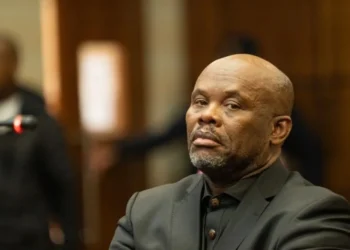
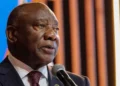
Reatile founder and chairman Simphiwe Mehlomakulu said the partnership “reflects the confidence placed in our 23-year track record” of investing in and operating energy businesses in South Africa.
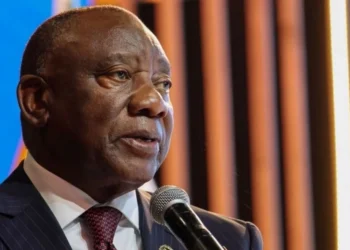
ADNOC Distribution chief executive Bader Saeed Al Lamki said in July that the acquisition “reflects our confidence in South Africa as a high-potential, well-regulated fuel retail sector”, pointing to the country’s transport infrastructure and growing driving-age population.
There is a symmetry worth noting. The 28% now earmarked for a local partner is the same proportion that Thebe Investment Corporation held in the business before exiting around 2022, according to trade reporting on the sale process.
What changes for you at the pump
Three things stay the same.
The signage stays Shell. ADNOC will license the brand for both retail service stations and lubricants, so a driver filling up in Mamelodi or Mitchells Plain will see no change on the canopy.
The price stays regulated. South Africa’s fuel price is set monthly by government using international product prices and the rand, which is why ADNOC told investors that the local framework offers gross margins per litre comparable to the UAE and insulates returns from inflation and currency swings. The same mechanism is what produced April’s record diesel increases and the cuts that followed.
The stations stay open. This is a sale of a going concern, not a wind-down.
What is not yet clear is whether anything changes for the people who work there. No commitments on employment levels, dealer contracts or supply arrangements have been published by either company.
What the deal actually includes
| Item | Detail |
|---|---|
| Buyer | ADNOC Distribution, listed on the Abu Dhabi Securities Exchange |
| Seller | Shell South Africa Holdings |
| Asset | Shell Downstream South Africa |
| Implied enterprise value | About $1 billion, roughly R16.1 billion, before net debt and working capital adjustments |
| Fuel stations | 580 company and dealer-owned, per ADNOC’s announcement |
| Convenience stores | 360 |
| 2025 fuel volumes | About 3.5 billion litres |
| Also included | Wholesale fuel, aviation, marine and lubricants operations |
| Not included | Shell’s offshore exploration interests and the Sapref refinery |
| Local partner | Reatile Group, minority stake, size undisclosed |
| Ownership after close | ADNOC Distribution 72%, empowerment partner and employee scheme 28% |
| Expected completion | 2027, subject to regulatory approval |
The station count varies by source. ADNOC’s own announcement puts it at 580 company and dealer-owned sites. Shell’s own materials and much of the coverage of the sale use a figure of 600, and Shell South Africa’s published network stood at 591 in 2025. This article uses the buyer’s figure.
The network represents about 10% of South Africa’s fuel retail market. ADNOC expects the acquisition to lift its earnings per share by about 6% and core earnings by about 13% in the first full year after completion.
How South Africa’s fuel retail became foreign-owned
This is the third of the country’s major networks to pass into foreign hands in eight years, and it completes a pattern.
Glencore has backed the second-largest network since the 2018 acquisition of Chevron’s Caltex stations, now trading as Astron Energy. Vitol’s Vivo Energy became market leader after buying a controlling stake in Engen from Malaysia’s Petronas in 2024. ADNOC now takes the Shell network.
The sellers in each case were oil majors and national oil companies reallocating capital away from lower-margin retail. Under chief executive Wael Sawan, Shell has been systematically divesting downstream assets in favour of upstream production, and Southafriworld has previously reported on the broader wave of multinationals scaling back or exiting South Africa.
The buyers are commodity traders and Gulf state energy companies, drawn by the same feature South African motorists sometimes resent. Regulated pricing caps the upside but guarantees a margin, which makes earnings predictable in a way deregulated markets are not.
Shell appointed Rothschild & Co to run the sale in mid-2024. Aramco, OQ Trading and Trafigura all looked. Sasol, PetroSA and Trafigura’s Puma Energy declined to bid. Talks with Swiss trader Gunvor collapsed in early 2026 before ADNOC emerged as preferred bidder.
Inbound capital of this scale is not common. The transaction is larger than Toyota’s R10.4 billion South African investment commitment announced earlier this year.
What still has to happen before 2027
The Competition Commission has not published a decision, and a transaction of this size will require a merger assessment and is likely to attract public interest conditions covering employment and empowerment.
Licence transfers under the Petroleum Products Act will also be needed before ADNOC can operate the network.
Several commercial details remain undisclosed. The size of Reatile’s stake has not been given, nor the split between the empowerment partner and the employee share scheme within the 28%, nor what Reatile is paying.
ADNOC has signalled it is not finished. Athmane Benzerroug, the company’s chief strategy, transformation and sustainability officer, has described the South African network as a potential platform for further acquisitions on the continent, while saying the group will be selective about which countries it enters.
For now the sequence is fixed. ADNOC must close its purchase from Shell first, and only then does Reatile’s minority acquisition take effect.