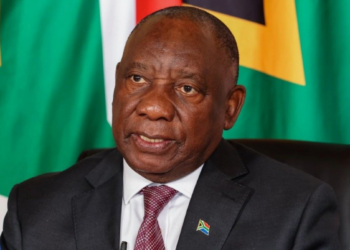
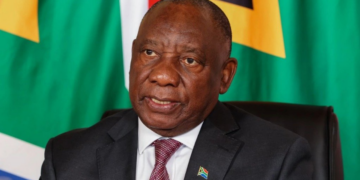





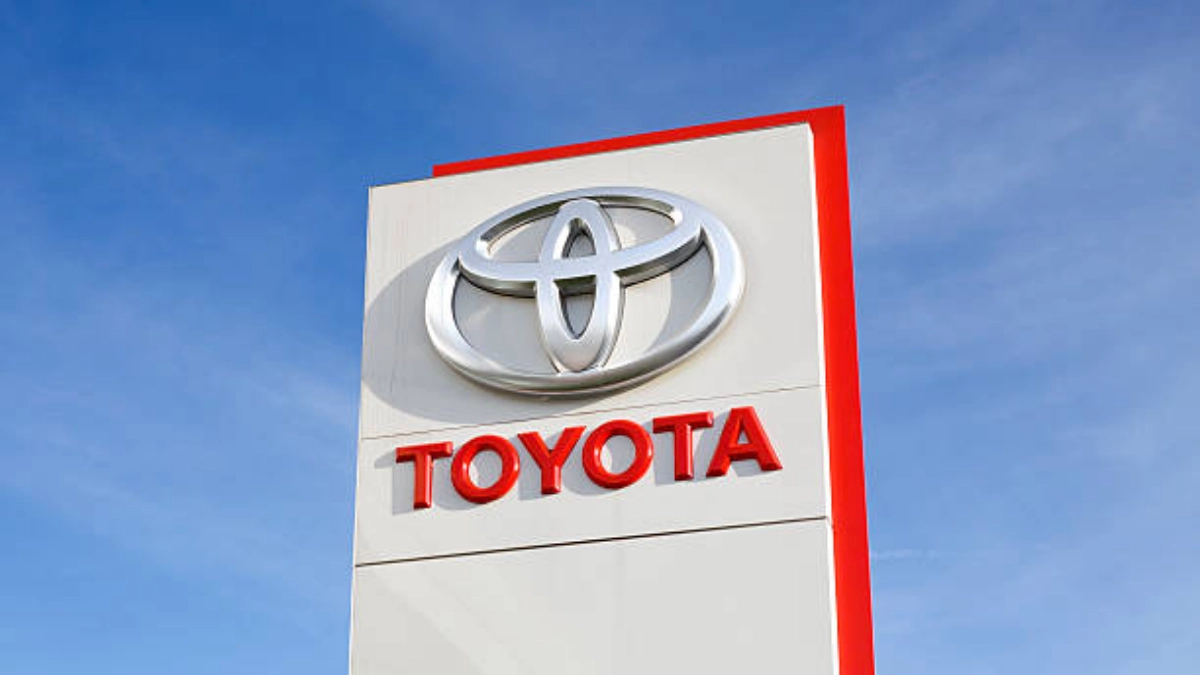
President Cyril Ramaphosa says Toyota will invest R10.4 billion in KwaZulu-Natal to prepare for the energy transition in the automotive sector, placing one of South Africa’s biggest vehicle manufacturers at the centre of the country’s latest investment drive. The commitment was disclosed in the President’s closing remarks at the 2026 South Africa Investment Conference on 31 March, where he said the pledge formed part of the highest cumulative value of commitments secured since the conference began.
The development matters because Toyota is not a marginal player in South Africa’s economy. Its Durban-based manufacturing footprint is one of the anchors of the country’s automotive industry, and any major capital commitment linked to the energy transition carries implications for jobs, localisation, exports and the long-term future of vehicle production in KwaZulu-Natal.
The stronger and more accurate angle here is not that Toyota has suddenly unveiled a full public project blueprint. The verified public record is narrower. Ramaphosa has announced a R10.4 billion Toyota investment tied to preparing for the automotive energy transition, but the official speech reviewed does not yet set out a detailed breakdown, timeline, technology mix or plant-by-plant implementation plan. That means the story is real and current, but the finer operational details are still limited in the public record.
What we know so far
The clearest primary source is the President’s own speech. In his closing remarks at the Sixth South Africa Investment Conference, Ramaphosa said: “In KwaZulu-Natal, Toyota will be investing R10,4 billion in preparing for the energy transition in the automotive sector.” He listed the Toyota commitment alongside other major investment pledges by Sasol, South32, Actom and Teleperformance.
That places the Toyota announcement inside a wider national investment push. The Presidency said ahead of the conference that the 2026 gathering marked a move from high-level planning to a more focused phase of delivery, with government targeting an additional R2 trillion in investment commitments over five years. Ramaphosa said in his closing remarks that the 2026 conference produced the highest cumulative value of pledges since the first conference and the highest number of projects.
What is still not public, at least in the official material reviewed, is exactly how Toyota’s R10.4 billion will be allocated. The Presidency’s wording links it to “preparing for the energy transition in the automotive sector,” but does not specify whether the money will be directed at hybrid production, battery electric vehicle readiness, plant retooling, supplier development, logistics upgrades, charging-related systems, or a combination of those elements.
That gap matters because “energy transition” in the auto sector can mean different things. It can refer to new-energy vehicle production, lower-emissions manufacturing, localisation of new components, or export-readiness for markets with tougher carbon rules. Without a fuller Toyota project document in public, the safest editorial reading is that the investment is strategic and transition-linked, but not yet fully itemised.
Why it matters
The announcement matters because South Africa’s automotive industry is under pressure to adapt to a changing global market. Toyota South Africa Motors said at its February 2026 State of the Motor Industry event that the sector must strengthen industrial competitiveness and accelerate the transition to new energy vehicles. That language closely matches the policy pressure facing South African manufacturers as export markets tighten emissions rules and as global investment shifts toward lower-emissions technologies.
Toyota itself has already been signalling that transition. In August 2025, Reuters reported that Toyota planned to introduce three fully electric vehicles in South Africa in 2026, with the longer-term aim of localising some production in future. At the time, Toyota South Africa CEO Andrew Kirby said the company did not believe one powertrain would dominate the future and outlined a multi-pathway strategy that included internal combustion, hybrid, plug-in hybrid, battery electric and fuel-cell vehicles.
There is also a local industrial angle. Toyota’s manufacturing base in Durban is deeply tied to the KwaZulu-Natal economy, and the company has repeatedly stressed the need for reliable infrastructure, local supplier scale and a stronger industrial ecosystem. In August 2025, Toyota reaffirmed its long-term commitment to eThekwini and KwaZulu-Natal in a high-level engagement with municipal leadership focused on roads, electricity, water and sanitation in the Prospecton precinct.
That means the new R10.4 billion commitment should not be read in isolation. It fits into a longer pattern of Toyota positioning South Africa, and particularly KwaZulu-Natal, as a production base that still has to be defended and modernised if it is to remain globally competitive.
Key details and figures
The key number is R10.4 billion, not merely a rounded R10 billion. That is the figure Ramaphosa used in his closing remarks at the Investment Conference. The speech places the investment in KwaZulu-Natal and ties it directly to preparation for the energy transition in the automotive sector.
The broader policy environment also matters. In March 2025, Reuters reported that South Africa would introduce a tax incentive scheme to support local production of electric vehicles, batteries and related manufacturing projects, with National Treasury expecting the policy to crowd in around R30 billion in private-sector investment. That helps explain why a company such as Toyota would now be mentioned in connection with transition-related investment rather than only conventional production expansion.
Toyota also has a recent history of substantial industrial commitments in South Africa. In August 2024, the Department of Trade, Industry and Competition announced a R1.175 billion partnership between Toyota South Africa Motors and Ogihara South Africa at Dube TradePort, aimed at deepening localisation and raising local content for models such as the Hilux, Fortuner and Corolla. That earlier project was smaller than the new R10.4 billion commitment, but it shows that Toyota has already been investing in the supplier and localisation base around its South African operations.
Taken together, these figures suggest the latest announcement is not a stand-alone headline without history. It appears to sit on top of a broader industrial trend in which Toyota is trying to protect its South African manufacturing base while adapting it to future export, policy and energy-transition demands. That is an inference based on the company’s recent statements, the government’s incentive direction, and the President’s wording at the conference.
What happens next
The next important step is disclosure. For this story to become more concrete, Toyota or government will need to publish more detail on what the R10.4 billion will fund, over what period it will be spent, and what the measurable outcomes will be in terms of production, jobs, localisation, exports or new-energy vehicle readiness. At the moment, the announcement is credible and official, but still thin on implementation detail in the public domain.
That does not make the announcement insignificant. On the contrary, it makes it a strong investment story with an incomplete public project profile. For South African readers, the core point is that one of the country’s most important automakers has now been linked, by the President in an official conference address, to a R10.4 billion transition-related investment in KwaZulu-Natal.
The safest editorial conclusion is therefore narrow and factual. Toyota has not yet publicly laid out a full technical roadmap in the sources reviewed, but Ramaphosa has announced a major R10.4 billion commitment tied to South Africa’s automotive energy transition. If followed by detailed implementation plans, it could become one of the most consequential recent industrial investment stories in KwaZulu-Natal.