





• About us
  • Advertise
  • Terms and Conditions
  • Editorial Policy
  • Privacy Policy
  • Contact
Southafriworld
  • Home
  • News
    • All
    • Business
    • Crime
    • Economy
    • Tech
    • Tourism
    New car sales in SA hit a 12-year high | Southafriworld

    New car sales hit 12-year high: what’s driving the boom

    Smart ID bank branch finder now live | Southafriworld

    New online tool shows where to get your smart ID at a bank

    Petrol price cut 52c, diesel up in August | Southafriworld

    Petrol drops 52c but diesel jumps R1.38 from Wednesday

    Southern Africa growth set to slow in 2026 | Southafriworld

    AfDB sees Southern Africa growth slowing to 2.1% in 2026

    Tshwane loses R155 million in grants | Southafriworld

    Tshwane loses R155 million meant for water and roads

    Minimum Wage South Africa 2026: R30.23 | Southafriworld

    Minimum wage South Africa 2026: hourly and monthly rates

    SARS Tax Season 2026: Key Deadlines | Southafriworld

    SARS tax season 2026: deadlines and how to file

    SASSA Grant Amounts 2026: Full List | Southafriworld

    SASSA grant amounts 2026: the full list and payment dates

    South Africa tourism arrivals up 12.3% in 2026 | Southafriworld

    SA tourism arrivals climb 12.3% to 5.5 million in 2026

    • Business
    • Crime
    • Economy
    • Tech
    • Tourism
  • About us
    • Masthead
    • Editorial Policy
    • Privacy Policy
    • Terms and Conditions
    • Corrections Policy
  • Advertise
  • Contact Us
No Result
View All Result
  • Home
  • News
    • All
    • Business
    • Crime
    • Economy
    • Tech
    • Tourism
    New car sales in SA hit a 12-year high | Southafriworld

    New car sales hit 12-year high: what’s driving the boom

    Smart ID bank branch finder now live | Southafriworld

    New online tool shows where to get your smart ID at a bank

    Petrol price cut 52c, diesel up in August | Southafriworld

    Petrol drops 52c but diesel jumps R1.38 from Wednesday

    Southern Africa growth set to slow in 2026 | Southafriworld

    AfDB sees Southern Africa growth slowing to 2.1% in 2026

    Tshwane loses R155 million in grants | Southafriworld

    Tshwane loses R155 million meant for water and roads

    Minimum Wage South Africa 2026: R30.23 | Southafriworld

    Minimum wage South Africa 2026: hourly and monthly rates

    SARS Tax Season 2026: Key Deadlines | Southafriworld

    SARS tax season 2026: deadlines and how to file

    SASSA Grant Amounts 2026: Full List | Southafriworld

    SASSA grant amounts 2026: the full list and payment dates

    South Africa tourism arrivals up 12.3% in 2026 | Southafriworld

    SA tourism arrivals climb 12.3% to 5.5 million in 2026

    • Business
    • Crime
    • Economy
    • Tech
    • Tourism
  • About us
    • Masthead
    • Editorial Policy
    • Privacy Policy
    • Terms and Conditions
    • Corrections Policy
  • Advertise
  • Contact Us
No Result
View All Result
Southafriworld
No Result
View All Result
Home News Economy

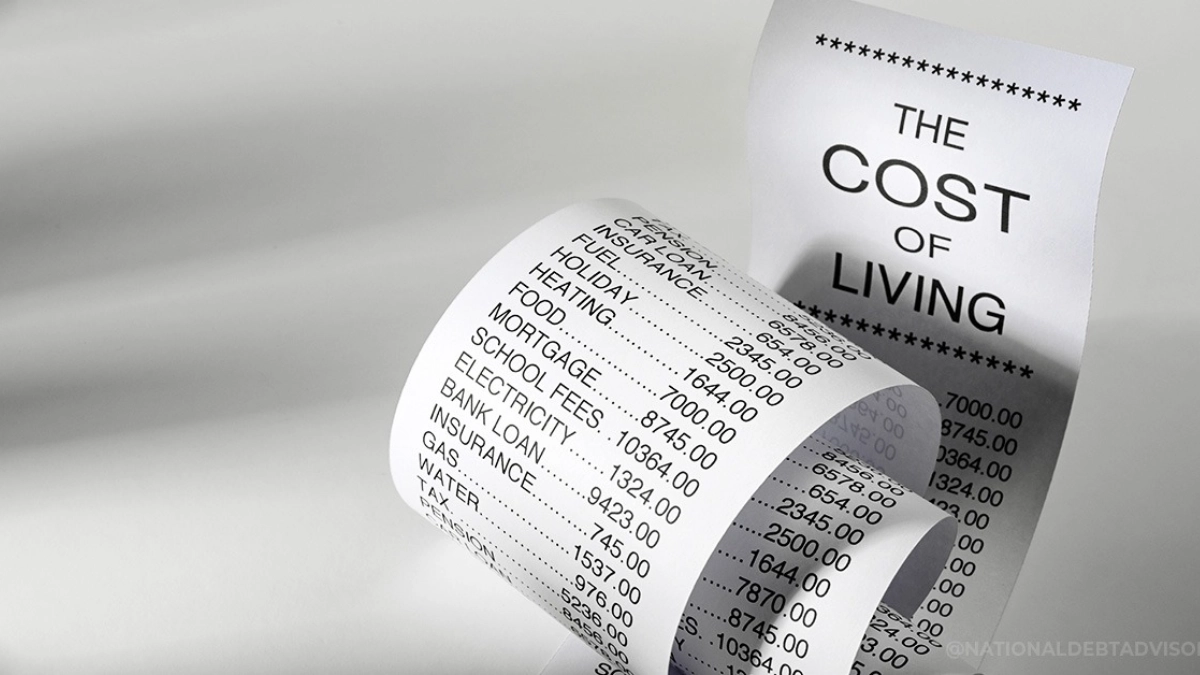
Essential costs push households into survival mode

New official reports show many South African households are still financially stretched as food, housing, utilities and other basic costs crowd out room for discretionary spending.

Ezra Labuschagne by Ezra Labuschagne
10 April 2026, 13:00
in Economy, News
A South African shopper reviewing grocery prices in a supermarket as rising essential costs squeeze household budgets.

South Africans are being squeezed into harsher spending choices as essential costs continue to dominate household budgets, even though headline inflation has eased. The strongest current official evidence comes from the Competition Commission’s second Cost of Living Report, released on 1 April 2026, which says many essentials remain expensive and that lower-income households are still carrying a disproportionate burden.

The broader picture in the public record supports the idea that many households are operating in survival mode. Parliament’s Budget Office said in its 2026 pre-budget brief that for many households the issue is “monthly survival”, shaped by prolonged unemployment, rising food and electricity prices, and weak service delivery. It added that under these conditions many households are forced into debt, informal support networks, or going without essentials such as food.

The stronger and more accurate angle here is not that every South African has suddenly changed spending behaviour in the same way. The verified position is narrower. Official data show that essentials are taking up such a large share of lower-income budgets that households have less room to absorb shocks or spend on anything beyond basics. That is the clearest evidence that spending habits are being reshaped by pressure rather than preference.

What we know so far

The Competition Commission says households in the lowest income decile allocate the largest share of their spending to food and non-alcoholic beverages at 40.71%, followed by housing and utilities at 26.1%. Together, those two categories account for 66.81% of total expenditure for the poorest households. The Commission also says the essential food and non-food categories examined in its report together represent about 83.96% of expenditure for low-income households.

That matters because these are not easy costs to avoid. The report focuses on electricity, water, rent, transport, education, primary healthcare, funeral policies, internet, food and interest-rate-related housing costs precisely because these are the categories households cannot easily substitute away from. The Commission says even when headline inflation moderates, the prices of essential goods and services can remain historically elevated, leaving cost pressures firmly entrenched.

The official report points to particularly heavy pressure from administered and basic service costs. From 2020 to January 2026, electricity prices rose by about 85% and water prices by about 68%, compared with overall inflation of 30% over the same period. Primary education costs rose by 37% and secondary education costs by 42%, both above headline inflation.

The Commission also notes that electricity now carries an outsized burden in low-income budgets. For consumers in the lowest income decile, electricity accounts for 5.5% of spending, which is more than what is spent on maize meal at 4.7%, brown bread at 3.3% and minibus taxi fares at 4.3%. That is one of the clearest signs in the data that essential costs are crowding out flexibility in household spending.

Why it matters

The financial squeeze is not only about prices on a shelf. It also affects how households judge their own financial adequacy. Statistics South Africa said last month that even though fewer people now describe themselves as poor than in 2015, many still say their income is not enough to meet everyday needs. The agency said 51.4% of individuals in 2023 regarded their income as falling short of what they need, while 51.0% of households said the same.

That makes the “survival mode” framing more than a loose headline. Official and parliamentary reporting now converge on a similar message: many households remain financially stretched even where inflation has cooled or where some broader poverty indicators have improved. Stats SA says many people still feel unable to meet rising living costs, while Parliament’s Budget Office says the affordability gap leaves many low-income households unable to cover non-negotiable essentials.

The Competition Commission’s report also shows why this pressure can reshape spending in practice. It says rent is one of the largest and least flexible items in household budgets, and that increases in rent directly erode disposable income and limit households’ ability to absorb rising costs in other essential areas such as food, transport and utilities. It similarly says changes in interest rates feed directly into monthly repayments for indebted households, materially affecting disposable income and lived cost-of-living pressure.

This means the spending story is less about lifestyle choice and more about defensive adjustment. When food, housing, electricity, water, transport and borrowing costs keep taking priority, households are left with less space for discretionary purchases, less room for savings, and less ability to withstand the next shock. That is the public-interest significance of the new reports.

Key details and figures

The headline numbers are stark. The Commission says essentials remain expensive even as inflation eases, and warns that renewed instability in the Middle East has already begun putting upward pressure on fuel and transport costs from April. It adds that higher fuel costs can also feed through into the prices of other goods, including food.

Parliament’s Budget Office puts similar pressure into a household-affordability frame. Its March 2026 brief says the majority of South Africans live in poverty severe enough to prevent them from meeting even basic food needs, let alone other essentials. It also says the average monthly household food basket in its comparison stood above both the food poverty line and key social grants, underlining the scale of the affordability gap.

Stats SA adds an important nuance. Its latest subjective poverty release says fewer households classify themselves as poor than eight years ago, but many still regard themselves as financially stretched. That matters because it suggests households can feel trapped between formal poverty indicators improving on paper and daily costs still overwhelming them in practice.

What happens next

The immediate next phase of this story is likely to be shaped by April’s fuel and transport pressures, which the Competition Commission has already flagged as a risk to food and broader living costs. That means the squeeze on household budgets may deepen further before any meaningful relief shows up in everyday spending patterns.

For now, the safest editorial conclusion is narrow and factual. The current official evidence supports the view that many South African households are being forced into survival-style budgeting because essentials are consuming too much of their income. The clearest proof is not a single survey line about behaviour. It is the combination of current Competition Commission data, Parliament’s affordability warning, and Stats SA’s finding that many households still feel their income does not cover their needs.

Get South Africa’s Biggest Stories

Join the Southafriworld newsletter for top stories and weekly news highlights, sent straight to your inbox.

We don’t spam! Read our privacy policy for more info.

Thanks for subscribing. Please check your inbox to confirm your email address.

Source: Competition Commission of South Africa
Tags: Competition Commissioncost of livinginflationNewsparliamentSouth AfricaStats SA
Previous Post

Ramaphosa says Toyota will invest R10.4 billion in SA

Next Post

Draft AI policy opens path to new rules

Ezra Labuschagne

Ezra Labuschagne

Ezra Labuschagne is the founder, editor, and publisher of Southafriworld, an independent South African digital news publication. Based in Pretoria, South Africa, he leads the publication’s editorial direction, publishing standards, content review, and audience strategy. His work focuses on current affairs, public interest reporting, business, the economy, public policy, and major developments that affect daily life in South Africa. As founder and editor, he is responsible for final editorial oversight, including source review, accuracy, updates, corrections, and publishing standards across Southafriworld.

Related Posts

New car sales in SA hit a 12-year high | Southafriworld
Economy

New car sales hit 12-year high: what’s driving the boom

08/04/2026
Smart ID bank branch finder now live | Southafriworld
News

New online tool shows where to get your smart ID at a bank

08/04/2026
Petrol price cut 52c, diesel up in August | Southafriworld
News

Petrol drops 52c but diesel jumps R1.38 from Wednesday

08/03/2026
Southern Africa growth set to slow in 2026 | Southafriworld
Economy

AfDB sees Southern Africa growth slowing to 2.1% in 2026

08/03/2026
Tshwane loses R155 million in grants | Southafriworld
News

Tshwane loses R155 million meant for water and roads

08/03/2026
Minimum Wage South Africa 2026: R30.23 | Southafriworld
Economy

Minimum wage South Africa 2026: hourly and monthly rates

08/03/2026
Next Post
A person using an AI interface on a computer as South Africa opens public comment on its draft national AI policy.

Draft AI policy opens path to new rules

  • Trending
  • Latest
US Issues Sanctions Warning to South Africa | Southafriworld

United States Issues Formal Sanctions Warning to South Africa Over Foreign Policy Positions

01/28/2026
Big Smoking Law Changes Coming To South Africa | Southafriworld

Big Change Coming For Smoking Laws In South Africa As New Controls Take Shape

01/12/2026
FlySafair sold to black empowerment investors | Southafriworld

FlySafair sold to black empowerment investor group

02/11/2026
New work hours laws proposed | Southafriworld

New work hours laws proposed for South Africa

02/28/2026
New car sales in SA hit a 12-year high | Southafriworld

New car sales hit 12-year high: what’s driving the boom

08/04/2026
Smart ID bank branch finder now live | Southafriworld

New online tool shows where to get your smart ID at a bank

08/04/2026
Petrol price cut 52c, diesel up in August | Southafriworld

Petrol drops 52c but diesel jumps R1.38 from Wednesday

08/03/2026
Southern Africa growth set to slow in 2026 | Southafriworld

AfDB sees Southern Africa growth slowing to 2.1% in 2026

08/03/2026

Recent News

New car sales in SA hit a 12-year high | Southafriworld

New car sales hit 12-year high: what’s driving the boom

08/04/2026
Smart ID bank branch finder now live | Southafriworld

New online tool shows where to get your smart ID at a bank

08/04/2026
Petrol price cut 52c, diesel up in August | Southafriworld

Petrol drops 52c but diesel jumps R1.38 from Wednesday

08/03/2026
Southern Africa growth set to slow in 2026 | Southafriworld

AfDB sees Southern Africa growth slowing to 2.1% in 2026

08/03/2026
Southafriworld

Southafriworld is an independent South African digital news platform delivering timely, credible reporting on national news, business, politics, technology, lifestyle, and major stories shaping South Africa and the world.

Follow Us

Browse by Category

  • Business
  • Crime
  • Economy
  • News
  • Tech
  • Tourism

Recent News

New car sales in SA hit a 12-year high | Southafriworld

New car sales hit 12-year high: what’s driving the boom

08/04/2026
Smart ID bank branch finder now live | Southafriworld

New online tool shows where to get your smart ID at a bank

08/04/2026
  • About us
  • Advertise
  • Terms and Conditions
  • Editorial Policy
  • Privacy Policy
  • Contact

© 2026 | Designed by Ezra Labuschagne.

No Result
View All Result
  • Home
  • News
    • Economy
    • Business
    • Tech
    • Crime
    • Tourism
  • About us
    • Terms and Conditions
    • Privacy Policy
    • Editorial Policy
    • Corrections Policy
    • Masthead
  • Advertise
  • Contact Us

© 2026 | Designed by Ezra Labuschagne.

This website uses cookies to personalize content and ads, analyze traffic, and improve your experience. By continuing to use this site, you consent to the use of cookies. View our Privacy & Cookie Policy.