








What the FlySafair fuel surcharge now costs per route
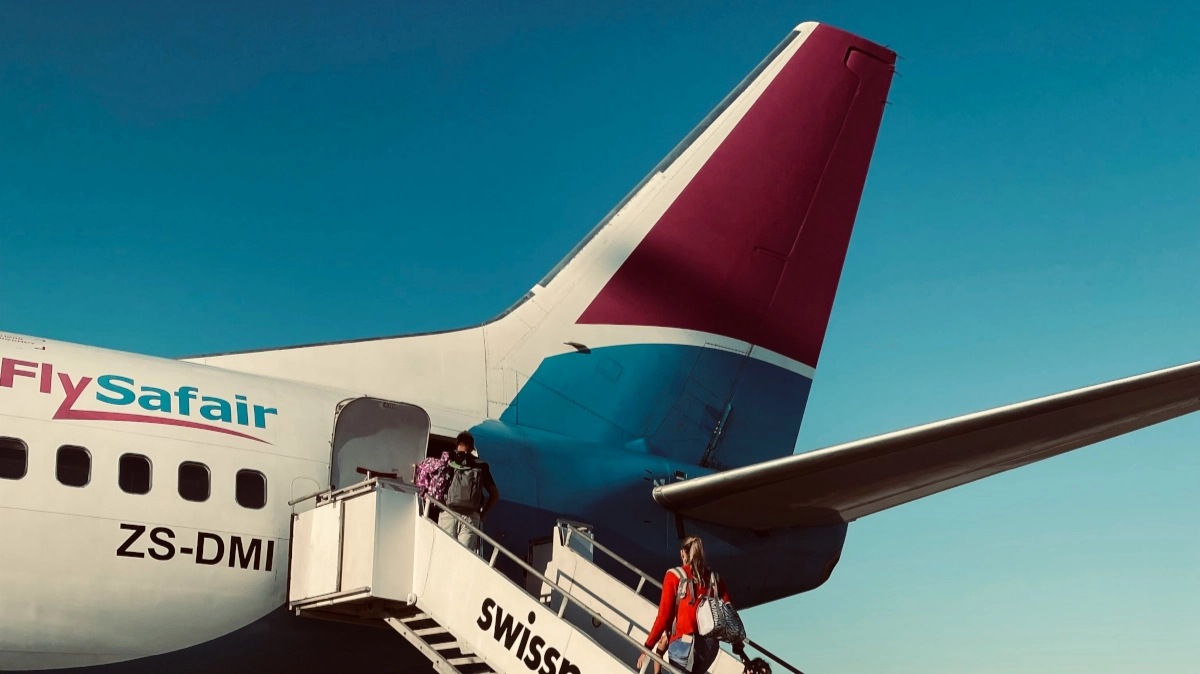
Anyone booking a FlySafair flight this week is paying more than they would have in late July. The airline’s fuel surcharge has risen on every one of the 26 routes it publishes, by between R26.45 and R104 a flight.
Cape Town to Johannesburg now carries a surcharge of R434.70, up from R374.90 on 21 July. Johannesburg to Mauritius carries R756, up from R652.
The surcharge is a separate line item added to the ticket price. It is not a base fare increase, and Southafriworld has not established whether FlySafair also adjusted underlying fares.
That distinction matters when comparing prices. A traveller sees a higher total, but the increase reported here is specifically the fuel levy, which the airline reviews and republishes every seven days.
The current levels are also well below where the surcharge stood earlier this year. FlySafair chief marketing officer Kirby Gordon has said the surcharge reached its peak on 14 April and was adjusted downwards on 21 July.
Why the levy rose while petrol prices fell in July
Road fuel and jet fuel moved in opposite directions over the same period. That is the part of this story most South Africans will find counterintuitive.
Statistics South Africa recorded petrol down 7.1% and diesel down 11.7% between June and July 2026, which Southafriworld covered in July’s headline inflation figures. Jet A1 pricing did not follow.
The gap comes down to how each fuel reaches the country. Gordon has said jet fuel prices more than doubled over the year to mid-2026, while petrol rose by roughly a third.
Southafriworld reported on FlySafair’s earlier surcharge extension in July. Road fuel relief also looks temporary, with a petrol price increase expected in September.
Every route and what changed since 21 July
| Route | 21 July 2026 | Current | Change |
|---|---|---|---|
| Nelspruit to Johannesburg | R164.45 | R190.90 | R26.45 |
| Cape Town to George | R171.35 | R198.95 | R27.60 |
| Bloemfontein to Johannesburg | R178.25 | R207.00 | R28.75 |
| Johannesburg to Durban | R207.00 | R240.35 | R33.35 |
| Durban to East London | R213.90 | R248.40 | R34.50 |
| Lanseria to Durban | R213.90 | R248.40 | R34.50 |
| Cape Town to Gqeberha | R235.75 | R272.55 | R36.80 |
| Gqeberha to Durban | R242.65 | R281.75 | R39.10 |
| East London to Johannesburg | R264.50 | R305.90 | R41.40 |
| Johannesburg to Victoria Falls | R267.00 | R309.00 | R42.00 |
| Johannesburg to Harare | R273.00 | R317.00 | R44.00 |
| Cape Town to East London | R278.30 | R323.15 | R44.85 |
| East London to Lanseria | R278.30 | R323.15 | R44.85 |
| Cape Town to Bloemfontein | R285.20 | R331.20 | R46.00 |
| Gqeberha to Johannesburg | R285.20 | R331.20 | R46.00 |
| Gqeberha to Lanseria | R307.05 | R355.35 | R48.30 |
| Cape Town to Windhoek | R317.00 | R367.00 | R50.00 |
| George to Johannesburg | R328.90 | R380.65 | R51.75 |
| George to Lanseria | R356.50 | R414.00 | R57.50 |
| Cape Town to Lanseria | R371.45 | R430.10 | R58.65 |
| Cape Town to Johannesburg | R374.90 | R434.70 | R59.80 |
| Cape Town to Durban | R378.35 | R438.15 | R59.80 |
| Cape Town to Hoedspruit | R449.65 | R520.95 | R71.30 |
| Cape Town to Nelspruit | R449.65 | R520.95 | R71.30 |
| Johannesburg to Zanzibar | R552.00 | R640.00 | R88.00 |
| Johannesburg to Mauritius | R652.00 | R756.00 | R104.00 |
The figures are FlySafair’s own, published on its fuel surcharge tracking page. Southafriworld could not retrieve that page directly because it requires JavaScript, so the values were taken from TopAuto’s tabulation of it and are dated to the week of 25 August 2026.
The pattern is consistent with the airline’s stated method. Longer routes burn more fuel and carry a higher levy, which is why the two holiday routes to Zanzibar and Mauritius sit at the top and the short Nelspruit and George hops sit at the bottom.
Why South Africa is more exposed than most aviation markets
The surcharge exists because of a supply chain that has thinned out over a decade. Gordon has said the number of operating crude oil refineries in South Africa fell from six to two between 2015 and 2026.
He has also said roughly 75% of South Africa’s fuel is now imported, against 20% to 30% before the Covid pandemic, and that 70% of Africa’s jet fuel imports arrive through the Strait of Hormuz. Fuel accounts for 50% to 55% of FlySafair’s direct operating cost.
The Strait has been the choke point since the conflict involving the United States, Israel and Iran escalated. Jet A1 prices at South African coastal airports rose about 70% in the first week of the conflict, and the surcharge followed on 12 March 2026, the first in FlySafair’s history.
Aaron Munetsi, chief executive of the Airlines Association of Southern Africa, has argued that the burden should be shared, saying < cite index=”100-1″>”airlines should not be expected to absorb the shock on their own”</cite> and calling on airports and air navigation service providers to cut congestion and delays that waste fuel.
Southafriworld has reported on South Africa’s draft fuel rationing policy, drawn up in response to the same supply risk.
What would have to happen for the surcharge to end
FlySafair has not set an end date. The levy was originally meant to run from 12 March to 12 May 2026 and has been extended more than once.
Gordon has described the mechanism as < cite index=”94-1″>”not a revenue mechanism”</cite> that moves with actual fuel costs, and told a briefing that the airline < cite index=”92-1″>”want[s] to try and get it down to a reasonable base”</cite>. FlySafair sells the tickets the surcharge is levied on, so its account of the levy is the position of an interested party.
Linden Birns, managing director of aviation consultancy Plane Talking, has pointed out that fuel arriving at South African ports was bought at earlier, higher prices, which means falls in the oil price take time to reach ticket prices. Munetsi has separately warned that Gulf refineries damaged during the conflict will need months to return to output even after shipping resumes.
Several things remain unconfirmed. FlySafair has not published an effective date for the current levels, has not said what jet fuel price would allow the surcharge to be withdrawn, and reviews the figures weekly, which means the amounts in the table above can change within days.
Two things are fixed for now. The surcharge does not apply retrospectively to bookings made before it was introduced, and changing an existing booking to a new departure date inside the surcharge period will attract the levy.