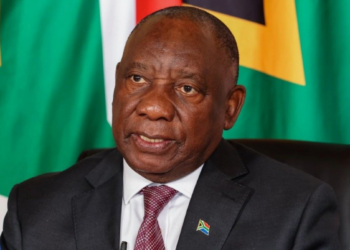






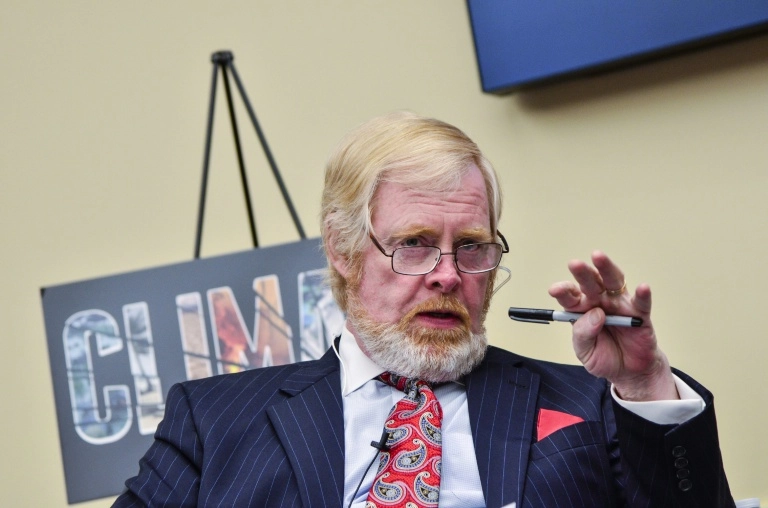
Leo Brent Bozell III, President Donald Trump’s ambassador-designate to South Africa, has arrived in Pretoria at a time of unusually strained relations between the two countries. His impending start in the role, once he formally presents credentials to President Cyril Ramaphosa, is being watched closely in diplomatic and political circles because Bozell is not a career diplomat. He is a long-time conservative activist best known for campaigns against what he calls liberal influence in media and culture.
Bozell’s appointment lands amid ongoing tension over South Africa’s foreign policy positions, including Pretoria’s legal action against Israel at the International Court of Justice and its ties with countries Washington views as strategic rivals. It also comes as US political narratives about South Africa’s domestic affairs continue to circulate in Washington, particularly claims about the treatment of the white Afrikaner minority and disputes around land reform.
In South Africa, analysts say the next phase of the relationship will depend on whether the new envoy focuses narrowly on traditional bilateral priorities such as trade and security, or whether he attempts to project American domestic culture war battles into South Africa’s already complex debates on race, identity, and social policy.
A new envoy at a low point in relations
The US and South Africa have a broad economic relationship, but the political relationship has deteriorated sharply over the past year. Bozell’s arrival follows a period in which Washington has publicly criticised Pretoria on multiple fronts, while South African leaders have pushed back, arguing that South Africa’s positions are grounded in constitutional values and international law.
In his written statement to the US Senate Foreign Relations Committee, Bozell described the moment as “challenging” for relations and said the President’s concerns about South Africa had “for too long” been unaddressed. He framed those concerns in terms of property rights, safety, corruption, and what he called South Africa’s “geostrategic drift” toward countries hostile to the United States.
That framing matters because it suggests Bozell’s mandate is not only to manage relations but to contest South Africa’s political choices openly, including on issues Pretoria treats as non-negotiable elements of its post-1994 identity, such as solidarity with Palestinians and resistance to perceived foreign pressure.
Bozell’s stated priorities for Pretoria
In his Senate submission, Bozell set out three headline priorities.
First, he said he would communicate US objections to South Africa’s foreign policy alignment and press South Africa to end its International Court of Justice case against Israel. He also referenced efforts to encourage action related to the International Criminal Court prosecutor, language that indicates a more confrontational stance on how South Africa has used international institutions.
Second, he said he would advance Trump’s invitation to Afrikaners who want to leave South Africa due to what he described as unjust racial discrimination. He linked that point to Trump’s criticism of policies associated with expropriation without compensation and to a broader argument about property rights.
Third, he said he would advocate for business interests by promoting fair trade practices and reduced barriers for US companies.
The Senate submission also includes several economic and consular claims intended to underline the importance of the relationship, including the role of US companies in South Africa and the scale of American travel to the country. Bozell framed these points as reasons to seek a lasting partnership even while challenging South Africa on areas of disagreement.
Why “culture war” language is becoming part of foreign policy
Bozell’s background is central to why his arrival is being discussed as more than a normal diplomatic handover. He built his public profile through media activism and US domestic political campaigns that focus on cultural and moral issues. In the United States, that style of politics is often described as culture war politics, where social questions become proxies for political identity and power.
The concern for South Africa is not that American culture battles will automatically replace domestic debates. South Africa has its own long-running fault lines shaped by inequality, race, crime, and service delivery. The risk is that imported narratives can intensify existing tensions by simplifying complex local realities into slogans designed for political mobilisation.
This is where the phrase “sanitary pads” has entered the conversation. In the United States and other countries, debates about gender identity and public facilities have increasingly used sanitary products as symbolic ammunition, including arguments about where sanitary products should be available and who public spaces are designed for. In South Africa, sanitary products are also tied to a very different reality: period poverty and access to basic dignity for learners and low-income households. When these themes collide, a practical public health issue can be pulled into ideological arguments that are not rooted in local needs.
South African policy debates on menstrual health have historically focused on affordability, school attendance, and dignity. Culture war framings, by contrast, tend to treat the same subject as a marker of identity politics. Analysts say this is one example of how international political agendas can reshape domestic conversations if political actors adopt foreign talking points for local advantage.
How Pretoria is likely to respond
South Africa’s government has traditionally tried to separate domestic politics from diplomatic engagement, particularly with major economic partners. Even so, officials and analysts have warned that a more ideological US approach could force Pretoria to respond publicly, especially if Washington increases pressure on high-profile issues such as the ICJ case.
South Africa also faces a practical challenge: diplomacy is not only about statements, it is about maintaining functioning channels for trade, visas, security cooperation, and crisis management. If the US mission in Pretoria becomes heavily politicised, that could complicate routine cooperation even in areas where both countries have shared interests, including investment, crime prevention cooperation, and regional stability initiatives.
At the same time, some South African political groupings may welcome a harder US line, especially parties that align themselves with conservative or nationalist narratives and see the current government as overly hostile to the United States. That dynamic could increase the domestic political value of diplomatic disputes, making them harder to resolve quietly.
What happens next
Bozell is expected to complete formal accreditation in the coming period, after which he will operate as the official US ambassador in Pretoria. The most immediate indicators of his approach will be:
- Whether he prioritises relationship repair through trade and investment engagement, or whether he foregrounds political disputes.
- Whether his public messaging amplifies American domestic narratives about South Africa, including claims around race and land.
- Whether Washington signals consequences linked to South Africa’s stance on Israel and its relationships with rival powers.
- Whether South Africa responds through quiet diplomatic channels or public counter-messaging.
For South Africans, the key question is whether this shift produces tangible consequences. These could include changes in investment sentiment, visa and consular cooperation, or new pressure related to trade arrangements. For Pretoria, the immediate task will be to manage the relationship without allowing foreign culture war agendas to dominate local policy debates.