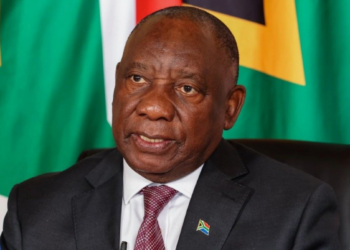

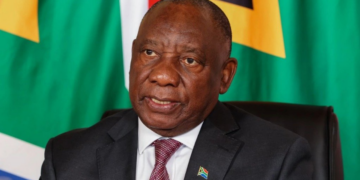







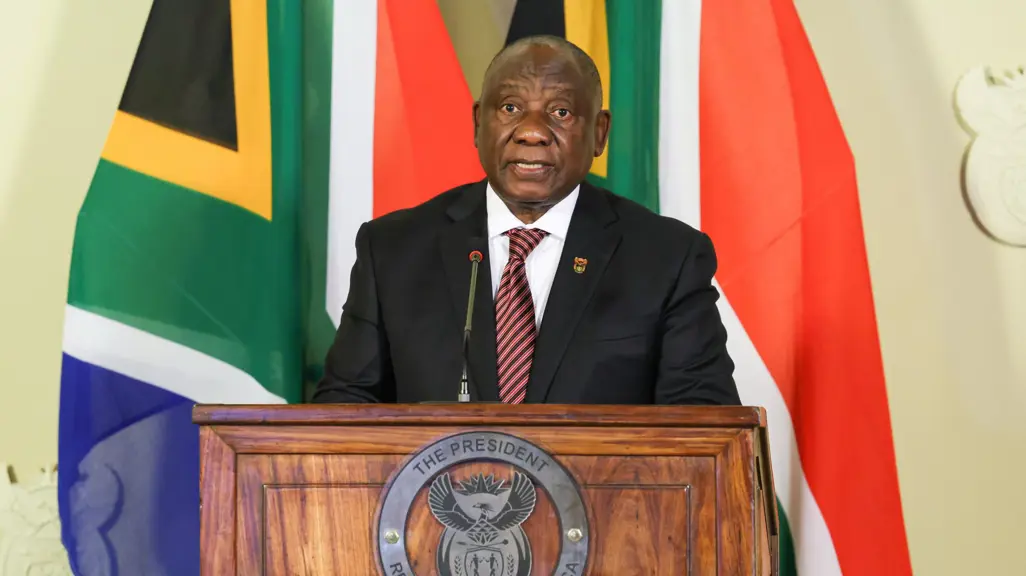
President Cyril Ramaphosa has reaffirmed that Black Economic Empowerment will remain a central pillar of government policy, pushing back against calls to scrap or dilute empowerment measures and signalling that government intends to strengthen how they work in practice.
In his reply to the debate on the 2026 State of the Nation Address in Cape Town, Ramaphosa argued that the country cannot meet constitutional goals of equality without transforming ownership, opportunity, and participation in the economy. He described claims that BEE only benefits a small connected elite as false, and said the focus should shift to making empowerment policies more effective rather than abandoning them.
What Ramaphosa said about BEE
Ramaphosa used his parliamentary reply to address critics across the political spectrum, including parties inside and outside the Government of National Unity. He said it is unacceptable for black South Africans, coloured South Africans, and Indian South Africans to remain poorer and have fewer opportunities than white South Africans, and he framed empowerment policy as part of redressing historical injustice.
He also acknowledged that inequality remains deeply entrenched, pointing to the income gap between white and black households. Ramaphosa said the purpose of empowerment measures is to close that gap through “deliberate and sustained efforts to expand opportunity”, and he delivered a clear political message: “Now is not the time to abandon BEE. Now is the time to make it more effective.”
A BBBEE review is now on the table
The most concrete policy signal in Ramaphosa’s remarks was confirmation that government is undertaking a review of the Broad Based Black Economic Empowerment framework. He said the review is intended to ensure that BBBEE supports “greater transformation and inclusive growth”.
Government has not yet published the scope, timelines, or consultation process for that review. In practice, a BBBEE review can range from technical tweaks to the Codes of Good Practice, to stronger enforcement and oversight aimed at issues such as fronting, weak verification, and empowerment deals that do not translate into broader participation. For now, the only confirmed point is that the review has been announced and positioned as a way to improve effectiveness, not to roll policy back.
What BEE covers and why employers keep hearing about it
BEE is often discussed as a single idea, but in real compliance terms it usually involves two linked systems:
- BBBEE policy, governed by the Broad Based Black Economic Empowerment Act and the Codes, which largely shape how companies are measured for empowerment status and procurement recognition.
- Employment Equity requirements, governed by the Employment Equity Act, which set duties on larger employers to plan and report on workplace transformation.
For many companies, BBBEE is felt through procurement. A firm’s BBBEE level can influence its competitiveness when bidding for work with government, state entities, and private sector buyers that apply procurement scorecards.
Employment Equity is felt through planning, reporting, and inspections, particularly for employers in the designated category, generally those with 50 or more employees.
These frameworks often overlap in public conversation because both are part of the broader transformation agenda, even though they operate through different laws and different enforcement levers.
Employment Equity is becoming a sharper enforcement tool
A major reason employers are hearing renewed warnings is that Employment Equity enforcement has become more structured and more consequential for state contracting.
Ramaphosa previously signed the Employment Equity Amendment Bill into law, and government communications on the law explain that it empowers the Minister of Employment and Labour to set sector specific targets and to regulate compliance criteria linked to Employment Equity Compliance Certificates. Those certificates matter because companies that want to do business with the state can be required to prove compliance with the Employment Equity Act and national minimum wage requirements.
Since April 2025, government has also published sectoral numerical targets under the Employment Equity Act for multiple sectors, which has intensified the compliance discussion among businesses, labour groups, and political parties.
What the sector targets mean for businesses
The Employment Equity targets set representation goals by sector and occupational level, generally focused on upper occupational levels such as top management, senior management, professionally qualified and middle management, and skilled technical and junior management.
For designated employers, the practical requirements typically include:
- Conducting workforce analysis and setting targets aligned to the applicable sector framework
- Submitting Employment Equity plans covering a five year period
- Reporting progress annually
- Demonstrating compliance or providing lawful justification where targets are not met
Government and the Department of Employment and Labour have argued that the targets are not rigid quotas and that employers set annual targets within the framework, but critics argue that the practical effect can still be quota like, particularly when compliance is tied to procurement eligibility.
Why Ramaphosa’s stance is landing as “enforcement”
Ramaphosa’s BEE defence comes at a time when the state is tightening several compliance routes that employers experience directly.
One is the Employment Equity route, which affects larger employers through planning, reporting and certification. Another is the broader labour inspection route, which Ramaphosa linked to enforcement across workplace laws and immigration related employment rules.
In his 2026 SONA, Ramaphosa warned that employers who hire foreign nationals without the required visas will “face the full might of the law” and said government plans to add 10,000 labour inspectors. While that warning is not a BBBEE rule, it reinforces the wider message that workplace compliance is moving into a higher enforcement phase, with more inspections and more consequences for non compliant employers.
The political split inside the GNU
The empowerment debate has also become a point of friction because the Government of National Unity includes parties with different economic views.
Some parties argue that BBBEE and related transformation frameworks have failed to deliver broad based outcomes and should be replaced or redesigned. Ramaphosa’s reply shows the ANC is not moving away from BEE. Instead, his approach is to defend the constitutional and economic case for transformation, while arguing that the solution is improved effectiveness.
This matters for business planning because it signals policy continuity. It also suggests that the near term debate is likely to focus on how enforcement is applied, how the BBBEE review is structured, and whether the state prioritises broad based outcomes such as skills development, enterprise support, and meaningful ownership participation rather than narrow compliance outcomes.
What employers should do next
For employers, the practical question is not whether BEE continues. The practical question is how to reduce compliance risk while government shifts toward stronger enforcement.
Key steps commonly recommended by labour and governance practitioners include:
- Confirm whether the business is a designated employer under the Employment Equity Act and ensure the current Employment Equity plan aligns with sector targets where applicable.
- Ensure annual Employment Equity reporting is up to date and supported by documented workforce analysis and recruitment processes.
- For businesses that contract with the state, confirm what is required for Employment Equity Compliance Certificates and keep records ready for procurement processes.
- Review BBBEE verification, supplier development documentation, and procurement scoring readiness, especially if the business relies on tender work or large corporate procurement.
- Train management and HR teams on lawful recruitment practices, documentation, and inspection readiness, especially where there is foreign employment in the workforce.
What to watch next
Three developments are likely to determine how this policy moment affects businesses on the ground.
First is the detail of the BBBEE framework review, including who leads it, what it covers, and whether it results in changes to Codes, enforcement, or reporting.
Second is how the Department of Employment and Labour applies sector targets in practice, including how compliance orders, inspections, and certification are handled.
Third is the broader enforcement environment, including labour inspections, procurement compliance checks, and any additional guidance or regulations that follow political pressure inside the GNU.
For now, Ramaphosa’s message is that empowerment stays, but government wants the policy to work better and to deliver outcomes that are broader than a narrow compliance system.